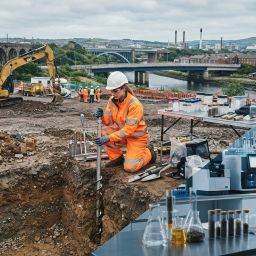
Could a single overlooked soil sample be the catalyst for a total structural failure or a budget-breaking foundation redesign? Many developers across the UK wide construction sector view site investigations as a secondary administrative task, yet the reality is far more critical. You understand that unforeseen ground conditions are the primary driver of project delays and financial overruns. This article demonstrates exactly how a soil report influences foundation design by translating raw geotechnical data into actionable engineering decisions that meet the NHBC Standards 2026.
We’ll explore how professional soil analysis ensures compliance with Building Regulations Approved Document A, dictates foundation selection, and mitigates the risks of reactive soils. By the end of this guide, you’ll have a clear roadmap for integrating technical soil investigations into your structural planning to protect both your assets and your reputation. For more comprehensive insights into site safety and hazardous material management, please refer to our pillar page on local compliance and surveying.
Key Takeaways
- Understand the mandatory requirements of Building Regulations Part A and NHBC Standards 2026 to ensure full legal compliance for UK wide construction projects.
- Learn exactly how a soil report influences foundation design by translating technical plasticity index data into precise depth and structural type specifications.
- Identify how high groundwater levels and reactive clay soils dictate the shift from traditional strip foundations to reinforced raft or piled solutions.
- Discover why UKAS accredited laboratory analysis is the gold standard for structural-risk assessments and providing a legally defensible site investigation.
- Mitigate the risk of unforeseen ground conditions and budget overruns by adopting a methodical, data-driven approach to geotechnical sampling.
The Critical Role of Soil Investigation in UK Foundation Engineering
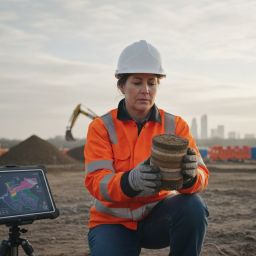
A soil report, or geotechnical investigation, is a technical assessment of subsurface conditions used to determine safe load-bearing capacities. Understanding how a soil report influences foundation design is the first step in any UK wide construction project. It’s not just a recommendation; it’s a legal necessity. Compliance with Building Regulations Part A and the NHBC Standards 2026 requires developers to provide evidence that the ground can support the intended structure. Skipping this step often results in “unforeseen ground conditions,” which account for a significant portion of construction litigation in the UK.
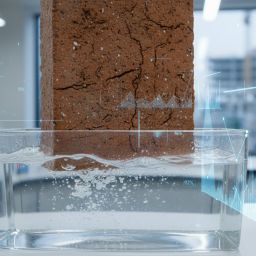
Identifying “shrink-swell” potential is particularly vital in clay-heavy regions. Without this data, foundations might be designed too shallow, leading to heave or subsidence as moisture levels fluctuate. Professional asbestos in soils testing and geotechnical analysis ensure these risks are mitigated before the first spade hits the ground. This methodical approach protects your budget from the sudden costs of reactive engineering.
Legislative Framework and Structural Safety
Modern foundation design must align with Eurocode 7, the UK standard for geotechnical engineering. This framework shifts the focus from simple safety factors to a more nuanced limit state design. A “Qualified Person” must interpret this data to secure local authority approval. They ensure the design accounts for site-specific variables that generic tables simply can’t cover. This professional oversight is essential for maintaining the structural integrity required by current UK legislation.
Preventing Settlement and Subsidence
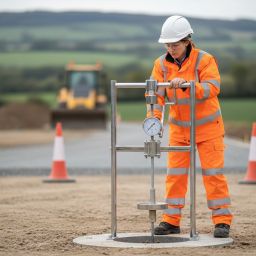
Engineers use soil reports to distinguish between total settlement and differential settlement. While total settlement is the uniform sinking of a building, differential settlement occurs when one part of the structure sinks faster than another. This leads to structural cracking and catastrophic failure. Load-bearing capacity is the maximum pressure soil can support without failure. By defining this limit early, you avoid the structural instability that plagues poorly planned developments and ensures long-term safety.
How Soil Analysis Data Shapes Foundation Selection
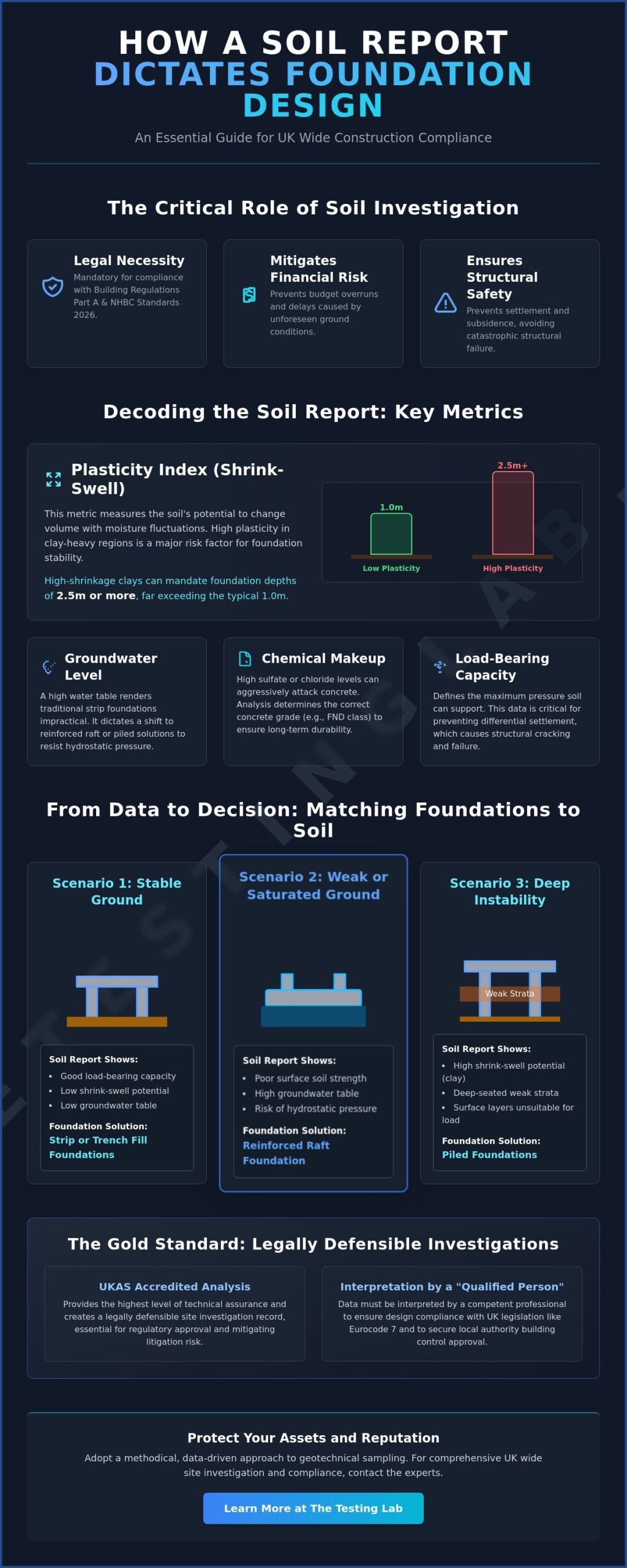
Data from a geotechnical survey directly dictates the structural blueprint. One of the most critical metrics is the plasticity index. While many assume a 1.0m depth is standard for UK wide residential builds, high-shrinkage clays can require depths of 2.5m or more, especially near vegetation. This is a primary example of how a soil report influences foundation design by moving beyond generic assumptions to site-specific precision.
Groundwater levels also play a decisive role. If a site investigation reveals a high water table, traditional strip foundations become impractical. In these scenarios, engineers often pivot to reinforced raft foundations or piling to ensure stability against hydrostatic pressure and soil saturation. The chemical makeup of the ground is just as vital as its physical strength. High sulfate levels can cause concrete to deteriorate rapidly. Designers use soil chemistry data to specify the correct concrete grade, such as FND class, to prevent long-term chemical attack. Ensuring these tests follow the MCERTS performance standard provides the legal and technical assurance required for modern construction.
Managing site safety involves identifying hidden hazards. Integrating asbestos in soils testing early in the process prevents costly work stoppages. If you’re unsure about your site’s contamination profile, our team can provide a tailored testing quote to secure your project’s timeline.
Physical Properties vs. Foundation Types
Shear strength data helps engineers choose between Trench Fill and Engineered Rafts. Trench fill is often the efficient choice for deeper foundations in stable ground, while rafts distribute loads across weaker surface soils. If the report identifies deep-seated weak strata, piling becomes necessary. The diameter and depth of these piles aren’t guessed; they’re calculated using the specific skin friction and end-bearing values found in the soil report.
Chemical Contamination and Waste Management
Excavated soil isn’t just “dirt” in the eyes of UK law. Professional WAC testing is mandatory for determining which landfill can accept your waste. Using WM3 testing allows for the precise classification of hazardous materials. This protects your site workers and ensures you aren’t paying premium disposal rates for non-hazardous material. Accurate classification keeps your project compliant and your waste management costs predictable.
Mitigating Risk Through UKAS Accredited Laboratory Analysis
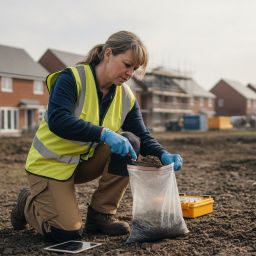
UKAS accreditation represents the pinnacle of technical competence in the construction sector. For structural-risk assessments, relying on non-accredited data is a gamble that UK mortgage lenders and insurance providers won’t accept. A professional soil report starts with site-specific borehole sampling, where cores are extracted and transported to an accredited facility for rigorous testing. This transition from field to lab is where the true understanding of how a soil report influences foundation design is forged. By utilizing data from the UK Soil Observatory alongside site-specific samples, engineers can account for the extreme geological diversity found UK wide.
Precision in testing doesn’t just ensure safety; it saves money. Without high-quality data, engineers are often forced to over-engineer, using thicker concrete or deeper piles to compensate for uncertainty. Accurate analysis allows for leaner, more cost-effective specifications that still meet every regulatory requirement. Comprehensive structural-risk assessments provide the long-term asset protection necessary for commercial and residential developments alike.
The Value of Precision in Testing
Insurance providers require independent lab results to verify that a building’s foundations are fit for purpose. Investing in high-quality testing at the start of a project prevents the catastrophic expense of mid-project redesigns. If ground conditions change unexpectedly during excavation, having a robust initial report provides the baseline data needed to pivot quickly without halting the entire site. It’s the difference between a controlled adjustment and a total project shutdown.
Securing Expert Consultancy
Managing the financial implications of soil findings is just as critical as the engineering itself. Consulting Estimating Consultants provide the construction estimating and cost consultancy needed to navigate these complexities.
The Testing Lab PLC offers a strategic partnership for developers requiring UK-wide support for complex soil and material investigations. Our team ensures that every sample is handled with methodological accuracy, removing the burden of professional responsibility from your shoulders. To ensure your project is grounded in technical excellence, request a professional soil analysis quote today and secure your foundation design with confidence.
Securing Your Structural Legacy with Data-Driven Design
Building on solid ground requires more than just standard structural calculations; it demands a granular understanding of the subsurface environment. We’ve explored how legislative compliance and technical precision merge to protect your project from unforeseen costs and structural failure. Understanding exactly how a soil report influences foundation design allows you to transition from reactive fixes to proactive engineering. By identifying chemical contaminants and physical soil properties early, you ensure your foundation is perfectly matched to the unique demands of your site. This methodical approach is the only way to satisfy the NHBC Standards 2026 and Building Regulations Part A effectively.
As your strategic partner, The Testing Lab PLC provides the technological confidence needed to navigate these complex requirements. Our UKAS Accredited Laboratory offers UK-wide coverage, with specialists in Asbestos in Soils and WAC Testing to keep your site safe and compliant. Secure your project with UKAS accredited soil testing from The Testing Lab PLC to ensure your structural specifications are both safe and cost-effective. Let’s work together to build a foundation that stands the test of time and regulation.
Frequently Asked Questions
Is a soil report mandatory for a small home extension in the UK?
Yes, a soil report is generally required to demonstrate compliance with Building Regulations Approved Document A, even for small home extensions. Building Control officers must verify that the ground’s load-bearing capacity is sufficient for the new structure. While minor works on known stable ground might occasionally use prescriptive rules, most UK wide projects require professional verification to avoid future subsidence or insurance complications.
How long is a geotechnical soil report valid for construction purposes?
A geotechnical soil report is typically considered valid for two to three years, provided there haven’t been significant changes to the site environment. If new trees are planted, nearby excavations occur, or groundwater levels shift, the data may no longer be accurate. This is a key way how a soil report influences foundation design over time, as it must reflect the current physical state of the land to remain legally sound.
Can the results of a soil report significantly increase my foundation costs?
Yes, if the analysis identifies high-shrinkage clay or low shear strength, you may need deeper trench-fill foundations or specialized piling. While this increases initial construction costs, it’s a strategic investment that prevents catastrophic structural failure later. Accurate data allows for precise engineering rather than expensive over-design, ensuring you only pay for the structural support actually required by your specific site conditions. This technical accuracy is also vital for the longevity of external features like patterned concrete driveways north east, where a stable sub-grade is essential to prevent surface cracking.
What happens if I build a foundation without a professional soil report?
Building without a professional report risks immediate rejection from Building Control and can invalidate your structural insurance or NHBC warranty. You also face the danger of differential settlement or heave, which are notoriously expensive to remediate. Professional soil investigation testing by a UKAS accredited lab provides the legal defensibility needed to protect your investment and ensures your project meets the rigorous standards required for UK wide construction.

Article by
P J F Thomas
CEO and Founder of TTL plc.
Disclaimer
Items declared are AI generated but do reflect our services. Please get in contact if you have any questions.