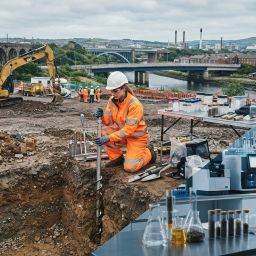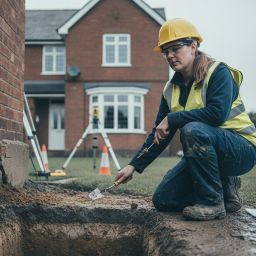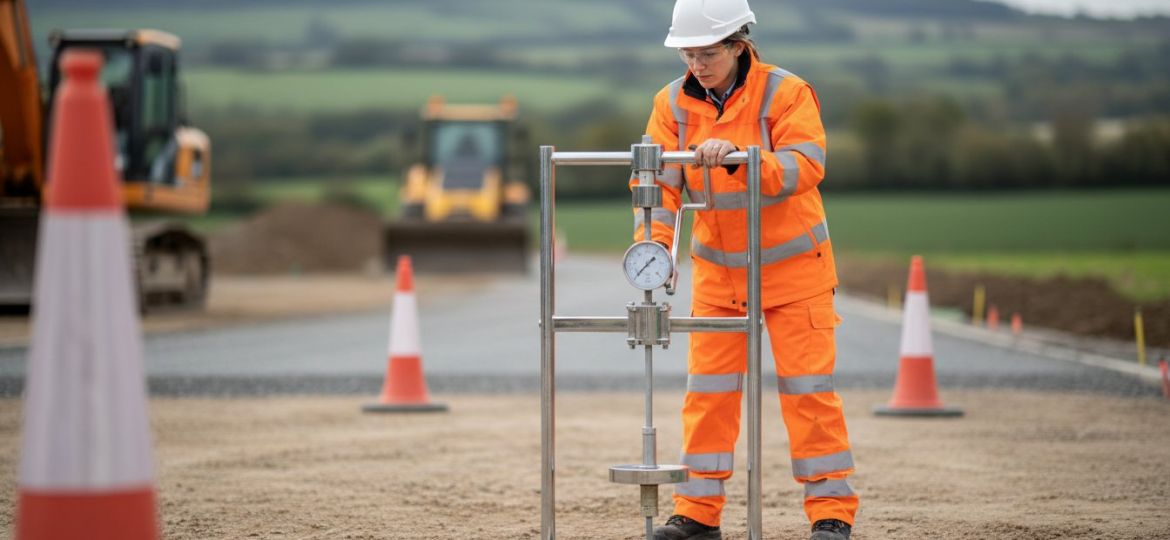
A single percentage point in a soil report can be the difference between a road that lasts decades and a project that collapses under its own regulatory weight. Having the California Bearing Ratio test explained is not just about understanding soil mechanics; it’s about managing the financial and structural risks inherent in UK infrastructure. Whether you’re working on a small access road or a major highway, the subgrade strength dictates every subsequent layer of your design.
You likely recognize the frustration of choosing between in-situ testing and laboratory analysis while under pressure to meet tight UKAS standards. It’s a common challenge to balance site efficiency with the stringent demands of UK legislation. This guide promises to clarify those technical nuances, ensuring your projects remain compliant and structurally sound. We’ll examine the core procedures, explain how to interpret lab results for sub-base thickness, and highlight the importance of selecting a UKAS accredited partner for your soil investigation needs. For those managing broader site risks, integrating these findings with a comprehensive site survey strategy across the UK wide landscape ensures total compliance from the ground up.
Key Takeaways
- Gain a clear understanding of how the California Bearing Ratio test explained in this guide serves as the regulatory benchmark for evaluating subgrade mechanical strength.
- Master the technical specifications of the penetration process, focusing on the precise load data collected at 2.5mm and 5.0mm depths.
- Learn to differentiate between typical values for clays, sands, and gravels to determine the exact thickness required for sub-base materials.
- Identify the strategic engineering solutions needed when results fall below 2%, including soil stabilization and the use of geotextiles.
- Ensure your UK wide projects maintain full compliance with legislation by utilizing UKAS accredited soil investigation testing for all site assessments.
What is the California Bearing Ratio (CBR) Test?
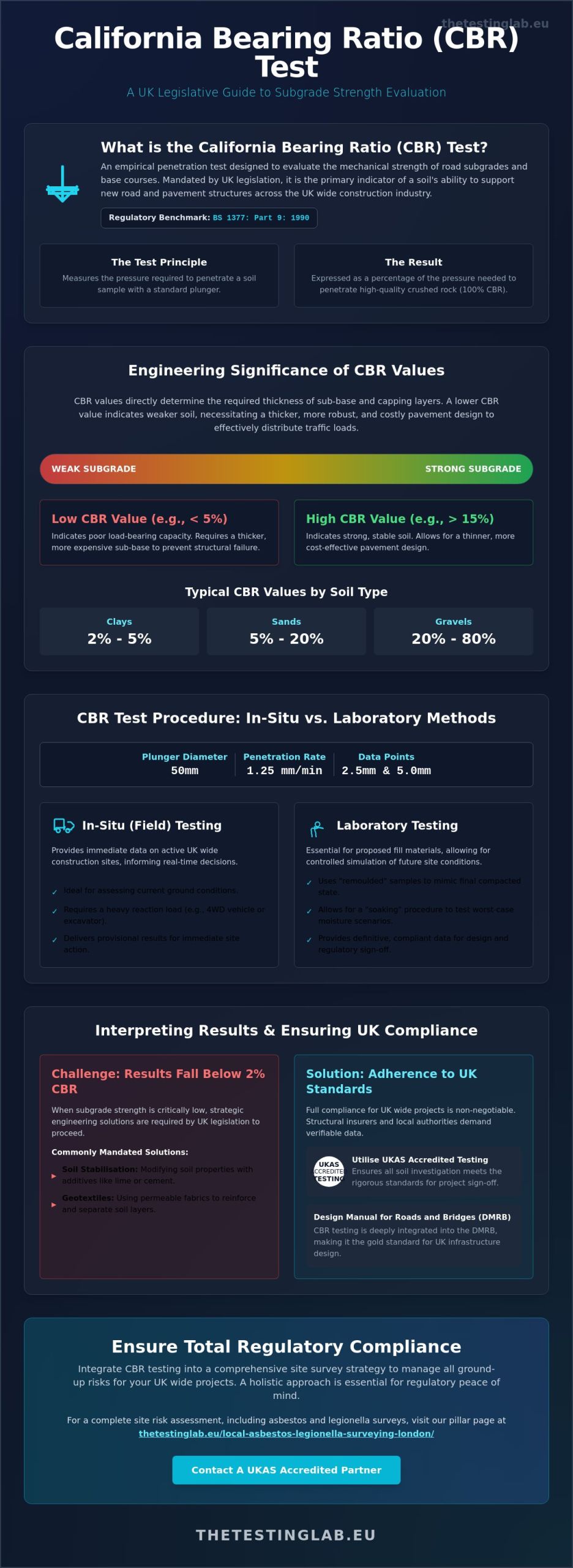
The California Bearing Ratio (CBR) is an empirical penetration test designed to evaluate the mechanical strength of road subgrades and base courses. In the UK wide construction industry, this metric is the primary indicator of how well a soil can support the layers of a new road or pavement. Having the California Bearing Ratio test explained through the lens of BS 1377: Part 9: 1990 ensures that every measurement meets the rigorous standards required for structural compliance. It’s essentially a measure of the resistance of a soil sample to penetration by a standardized plunger, providing a clear percentage that represents its relative strength.
The core mechanism involves comparing the pressure needed to penetrate a site soil sample with the pressure required for a high-quality crushed rock. We express the final result as a percentage; where 100% signifies the strength of premium crushed rock. This scale allows engineers to quantify the load-bearing capacity of diverse soil types across different UK sites. By establishing this baseline, project managers can make informed decisions about the structural requirements of their infrastructure.
The Engineering Significance of CBR Values
CBR values are the foundation of pavement design because they directly determine the required thickness of the sub-base and capping layers. A lower percentage indicates a weaker subgrade, which necessitates a thicker, more expensive pavement structure to distribute traffic loads effectively. Soil moisture content plays a pivotal role here; even slight increases in water levels can significantly reduce a CBR result and increase project costs. The 100% reference point is defined as the pressure required to penetrate a standard sample of crushed California limestone.
Why CBR Testing Remains the UK Industry Standard
Despite the development of newer analytical methods, CBR testing remains the gold standard because of its deep integration into the Design Manual for Roads and Bridges (DMRB). Structural insurers and local authorities almost universally require UKAS accredited data before granting project sign-off. Having the California Bearing Ratio test explained in this context highlights why it’s a mandatory step for UK wide infrastructure safety. For those managing complex sites, ensuring these tests are part of a broader site survey strategy is essential for total regulatory peace of mind.
CBR Test Procedure: Laboratory vs. In-Situ Methods
Getting the California Bearing Ratio test explained requires a deep dive into the physical mechanics of the procedure. Whether conducted in a laboratory or directly on-site, the standard penetration rate remains constant. A 50mm diameter plunger is driven into the soil at a controlled speed of 1.25mm per minute. Engineers record the loads required to reach penetrations of exactly 2.5mm and 5.0mm. These specific data points allow for the calculation of the CBR percentage against the standard crushed rock benchmarks. Precision is vital; for instance, any particles larger than 20mm must be removed from the sample area to prevent skewed results.
The choice between field and lab methods often dictates the pace of a project. While in-situ testing provides immediate feedback on current ground conditions, laboratory testing allows for the manipulation of variables like moisture and compaction. Understanding the nuances of the CBR test procedure helps you choose the right method for your specific site constraints and legislative requirements.
Step-by-Step Field (In-Situ) Testing
Field testing offers immediate data for active UK wide construction sites. The process begins with surface preparation, where we remove topsoil and level the test area to ensure the plunger makes uniform contact. A significant reaction load is necessary to provide the resistance needed for penetration. This is typically achieved using a heavy vehicle, such as a 4WD or an excavator, positioned directly over the test point. Once the hydraulic jack and plunger are assembled, we conduct the penetration and record the load-penetration curve. This provides provisional results that can inform immediate site decisions.
When to Opt for Laboratory CBR Testing
Laboratory testing is essential when dealing with proposed fill materials or embankments where the soil doesn’t yet exist in its final compacted state. We use a “remoulded” sample process to mimic future site conditions. Crucially, laboratories can perform a “soaking” procedure. This involves submerging the sample for several days to simulate worst-case saturated ground conditions, which is a critical safety factor for UK wide infrastructure. For projects requiring this level of forensic detail, utilizing UKAS accredited laboratory analysis ensures your data withstands regulatory scrutiny. If you need to confirm the structural viability of your fill materials, our specialists can provide a tailored soil testing quote to ensure your project remains compliant.
Interpreting Results and Ensuring UK Compliance
Interpreting data is where technical theory meets site reality. Once you have the California Bearing Ratio test explained through raw percentages, you must categorize the findings to inform your engineering strategy. Typical values vary significantly across different geologies. Heavy clays often sit between 2-5%, while clean sands range from 10-30%, and well-graded sandy gravels can reach 40-60%. If your results fall below 2%, it’s a critical indicator of poor subgrade strength. This low threshold usually necessitates soil stabilization, the use of geotextiles, or deeper excavation to reach more competent ground.
During initial site assessments across the UK wide landscape, soil strength is rarely the only concern. It’s vital to integrate CBR data with asbestos in soils testing to identify contamination risks early. This dual approach, often part of a wider site survey strategy, ensures you don’t just design a stable road, but also manage the environmental liabilities that could halt construction. UKAS accreditation is non-negotiable here; it provides the legal and insurance validity required for project sign-off.
CBR and Road Foundation Design (CD 225)
The Role of UKAS Accredited Laboratories
UKAS accreditation is the only way to ensure your site investigation data holds weight with structural insurers and local authorities. Using non-accredited data introduces immense risk, including project delays, structural failure, and significant legal liability. As a strategic partner, The Testing Lab PLC provides UK wide support for complex soil investigations, ensuring every result is precise and legally robust. If you need a reliable assessment for your next project, you can request a quote for soil testing to secure your project’s foundation.
Securing Your Site with Precise Structural Data
Success in UK wide construction starts with data you can trust. We’ve explored the technical mechanics of penetration rates, the strategic choice between in-situ and laboratory methods, and the legislative requirements of BS 1377. Having the California Bearing Ratio test explained in this professional context ensures you can interpret results with confidence and design road foundations that meet every structural safety standard. Precise measurements don’t just ensure compliance; they prevent the costly over-engineering of sub-base layers.
As a UKAS Accredited Laboratory, our team provides comprehensive site investigation coverage across the country. We specialize in asbestos in soils and structural-risk assessments, helping you manage complex ground conditions from a single, reliable point of contact. For more information on our full range of services, including our specialist surveying in London and beyond, explore our pillar resources. When you’re ready to move forward with your next project, request a technical quote for UKAS accredited CBR testing. We’re here to ensure your structural compliance is handled with engineering precision and methodological rigour.
Frequently Asked Questions
Is the California Bearing Ratio test the same as a Plate Bearing Test?
No, these tests differ significantly in both scale and methodology. While the California Bearing Ratio test explained in this guide uses a 50mm plunger to measure penetration resistance, the Plate Bearing Test uses a much larger plate, often up to 600mm, to measure settlement and the modulus of subgrade reaction. CBR is specifically designed for pavement and sub-base design. Plate Bearing is typically used for heavy plant standing or crane mat verification where larger surface areas are under load.
What is a good CBR value for road construction in the UK?
A “good” CBR value depends on the specific design requirements, but generally, a result above 5% is acceptable for a road subgrade. Values between 2% and 5% are common in UK wide clay soils and often necessitate the addition of a capping layer. If results fall below 2%, the ground is considered very poor and usually requires soil stabilization or significant excavation. For sub-base materials, engineers look for much higher values, often exceeding 30% to 80% depending on the material class.
How many CBR tests are required per square metre of a site?
Testing frequency is dictated by the project specification and ground variability rather than a fixed “per square metre” rule. For road projects, it’s standard practice across the UK wide construction sector to test at 30 to 50 metre intervals along the centreline. For larger site areas, one test per 1000 square metres is a common baseline. You should always consult the Design Manual for Roads and Bridges (DMRB) or your local authority to ensure your testing frequency meets specific project sign-off requirements.
Can CBR testing be performed on soils with large stones or boulders?
Standard CBR testing isn’t suitable for soils containing significant amounts of material larger than 20mm. These large stones interfere with the 50mm plunger, leading to inaccurate and artificially high results that don’t reflect the actual soil matrix strength. In stony or granular ground, engineers often pivot to Plate Bearing Tests to get a more representative measure of the site’s capacity. Integrating these mechanical tests with a comprehensive site survey strategy ensures that all geological and environmental risks are managed simultaneously.

Article by
P J F Thomas
CEO and Founder of TTL plc.
Disclaimer
Items declared are AI generated but do reflect our services. Please get in contact if you have any questions.