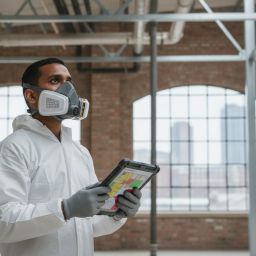
Relying on a testing lab without verifying its technical credentials is a risk that can lead to significant legal repercussions under UK law. Many project managers mistakenly believe that any standard certification provides enough protection, but the reality is that only specific accreditation offers the level of rigor required for UK wide compliance. Understanding what is UKAS accreditation and why it matters is essential for anyone responsible for asbestos consultancy, soil investigation, or water management. It’s the difference between a simple badge of quality and a legally defensible guarantee of technical competence.
We know how difficult it’s to verify lab claims while navigating complex safety regulations like the Accreditation Regulations 2009. This article will show you how choosing a UKAS accredited partner mitigates risk and ensures your data stands up to the highest level of scrutiny. We’ll examine the technical value of these standards and explain how they provide the legal peace of mind necessary for your local asbestos and legionella surveying needs and broader compliance goals.
Key Takeaways
- Understand the role of the United Kingdom Accreditation Service as the sole national body appointed by the government to verify technical competence for UK wide compliance.
- Learn how utilizing accredited laboratory data protects duty holders from legal repercussions and potential HSE prosecution by ensuring all testing meets rigorous statutory standards.
- Gain a clear professional perspective on what is UKAS accreditation and why it matters for maintaining data integrity and reducing the financial burden of unreliable results.
- Discover the critical distinction between generic ISO certification and specific UKAS accreditation to ensure your testing partner is legally qualified for your exact project requirements.
- Identify the methodology for verifying a laboratory’s “Scope of Accreditation” to guarantee they possess the proven expertise for specialized asbestos, water, or soil investigation tasks.
Understanding UKAS Accreditation: The Gold Standard for UK Laboratories
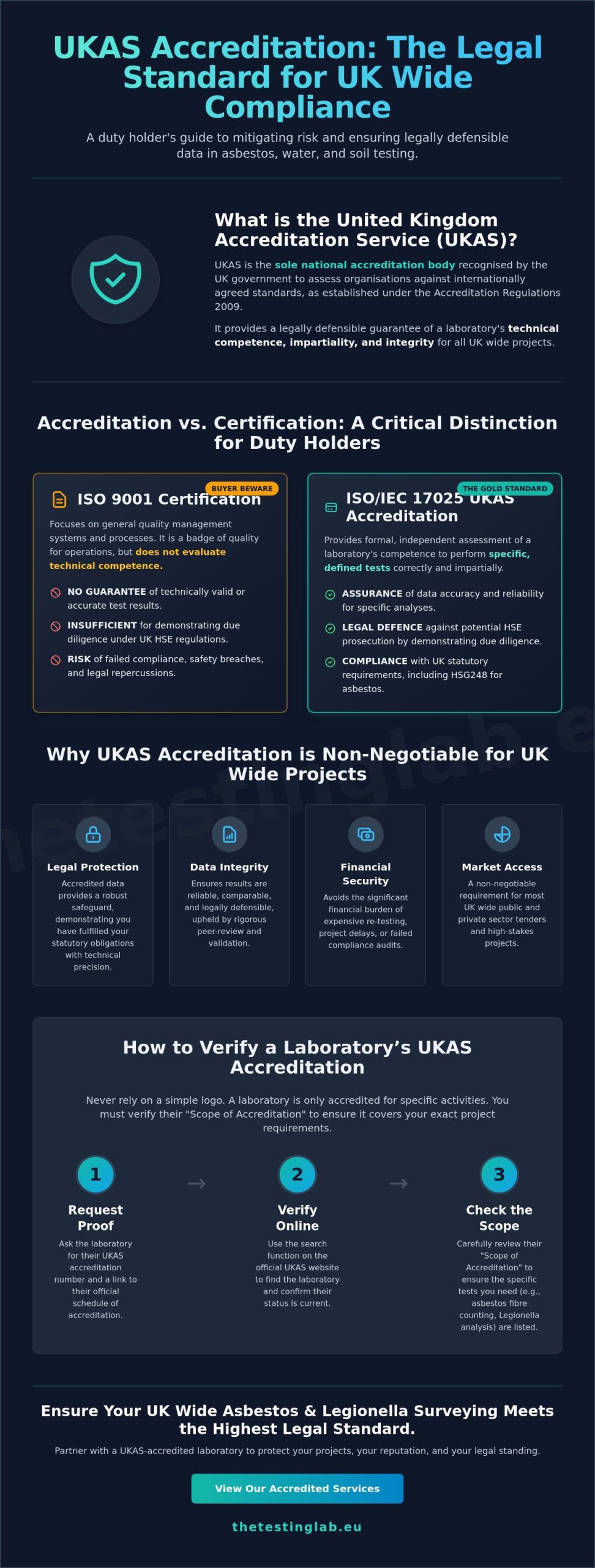
In the United Kingdom, technical competence isn’t a matter of opinion; it’s a matter of verified data. The United Kingdom Accreditation Service (UKAS) is the sole national accreditation body recognised by the government to assess organisations against internationally agreed standards. This recognition is established under the Accreditation Regulations 2009. For a laboratory, obtaining this status is a formal acknowledgement that they possess the necessary expertise and equipment to perform specific tests accurately. UKAS accreditation is the independent assessment of a laboratory’s impartiality and technical ability.
Maintaining a “UK wide” standard is critical for national consistency. Whether you’re managing a site in London or the Highlands, the safety data you receive must be comparable and reliable. To truly grasp what is UKAS accreditation and why it matters, you have to look at the legal weight it carries. Without it, a lab is simply making a self-declaration of quality. With it, every test result is backed by a rigorous peer-review process that ensures the highest level of technical integrity.
Accreditation vs. Certification: Why the Difference Matters
A common point of confusion for duty holders is the difference between ISO 9001 and ISO/IEC 17025. While ISO 9001 is a valuable certification for general management systems, it doesn’t evaluate the technical validity of a laboratory’s results. Only ISO/IEC 17025 accreditation provides the assurance that the specific analysis of a sample is correct. Relying on certification alone for high-risk surveys creates a “Buyer Beware” scenario. Using non-accredited bodies for critical safety testing can lead to inaccurate reports, which in turn results in failed compliance audits or, worse, safety breaches on site.
The Engineering Mindset: Precision in Laboratory Operations
We approach laboratory testing with a precision-focused engineering mindset. This means every variable is controlled. UKAS monitoring involves regular, intensive assessments of equipment calibration and staff training records. Nothing is left to chance. A vital component of this process is the sample chain of custody. This protocol ensures that from the moment a sample is collected during local asbestos and legionella surveying until the final report is issued, the integrity of the material is never compromised.
- Regular verification of technical staff competency.
- Traceable calibration of all testing machinery.
- Strict adherence to validated testing methodologies.
This systematic approach removes the professional responsibility burden from your shoulders, placing it firmly into the hands of verified experts.
Why UKAS Matters: Ensuring Legal Compliance and Data Integrity
Understanding what is UKAS accreditation and why it matters requires looking at the legal protection it offers. For any duty holder, the primary concern is mitigating risk. Accredited data acts as a safeguard against Health and Safety Executive (HSE) prosecution because it demonstrates that you’ve fulfilled your statutory obligations with technical precision. The United Kingdom Accreditation Service (UKAS) serves as the ultimate check on these standards, ensuring that “the checkers” themselves are competent. UKAS results provide a legal defense by demonstrating that the duty holder has exercised due diligence through the use of a competent, independently verified laboratory.
The Role of UKAS in Asbestos and Legionella Legislation
In the context of asbestos and water safety, the requirements are specific. Under HSG248, any asbestos consultancy work must be underpinned by accredited laboratory analysis to ensure fiber counting and material identification are beyond reproach. Similarly, Legionella risk assessments must align with ACOP L8, which expects water analysis to be performed by a lab with the correct scope of accreditation. For brownfield sites across the country, asbestos in soils testing is a critical step in regulatory sign-off. If you’re managing a complex site, you can request a specialist compliance quote to ensure your project meets these rigorous standards.
Technical Reliability in Material and Soil Investigation
Construction projects rely on the structural and environmental integrity of the ground. Using specialist soil investigation ensures that topsoil and subsoil meet the BS 3882:2015 standards. This level of accredited analysis prevents the catastrophic costs of structural failures or unforeseen environmental contamination liabilities. It’s about building on a foundation of verified facts rather than assumptions, ensuring UK wide safety for every development.
Choosing a UKAS Accredited Partner for Your UK Wide Projects
Understanding what is UKAS accreditation and why it matters also involves recognizing that accreditation isn’t a blanket approval. It’s test-specific. You must verify a laboratory’s “Scope of Accreditation” to ensure they’re actually competent for the specific analysis your project requires. This level of scrutiny ensures that whether you’re dealing with complex soil chemistry or hazardous materials, the methodology used is validated and regularly audited by external experts.
How to Verify a Laboratory’s UKAS Schedule
To verify a laboratory’s credentials, visit the official UKAS website and use their search tool to find the lab’s unique accreditation number. This search will generate a “Schedule of Accreditation,” which is a technical document listing every test the lab is authorized to perform. When decoding the schedule, check for specific methodologies like XRD or XRF analysis to confirm the lab’s technical range. Every valid lab analysis certificate must clearly display the UKAS symbol and the laboratory’s unique number; this provides a traceable link to their verified competence and ensures the data is legally defensible.
Next Steps: Securing Your Compliance Strategy
Securing your compliance strategy begins with a transparent procurement process. When you request a specialist quote, ensure the proposal includes the full schedule of accreditation relevant to your specific project needs. Integrating accredited testing into your long-term water and asbestos management plans isn’t just a regulatory hurdle. It’s a commitment to operational excellence and safety. Don’t leave your legal safety to chance. Ensure your next project is fully compliant by contacting our UKAS accredited laboratory to discuss your requirements.
Securing Technical Excellence for Your Next Project
Achieving UK wide compliance requires more than just meeting basic standards; it demands a commitment to verified technical competence. We’ve explored what is UKAS accreditation and why it matters for maintaining data integrity and protecting your organization from the legal risks associated with non-compliant testing. By selecting an independent UKAS accredited laboratory, you ensure that every sample analysis for Asbestos, Legionella, or Soil investigation meets the highest statutory requirements. This strategic choice removes the professional liability burden from your shoulders and places it into the hands of specialists who prioritize precision.
As you plan your next development or maintenance schedule, remember that the quality of your testing partner is the foundation of your safety strategy. Request a UKAS accredited testing quote today to secure your compliance. We’re ready to provide the technical magistery and reliable data your projects deserve.
Frequently Asked Questions
Is UKAS accreditation a legal requirement for asbestos testing?
Yes, UKAS accreditation is a legal requirement for laboratories performing asbestos fiber counting and material identification under the Control of Asbestos Regulations 2012. Regulation 21 specifically mandates that any person or laboratory carrying out these tests must be accredited to the ISO/IEC 17025 standard. This legal framework ensures that safety data used for UK wide compliance is generated by technically competent entities. Without this accreditation, results aren’t legally valid for regulatory sign-off.
What is the difference between ISO 17025 and ISO 9001?
ISO 9001 focus is on general quality management systems, while ISO/IEC 17025 specifically evaluates the technical competence and validity of laboratory results. While ISO 9001 ensures a business is well-managed, it doesn’t verify the accuracy of a lab sample. Understanding what is UKAS accreditation and why it matters involves recognizing that only the 17025 standard provides the technical rigorousness required for reliable laboratory analysis. It’s the essential benchmark for engineering precision.
How do I check if a laboratory is UKAS accredited?
You check a laboratory’s status by searching the official United Kingdom Accreditation Service (UKAS) website using the lab’s name or unique four-digit accreditation number. Every accredited body must have a published Schedule of Accreditation that details the specific tests they’re authorized to perform. Checking this schedule is the only way to confirm a lab has the proven expertise for your specific project requirements. It ensures the lab’s technical scope matches your needs across all UK wide sites.
Can I use a non-accredited lab for Legionella risk assessments?
While the risk assessment itself is a professional judgment, the Health and Safety Executive (HSE) through ACOP L8 strongly recommends using UKAS accredited laboratories for all water analysis. Relying on non-accredited data for Legionella monitoring significantly increases your legal risk and professional liability. Using accredited labs provides the necessary technical assurance that your water management plan’s based on accurate, verifiable data for UK wide safety. It’s about maintaining a legally defensible position.

Article by
P J F Thomas
CEO and Founder of TTL plc.
Disclaimer
Items declared are AI generated but do reflect our services. Please get in contact if you have any questions.