Receiving a positive result on an asbestos report doesn’t mean your project has to grind to a halt or that your budget is about to collapse. It’s natural to feel the weight of professional responsibility while worrying about occupant health or the complexity of UK regulations. This guide explains exactly what happens after a positive asbestos survey, providing a clear roadmap to ensure you meet your legal obligations under the Control of Asbestos Regulations 2012 (CAR 2012). We’ll break down the “Duty to Manage” requirements, the critical difference between remediation and removal, and why independent UKAS accredited oversight is your strongest defense for compliance UK wide. By following a structured, engineering-led approach, you can transition from initial discovery to a long-term management framework that protects both your people and your professional reputation.
Key Takeaways
- Identify the immediate “stop work” protocols required to prevent accidental exposure once Asbestos Containing Materials (ACMs) are confirmed UK wide.
- Gain a clear understanding of what happens after a positive asbestos survey, including your statutory obligation to update the Asbestos Register and notify stakeholders.
- Determine the most appropriate remediation strategy by distinguishing between long-term management in situ and the requirements for professional removal.
- Learn why independent UKAS accredited 4-stage clearance is a mandatory safety standard for verifying that areas are safe for re-occupation.
Interpreting the Positive Result: What Your Asbestos Report Actually Means
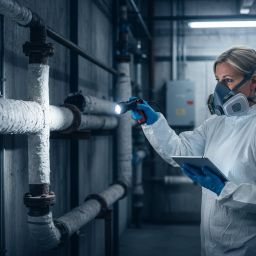
A positive survey result confirms that Asbestos Containing Materials (ACMs) are present within your premises. This isn’t a subjective observation; it’s a definitive finding based on rigorous laboratory analysis. Understanding what happens after a positive asbestos survey begins with immediate “Stop Work” protocols UK wide. Any maintenance, drilling, or construction in the affected zone must cease immediately to prevent fibre release. For a comprehensive overview of asbestos and its various forms, understanding the specific mineral type found is vital. Whether it’s Chrysotile, Amosite, or Crocidolite, each carries a distinct risk profile based on its microscopic structure and friability.
The surveyor’s recommendation section is the most critical part of the document. It moves beyond the “positive” label to provide a clear methodology for risk mitigation. Knowing what happens after a positive asbestos survey allows you to transition from reactive panic to a structured, engineering-led management plan. It’s here that you’ll find the path toward professional asbestos surveying and long-term safety.
Understanding Material and Priority Risk Scores
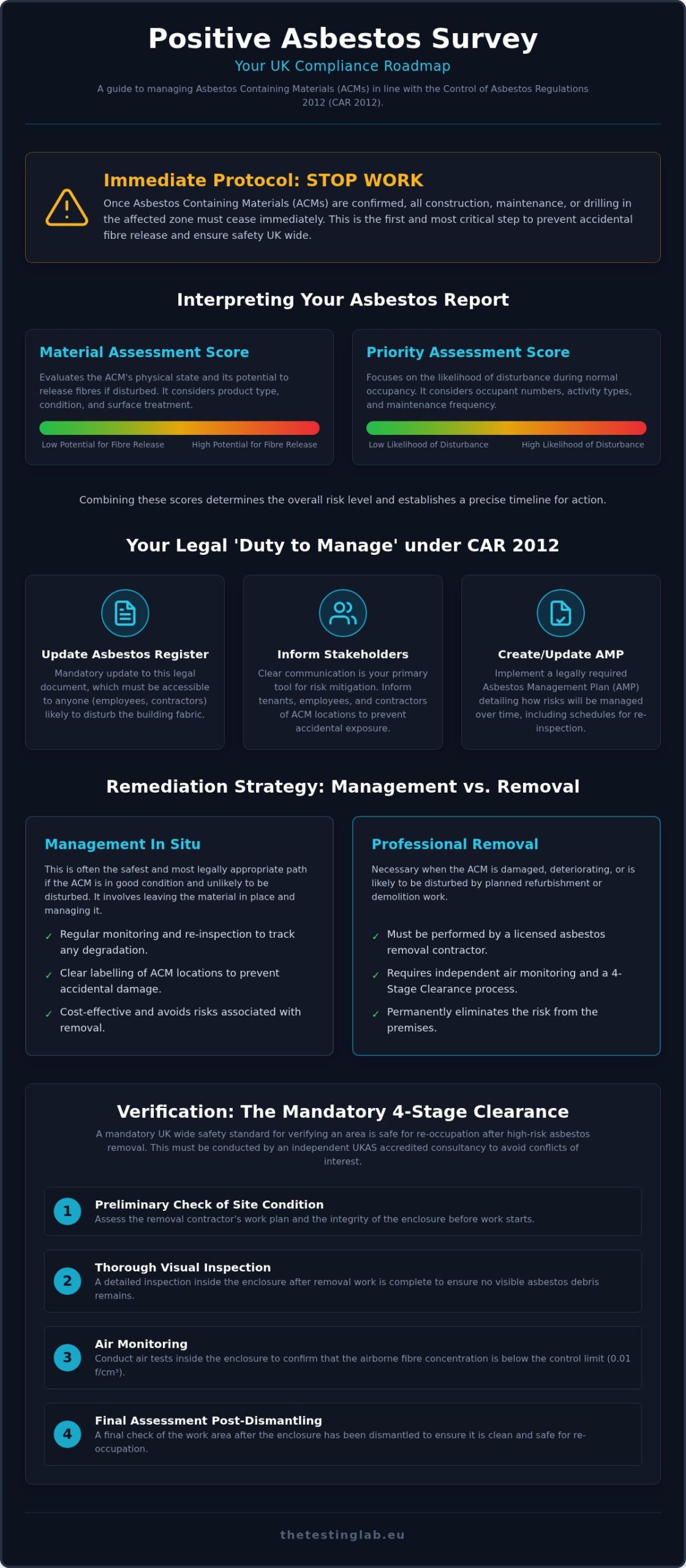
The Material Assessment evaluates the ACM’s physical state and its potential to release fibres if disturbed. This score considers the product type, its current condition, and any existing surface treatment. High scores indicate materials that are easily damaged or already deteriorating, requiring urgent attention.
The Priority Assessment focuses on the human element and the likelihood of the material being disturbed during normal daily occupancy. Factors include the number of occupants, the type of activity occurring, and the frequency of maintenance tasks near the ACM.
By combining the material and priority scores, duty holders can determine the overall risk level and establish a precise timeline for remedial action.
Discovery to Duty: Legal Compliance Steps UK Wide
Once the laboratory confirms the presence of ACMs, the legal “Duty to Manage” under Regulation 4 of CAR 2012 activates immediately. It’s no longer a matter of discovery; it’s about implementing a rigorous control framework. A critical part of what happens after a positive asbestos survey is the mandatory update of your Asbestos Register. This record must be accessible to anyone likely to disturb the fabric of the building, including tenants, employees, and external contractors.
Clear communication is your primary tool for risk mitigation. You’ve got to inform stakeholders of the ACM locations to prevent accidental exposure. Consulting with an expert asbestos consultancy allows you to evaluate whether “management in situ” is appropriate. Often, if the material is in good condition, leaving it undisturbed is the safest legal path. However, if the risk score necessitates removal, engaging with firms recognised by the Asbestos Removal Contractors Association ensures the work is handled by licensed professionals.
Implementing a Compliant Asbestos Management Plan (AMP)
The AMP is a living document required for all non-domestic premises UK wide. It details exactly how you intend to manage the identified risks over time. This includes a defined schedule for regular monitoring and re-inspections by accredited professionals to track any material degradation. Understanding what happens after a positive asbestos survey helps you move from reactive measures to proactive safety. For duty holders in the capital, our London asbestos surveying pillar offers localized guidance on maintaining these records. If you need assistance structuring your plan, get in touch with our specialist team to ensure your strategy remains legally defensible.
Remediation and Verification: The Role of UKAS Accredited Consultancy
If the remediation strategy requires removal, hiring a licensed contractor is only half of the compliance equation. Independent air monitoring is essential to ensure the work area is safe. This is a critical part of what happens after a positive asbestos survey. Relying on a removal contractor to verify their own work creates a conflict of interest. Instead, duty holders should appoint an independent consultancy for laboratory analysis. This ensures an impartial assessment of the environment. The process follows the UK government asbestos guidance regarding safety and toxicological risks.
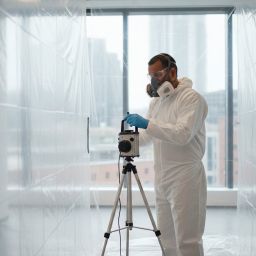
For high-risk asbestos removal, the 4-stage clearance process is a mandatory UK wide safety standard. This procedure includes a preliminary check of the site, a thorough visual inspection, air monitoring to confirm fibre levels are below 0.1 f/cm³, and a final post-enclosure check. Understanding what happens after a positive asbestos survey means knowing that you can’t re-occupy the space without a “Certificate of Reoccupation.” Once you’ve received this certificate, you’ll update your asbestos register one last time to reflect the change in material status. This provides a clear audit trail for future inspections.
The Importance of UKAS Accredited Air Monitoring
During removal, various types of air monitoring are deployed to safeguard the site. Background monitoring establishes baseline levels; leak monitoring checks the integrity of enclosures; and personal monitoring assesses the exposure of workers. UKAS accreditation to ISO 17025 is the gold standard for these tests. It provides the technical magistery required for legal compliance and insurance defensibility. Independent air clearance serves as the final, uncompromising barrier between a hazardous work site and a safe, productive environment for your building’s occupants.
Securing Your Path to Full Asbestos Compliance
It’s a structured process that ensures the safety of your building’s occupants once you transition from discovery to management. By updating your asbestos register and implementing a robust management plan, you’ll fulfill your legal duties under CAR 2012. Understanding what happens after a positive asbestos survey allows you to manage risks with precision rather than reacting with uncertainty. The integrity of your project depends on independent oversight. Utilizing a UKAS accredited testing laboratory and expert 4-stage clearance monitoring provides the legal defensibility your organization requires UK wide. As your strategic partner, we take the technical burden off your shoulders, ensuring every stage meets the highest regulatory standards. Request a UKAS accredited asbestos consultancy quote today to secure your premises. With the right expert guidance, you can maintain a safe environment and achieve total peace of mind.
Frequently Asked Questions
Does a positive asbestos survey mean I have to remove the material immediately?
Failure to comply with the “Duty to Manage” can lead to severe consequences from the Health and Safety Executive (HSE). Penalties include unlimited fines and potential imprisonment for serious breaches UK wide. Neglecting what happens after a positive asbestos survey also opens duty holders to civil litigation from occupants or employees exposed to fibres due to mismanagement. To ensure your property interests are legally protected, check out Feltons Solicitors LLP.
Can I continue to use a building if asbestos has been found?
Yes, you can continue to occupy a building with identified ACMs, provided they are managed correctly. You must maintain an up to date Asbestos Management Plan and ensure the materials are regularly inspected by an accredited professional. Understanding what happens after a positive asbestos survey helps you maintain safety. For specific regional compliance, consult our London asbestos surveying pillar to ensure all protocols are met.
How much does asbestos air monitoring cost after a positive survey?
Costs for air monitoring are determined by several factors, including the number of samples required and the duration of the removal project. Pricing typically covers site visits and laboratory analysis by a UKAS accredited consultancy. Since every project has unique technical requirements UK wide, it’s best to request a bespoke quote to ensure your specific compliance needs are met.

Article by
P J F Thomas
CEO and Founder of TTL plc.
Disclaimer
Items declared are AI generated but do reflect our services. Please get in contact if you have any questions.