What if the audit trail you rely on for insurance is legally worthless because the data behind it lacks UKAS accreditation? With the Health and Safety Executive reporting that work-related injuries and illnesses cost the UK economy £22.9 billion annually, the stakes for health and safety compliance for property managers UK have never been higher. You’re likely feeling the pressure of the Renters’ Rights Act 2025 and the updated HHSRS regulations that came into force on 23 June 2026. Managing multiple contractors for asbestos, water, and fire safety while ensuring every risk assessment is robust enough for an HSE inspection is a complex logistical challenge.
We recognize that managing the intersection of the Building Safety Act and the new Fire Safety (Residential Evacuation Plans) Regulations can feel like a moving target. This guide provides a streamlined framework to master your UK wide obligations and reduce your liability through precision-led data. You’ll gain a clear roadmap for the 2026 regulatory landscape, covering everything from mandatory PEEPs to the latest UKAS-accredited testing requirements for asbestos consultancy and Legionella risk assessments. We’ll show you how to transform these statutory obligations into a robust, defensible system of operational excellence.
Key Takeaways
- Understand the evolving role of the “Accountable Person” under the Building Safety Act and how it reshapes statutory responsibilities across UK-wide property portfolios.
- Master the technical transition from asbestos management surveys to refurbishment surveys to ensure full Regulation 4 (CAR 2012) compliance.
- Implement robust ACOP L8 water management protocols to mitigate Legionella risks and maintain safety standards in diverse UK property systems.
- Discover why UKAS-accredited laboratory testing provides the precision-led data essential for maintaining health and safety compliance for property managers UK.
- Identify the critical distinction between “competent persons” and accredited organisations to ensure your audit trails withstand rigorous HSE and insurance inspections.
Statutory Health and Safety Obligations for UK Property Managers
The foundation of health and safety compliance for property managers UK rests on a rigid hierarchy of legislation. At its core, the Health and Safety at Work etc. Act 1974 establishes the general duty of care. This is supplemented by the Management of Health and Safety at Work Regulations 1999, which mandates systematic risk assessments across all UK wide portfolios. In 2026, this landscape has shifted significantly with the full independence of the Building Safety Regulator as of 27 January. The role of the “Accountable Person” is now a statutory reality for those managing higher-risk buildings. While you might appoint a “Responsible Person” for fire safety or water hygiene in multi-tenanted commercial premises, the legal duty remains non-delegable. You can outsource the task, but you cannot outsource the ultimate liability.
The Building Safety Act and Higher-Risk Buildings
Managing higher-risk buildings now requires a “Golden Thread” of information. This isn’t just about storing digital files; it’s a verified, live record of a building’s safety metadata. Property managers must maintain a comprehensive safety case file that proves risks are identified and mitigated. This mandatory reporting ensures that every structural or fire safety decision is backed by empirical evidence, preventing the data silos that historically led to catastrophic failures.
Duty to Manage: Civil vs. Criminal Liability
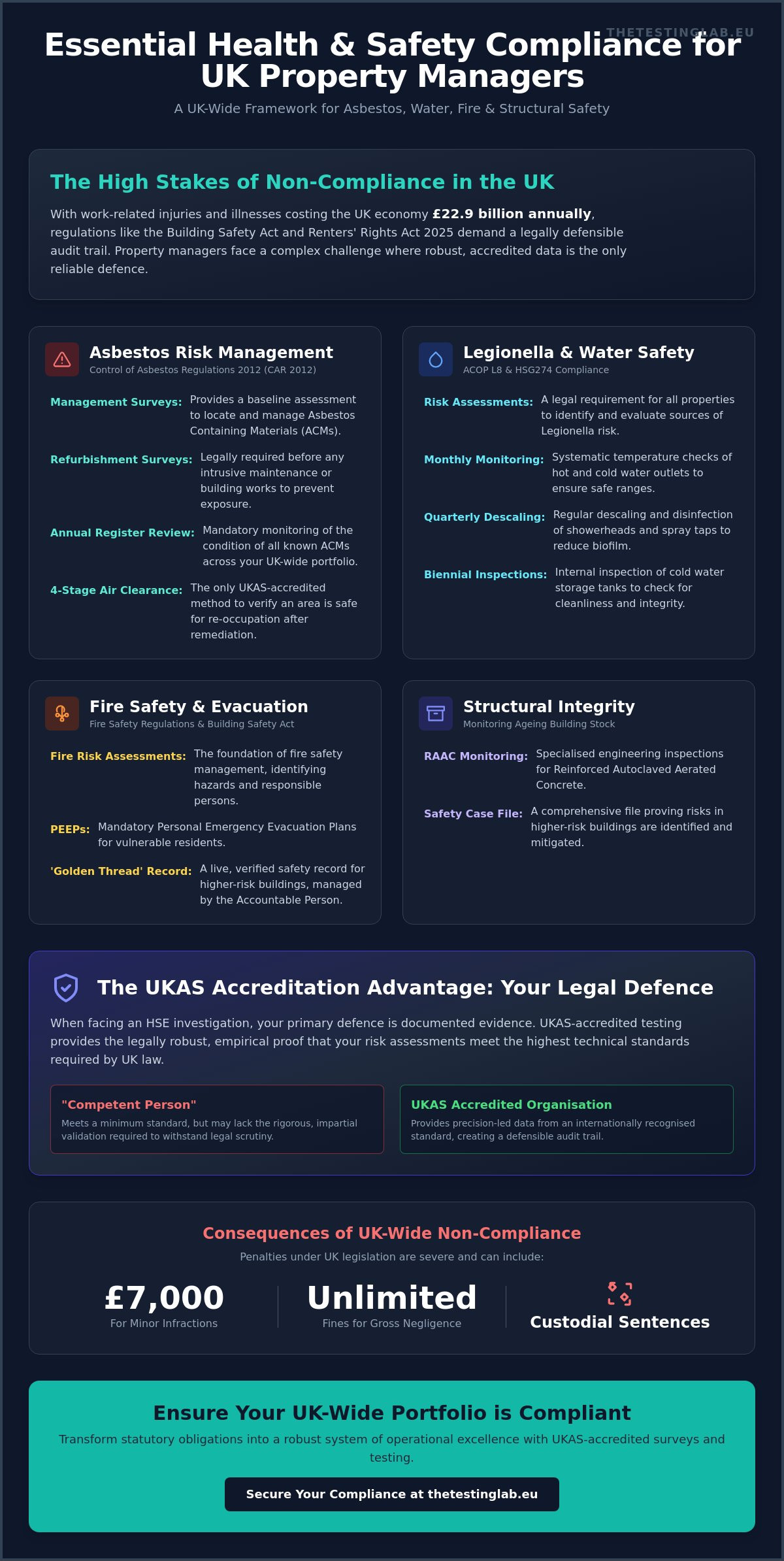
Non-compliance carries severe weight in the current regulatory environment. Under the Renters’ Rights Act 2025 and updated HHSRS regulations, penalties for safety failures can reach £7,000 for minor infractions or result in unlimited fines and custodial sentences for criminal negligence. When facing an HSE investigation, your primary defence is documented evidence. This is why UKAS-accredited documentation is essential. It provides the empirical proof that your surveys and risk assessments meet the highest technical standards required by UK law, shifting the burden of proof back to a position of operational excellence.
Essential Health and Safety Surveys for Property Portfolios
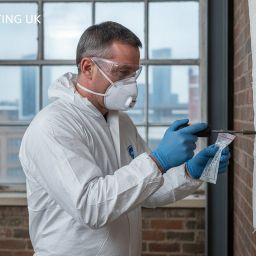
Maintaining a property portfolio requires more than high-level oversight; it demands granular technical data. Achieving health and safety compliance for property managers UK involves a rigorous schedule of statutory surveys that move beyond visual inspections. Asbestos remains a primary concern under Regulation 4 of the Control of Asbestos Regulations 2012. While management surveys provide a baseline, any planned maintenance or capital expenditure projects necessitate a transition to more intrusive refurbishment or demolition surveys to prevent accidental exposure. If you’re managing older building stock UK wide, these surveys are the only way to ensure contractor and tenant safety.
Managing Asbestos Risks UK-Wide
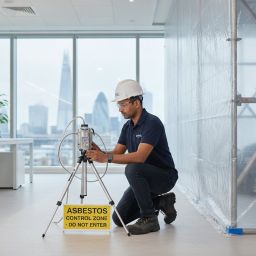
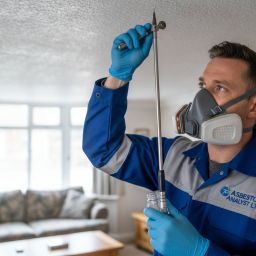
Professional asbestos consultancy is vital for identifying high-risk materials like pipe lagging or insulating board. Statutory requirements mandate that asbestos registers are reviewed annually to track material degradation. If remediation occurs, 4-stage air clearance testing is the only way to ensure a building is safe for re-occupation. This methodical approach ensures that your audit trail is robust enough for any HSE inspection.
Legionella Control and Water Management
Water safety is equally critical. Conducting mandatory Legionella risk assessments is a legal requirement under ACOP L8. This applies whether you manage residential blocks or commercial offices. Compliance involves monthly temperature monitoring, quarterly showerhead descaling, and biennial tank inspections to prevent bacterial proliferation. It’s a system of operational excellence that protects both the user and the manager from liability.
Fire Risk Assessments (FRA) must now align with the Fire Safety (Residential Evacuation Plans) Regulations 2025, which came into force on 6 April 2026. This includes the creation of Personal Emergency Evacuation Plans (PEEPs) for vulnerable residents. Additionally, ageing building stock must be monitored for structural risks such as Reinforced Autoclaved Aerated Concrete (RAAC). These material-based risks require specialized engineering inspections to ensure long-term structural integrity. For those overseeing complex sites, integrating these requirements into a single compliance framework is the most effective way to mitigate risk.
Implementing a UK-Wide Compliance Strategy with UKAS Accredited Testing
Statutory health and safety compliance for property managers UK depends on the technical integrity of your raw data. There is a fundamental difference between a “competent” person conducting a visual check and a UKAS-accredited organisation performing laboratory analysis. Relying on subjective assessments without empirical backing leaves your organisation exposed during HSE audits or insurance claims. Laboratory-backed data is essential for hazardous material identification and water microbiology. By streamlining your workflow through integrated local asbestos and legionella surveying, you can reduce site visits while ensuring every sample follows a rigorous chain of custody. Implementing these precision-led protocols is the only way to achieve long-term health and safety compliance for property managers UK.
The Value of UKAS Accreditation in Testing
UKAS accreditation represents the gold standard for asbestos and water analysis. It provides an independent verification of technical competence that a standard surveying firm cannot offer. This independence is crucial for avoiding conflicts of interest. When you use an accredited laboratory, you ensure that the identification of hazards is entirely separate from any subsequent removal or remediation works. It protects property managers from the risk of removal contractors inflating the scope of work based on their own internal assessments.
Centralising Compliance for UK-Wide Portfolios
Maintaining consistent safety standards across UK wide assets requires a centralised digital strategy. Fragmented data from multiple regional contractors creates blind spots in your risk profile. In 2026, effective compliance management utilizes digital reporting to maintain the Golden Thread of information required by the Building Safety Act. This ensures that certificates of analysis and risk assessments are instantly accessible; creating a defensible audit trail that proves your commitment to operational excellence and tenant safety.
Securing Legal Defensibility Through Technical Precision
Achieving total health and safety compliance for property managers UK requires a transition from reactive maintenance to a data-led, accredited strategy. As the 2026 regulatory landscape matures, the distinction between simple surveying and UKAS-accredited analysis becomes the defining factor in your legal defensibility. By centralising your Golden Thread of information and ensuring every risk assessment is backed by empirical laboratory data, you’ll eliminate the ambiguity that often leads to HSE intervention or insurance failures. This methodical approach transforms statutory obligations from a burden into a system of operational excellence.
We’re here to act as your strategic partner, taking the technical weight of compliance off your shoulders. Our UKAS Accredited Laboratory and independent asbestos and Legionella consultancy provide the precision needed to protect your UK wide assets. Whether you’re managing high-rise residential blocks or complex commercial estates, our methodology ensures your portfolios remain safe and fully compliant with the latest statutory requirements. You don’t have to navigate these legislative complexities alone. With a robust audit trail and laboratory-backed data, you can manage your properties with absolute confidence.
Request a UK-wide compliance survey quote from our UKAS specialists and ensure your safety data meets the highest standards of technical accuracy.
Frequently Asked Questions
What are the mandatory health and safety inspections for UK commercial properties?
Statutory inspections for commercial sites include Fire Risk Assessments (FRA), Electrical Installation Condition Reports (EICR) every five years, and annual Gas Safety Certificates. To ensure your systems meet these standards, you can learn more about Excel Electrical and their maintenance services. For buildings constructed before 2000, an annual asbestos register review is mandatory under Regulation 4 of CAR 2012. These requirements form the backbone of health and safety compliance for property managers UK, ensuring every managed asset remains legally fit for occupation and protected against HSE scrutiny.
How often should a property manager conduct a Legionella risk assessment?
Legionella risk assessments must be reviewed whenever there’s a significant change to the water system or building usage, typically at least every two years under ACOP L8. While the assessment provides the framework, compliance requires ongoing operational tasks. Property managers must ensure monthly temperature monitoring and quarterly showerhead descaling are documented. If a system remains stagnant for long periods, an immediate re-assessment is necessary to maintain safety UK wide.
Is a fire risk assessment a legal requirement for residential blocks?
Yes, a Fire Risk Assessment is a strict legal requirement for the common parts of all multi-occupied residential buildings under the Regulatory Reform (Fire Safety) Order 2005. As of 6 April 2026, this includes the mandatory creation of Personal Emergency Evacuation Plans (PEEPs) for vulnerable residents. Assessments must be recorded in writing and reviewed annually to ensure they reflect the current structural and occupancy risks of the building.
What is the difference between an asbestos management survey and a refurbishment survey?
A management survey is a non-intrusive inspection designed to manage asbestos during normal building occupation. Conversely, a refurbishment survey is a fully intrusive, destructive inspection required before any construction or maintenance work begins. Correctly identifying the need for a refurbishment survey is vital for health and safety compliance for property managers UK, as it prevents accidental fibre release during capital expenditure projects or structural upgrades.
Who is legally responsible for health and safety compliance in a managed property?
The “Accountable Person” or “Responsible Person” holds the primary legal liability, which usually falls on the landlord or the appointed property manager. Under the Building Safety Act 2022, this individual must maintain the Golden Thread of safety information for higher-risk buildings. While you can delegate the execution of surveys to specialists, the statutory duty to ensure a safe environment remains non-delegable and carries significant criminal and civil penalties.
Why should property managers use UKAS-accredited laboratories for material testing?
UKAS accreditation is the only independent guarantee that laboratory data is accurate, impartial, and technically robust. Using accredited facilities for asbestos or water microbiology testing ensures your audit trail is legally defensible during insurance claims or HSE inspections. It eliminates the conflict-of-interest risks inherent when using non-accredited contractors and provides the high-precision data necessary to manage complex UK wide portfolios with absolute confidence.

Article by
P J F Thomas
CEO and Founder of TTL plc.
Disclaimer
Items declared are AI generated but do reflect our services. Please get in contact if you have any questions.