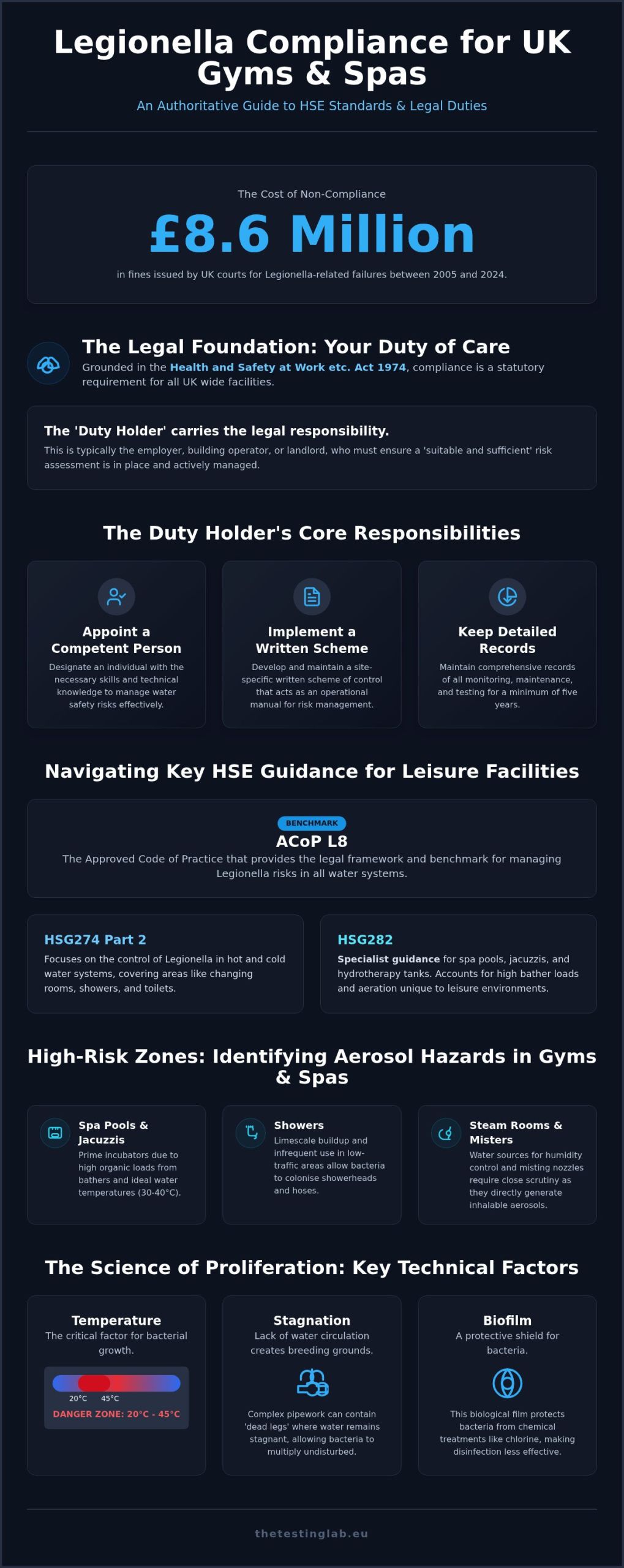
Between 2005 and 2024, UK courts issued £8.6 million in fines for Legionella-related failures, proving that compliance isn’t just a box-ticking exercise but a critical safeguard for your business. We understand that managing high-risk water systems like spa pools and multi-point showers feels overwhelming, especially when the threat of HSE prosecution looms. Securing a professional legionella risk assessment for gyms and spas is the first step toward total peace of mind.
This authoritative guide ensures your leisure facility meets every HSE standard by demystifying ACoP L8 and HSG282 protocols. We’ll provide a clear, actionable water management plan that identifies hidden risks and establishes a precise testing frequency. By the end, you’ll have the technical roadmap needed to maintain a safe environment for your guests and staff UK wide, backed by the certainty of UKAS accredited standards.
Key Takeaways
- Identify the Duty Holder’s legal obligations under the Health and Safety at Work Act 1974 to maintain a ‘suitable and sufficient’ risk assessment for all UK wide facilities.
- Understand why aerosol-generating systems like spa pools and high-organic load environments require specialized monitoring to prevent bacterial incubation.
- Learn how a professional legionella risk assessment for gyms and spas translates into a tailored written scheme of control for your specific plant room.
- Discover why UKAS accredited laboratory analysis is essential for accurate microbiological identification and maintaining legionella compliance.
Legal Requirements and the Role of the Duty Holder under ACoP L8
Under the Health and Safety at Work etc. Act 1974, every commercial facility must conduct a ‘suitable and sufficient’ risk assessment. This isn’t a suggestion; it’s a statutory requirement for UK wide operations. The Duty Holder, usually the employer, building operator, or landlord, carries the legal weight for water safety. If an outbreak occurs, the HSE doesn’t just look at the consultant; they look at the Duty Holder’s oversight of the entire system.
The Duty Holder’s core responsibilities include:
- Appointing a ‘competent person’ with the technical knowledge to manage risks.
- Implementing and maintaining a site-specific written scheme of control.
- Keeping detailed records of all monitoring and maintenance for at least five years.
The Approved Code of Practice L8 (ACoP L8) provides the framework for legal defensibility. It’s the benchmark by which HSE inspectors judge your facility’s safety culture. Relying on basic water testing is dangerous for leisure sites. High-aerosol systems like showers and misting stations require a more rigorous approach. Understanding the risks involved starts with a comprehensive Legionnaires’ disease overview, which highlights how the bacteria thrive in stagnant, warm water before being inhaled by unsuspecting guests.
Dual Compliance: Merging HSG274 and HSG282 Standards
Managing a gym or spa requires balancing two distinct technical standards. HSG274 Part 2 focuses on the hot and cold water systems within your changing rooms and toilets. However, spa pools, jacuzzis, and hydrotherapy tanks demand the specialist rigour of HSG282. This document accounts for high organic loads and constant aeration that standard systems don’t face. Securing a legionella risk assessment for gyms and spas that accounts for both HSG274 and HSG282 is the only way to ensure your facility remains legally robust. HSG282 supplements ACoP L8 by providing the specific microbiological parameters and disinfection regimes unique to leisure water environments. For facilities seeking legionella compliance, merging these standards into one cohesive strategy is essential for operational excellence.
High-Risk Systems: Identifying Aerosol Hazards in Gyms and Spas
Aerosol generation represents the primary transmission route for Legionella bacteria. Identifying every ‘at-risk’ outlet is the critical first step in a professional legionella risk assessment for gyms and spas. Unlike standard office blocks, leisure facilities operate systems that intentionally create fine mists. Spa pools and jacuzzis are particularly hazardous; their high organic loads and body-temperature water provide a perfect incubator. Steam rooms also require scrutiny, specifically the water sources for humidity control and misting nozzles.
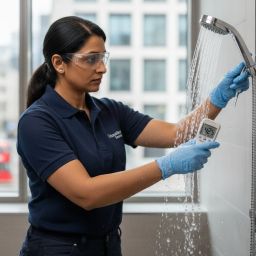
Gym showers often harbour risks through limescale buildup and infrequent use in low-traffic changing areas. These conditions allow bacteria to colonise the showerheads and hoses. To manage these complexities, duty holders must align with ACoP L8 Legal Requirements to ensure every aerosol source is mapped and controlled. If your facility has recently added new equipment or seen changes in usage patterns, it’s worth reviewing your current legionella risk assessments to ensure your written scheme remains accurate.
Technical Risk Factors: Temperature, Stagnation, and Biofilm
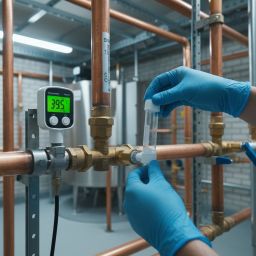
The ‘Danger Zone’ between 20°C and 45°C is where Legionella proliferates rapidly. Maintaining temperatures outside this range is a non-negotiable requirement for UK wide facilities. Stagnation is another major factor. Complex pipework in leisure centres often contains ‘dead legs’ where water doesn’t circulate, leading to biofilm development. This biological film protects bacteria from chemical treatments. High bather loads further complicate matters by depleting chlorine or bromine efficacy. You can find more detail on our pillar page for London and UK wide compliance.
Developing a Water Management Plan with UKAS Accredited Testing
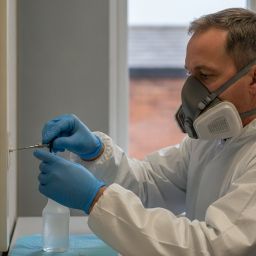
A professional legionella risk assessment for gyms and spas must conclude with a written scheme of control tailored to the facility’s specific plant room. This document acts as your operational manual. For leisure sites, following HSE guidance for spa pools ensures your management plan accounts for the unique biological pressures of high-bather loads. We emphasize the importance of UKAS accredited laboratory analysis for all water samples. Without accredited testing, your microbiological identification lacks the legal defensibility required during an HSE inspection.
Compliance management isn’t a static event. You should conduct annual reviews or immediate assessments following significant changes to your water system or building use. Strategic partners often integrate these checks with other compliance needs, such as asbestos consultancy, to create a holistic safety strategy UK wide. This joined-up approach removes the burden of professional responsibility from your shoulders while ensuring every pipe and plant room is accounted for. It’s a methodical way to transition from operational risk to system-wide excellence.
Implementation: From Sampling to Remediation
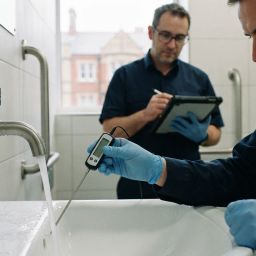
Monthly temperature monitoring and quarterly Legionella sampling are standard protocols for high-risk leisure outlets. If contamination occurs, remediation strategies like thermal disinfection or chemical shock dosing must be deployed based on the system’s technical configuration. Secure your facility’s safety by requesting a professional legionella risk assessment from our specialists. We move beyond simple checklists to provide a precision-engineered water management plan that maintains a safe environment for every visitor. Our team ensures that your legionella risk assessment for gyms and spas remains a living document, evolving alongside your facility’s needs.
Future-Proofing Your Facility’s Water Safety
Maintaining a safe environment requires more than meeting minimum standards. It demands a precise approach merging ACoP L8 requirements with the specialist rigour of HSG282. By identifying aerosol hazards and implementing a written scheme of control, you protect your reputation and your staff. A professional legionella risk assessment for gyms and spas provides the legal defensibility needed in this high-risk sector. Our team delivers UKAS accredited laboratory analysis and comprehensive reporting to ensure your water management plan is technically robust. Whether you operate a single boutique gym or a national chain, our expert site inspections provide clarity UK wide. Take the professional responsibility off your shoulders and ensure your plant rooms operate with precision. Request a UK wide Legionella risk assessment quote from The Testing Lab PLC today to secure your compliance.
Frequently Asked Questions
Is a Legionella risk assessment legally required for a gym without a pool?
Yes, a risk assessment is a legal requirement for any facility with a water system. Under the Health and Safety at Work etc. Act 1974, gyms must manage risks from showers, taps, and drinking fountains regardless of whether they have a pool. These systems can still produce aerosols and harbour bacteria, making a professional assessment essential for UK wide compliance and guest safety. For gym operators looking to offer comprehensive support to their members, you can also discover Foundation Bike Fit for expert cycling setup and performance advice.
How often should a spa pool be tested for Legionella according to HSG282?
According to HSG282, spa pools must undergo Legionella testing at least quarterly. If your facility manages high bather loads or experiences frequent temperature fluctuations, more regular sampling is often necessary. These tests must be supported by daily monitoring of pH and disinfectant levels. This rigorous approach ensures that your water management plan remains robust and provides a safe environment for all facility users; you can also learn more about maintaining your physical sports equipment to the same high safety standards.
Costs for a legionella risk assessment for gyms and spas vary based on the complexity of the water systems and the number of aerosol-generating outlets. While industry averages exist, we provide bespoke, fixed-fee site survey and inspection charges to ensure full transparency. A comprehensive assessment includes a detailed plant room inspection and a tailored written scheme of control, offering better long-term value than basic checklists.
Can I carry out a Legionella risk assessment myself?
The law allows you to conduct your own assessment if you are ‘competent’. However, the HSE defines competence as having the necessary skills, knowledge, and experience to identify and manage risks effectively. For complex leisure facilities, most duty holders appoint strategic partners like The Testing Lab PLC to ensure UKAS accredited standards are met and professional responsibility is correctly managed.

Article by
P J F Thomas
CEO and Founder of TTL plc.
Disclaimer
Items declared are AI generated but do reflect our services. Please get in contact if you have any questions.