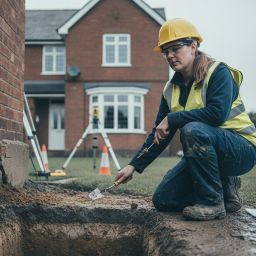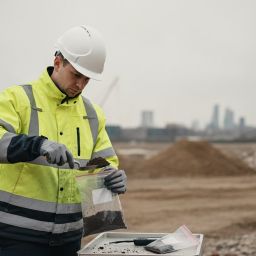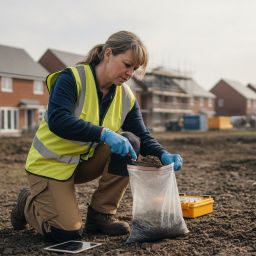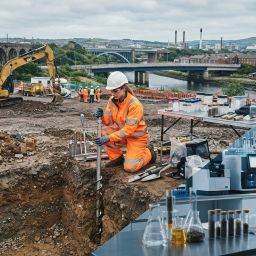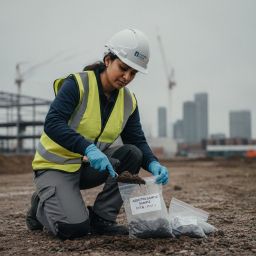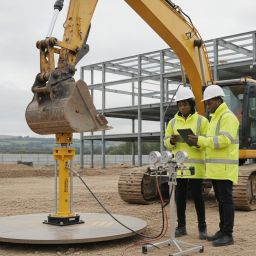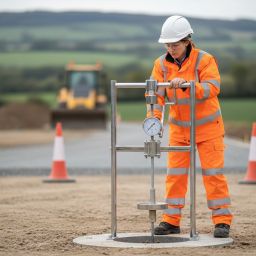
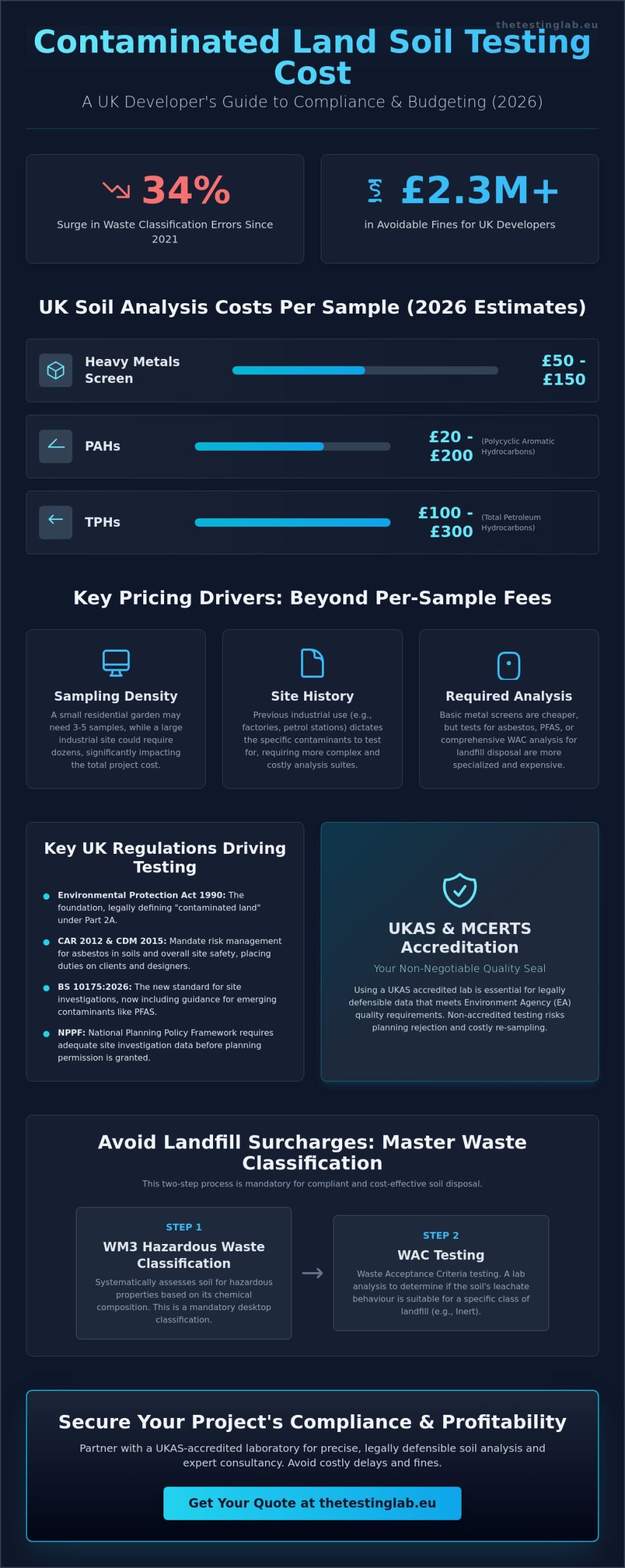
Did you know that waste classification errors have surged by 34% since 2021, resulting in over £2.3 million in avoidable fines for UK developers? It’s a staggering figure that highlights how easily a project can stall when laboratory fees and regulatory requirements aren’t clearly defined. You’re likely feeling the pressure to balance strict compliance with CAR 2012 and CDM 2015 while trying to pin down an accurate contaminated land soil testing cost UK for your next site investigation.
We understand that navigating the technicalities of WM3 guidance and the new BS 10175:2026 standards feels like a moving target. At The Testing Lab PLC, we view ourselves as your strategic partner, stripping away the complexity to provide precise, UK-wide pricing data. Whether you need a specialist asbestos consultancy or a comprehensive WAC analysis, we’ll help you master the current market rates to avoid expensive landfill surcharges.
This professional 2026 guide breaks down everything from entry-level heavy metal screens to complex Phase 2 intrusive investigations. You’ll gain the clarity needed to budget effectively while ensuring every sample meets the highest UKAS-accredited standards and aligns with the latest government PFAS strategy.
Key Takeaways
- Understand how the Environmental Protection Act 1990 and the new BS 10175:2026 standards dictate your site investigation requirements for full legal compliance.
- Learn how to accurately calculate your contaminated land soil testing cost UK by evaluating sampling density, site history, and specific laboratory analysis fees.
- Discover the critical stages of asbestos in soil testing, from initial identification to gravimetric analysis, to mitigate health risks on UK wide brownfield developments.
- Master the mandatory WM3 hazardous waste classification and WAC testing protocols to avoid unexpected landfill surcharges and costly project delays.
- Ensure technical precision by partnering with a UKAS-accredited laboratory for independent soil analysis and expert asbestos consultancy to safeguard your project’s profitability.
Understanding Contaminated Land Soil Testing in the UK: A Legislative Overview
Navigating the legal landscape of brownfield redevelopment requires more than just a checklist; it demands a deep understanding of the Environmental Protection Act 1990. Under Part 2A of this Act, land is legally “contaminated” if it contains substances that cause significant harm or the possibility of such harm. For developers across the UK, the Environment Agency (EA) acts as the primary enforcer, ensuring that soil quality meets stringent safety thresholds. This regulatory scrutiny is exactly why the contaminated land soil testing cost UK is a vital consideration during the early feasibility stages of any project. To establish a baseline, refer to this Contaminated Land definition to see how historical industrial use impacts modern site safety.
In UK planning law, contaminated land soil testing is the systematic process of identifying and quantifying hazardous substances within the ground to determine if a site poses an unacceptable risk to human health or the environment. When you’re repurposing brownfield sites, this analysis isn’t optional. It’s a mandatory trigger that ensures your development doesn’t inherit legacy liabilities or face sudden stop-work orders from local authorities. We view this process as a strategic risk mitigation tool rather than a mere administrative hurdle.
Key UK Regulations Driving Soil Testing
Several frameworks dictate the scope of your investigation. The Control of Asbestos Regulations 2012 (CAR 2012) specifically targets asbestos in soils, a common find on demolition sites. Meanwhile, CDM 2015 places the duty of risk management on the client and principal designer, making accurate soil data essential for site safety. The National Planning Policy Framework (NPPF) further reinforces this by requiring developers to provide adequate site investigation information, often including a specialist asbestos survey or chemical screen, before planning permission is granted.
The Importance of UKAS Accreditation in Soil Analysis
Precision is our baseline. Using a laboratory accredited by the United Kingdom Accreditation Service (UKAS) to ISO/IEC 17025 standards ensures your data is legally defensible. For chemical analysis, MCERTS (Monitoring Certification Scheme) provides the specific quality assurance the Environment Agency requires. If you opt for non-accredited testing to lower your contaminated land soil testing cost UK, you risk planning rejection. The updated BS 10175:2026 standard, published in March 2026, now includes guidance on emerging contaminants like PFAS, making professional, accredited testing more critical than ever for UK wide projects.
Calculating Contaminated Land Soil Testing Cost UK: Key Pricing Drivers
Budgeting for a site investigation involves more than just laboratory fees. While a single sample might seem affordable, the total contaminated land soil testing cost UK is primarily driven by sampling density and the specific suites required by your local planning authority for UK wide developments. A small residential garden might only require three to five samples, whereas a large industrial site could necessitate dozens of boreholes to meet the statistical requirements of the Land Contamination Risk Management (LCRM) guidance. We see many projects face delays because the initial sampling plan was too sparse, leading to regulators demanding a second, more expensive round of testing.
| Analysis Type | Estimated Cost Per Sample (2026) |
|---|---|
| Heavy Metals Screen | £50 – £150 |
| PAHs (Polycyclic Aromatic Hydrocarbons) | £20 – £200 |
| TPHs (Total Petroleum Hydrocarbons) | £100 – £300 |
| Asbestos Identification Screen | £25 – £100 |
Factors That Increase Soil Testing Expenses
Site history is the most significant variable. If your project sits on a former gasworks or chemical plant, you’ll need targeted analysis for complex volatiles or phenols; these carry a higher price point than standard suites. Turnaround times also impact the bottom line. While standard results take five to ten working days, 24-hour or 48-hour “express” services often incur a 50% to 100% surcharge. For precise mineralogical identification, we often deploy advanced techniques like XRD analysis or XRF analysis to provide the high-resolution data necessary for complex remediation strategies.
Professional Fees vs. Laboratory Analysis
It’s vital to distinguish between the “cost per sample” and the “cost per project.” Professional fees cover the expertise of an environmental engineer to collect samples correctly, ensuring no cross-contamination occurs. DIY sampling often results in rejected reports because the methodology fails to meet the standards expected UK wide. A comprehensive interpretative report, which compares raw lab data against current Soil Guideline Values (SGVs), is what actually secures your planning discharge. If you’re unsure which suite your site requires, you can request a bespoke testing quote to ensure your contaminated land soil testing cost UK remains predictable and transparent.
Asbestos in Soils: Specific Testing Requirements and Costs
Asbestos contamination is an almost universal feature of UK wide brownfield redevelopment, frequently stemming from historical demolition rubble. When these materials aren’t correctly identified early on, your contaminated land soil testing cost UK can skyrocket due to unexpected hazardous waste surcharges. We follow the rigorous standards set by the Association of Geotechnical & Geoenvironmental Specialists (AGS) to ensure our soil investigations are both legally robust and technically precise.
The testing process typically unfolds in three distinct stages. First, we perform an identification screen to confirm the presence of fibres. If positive, we move to gravimetric analysis and, finally, PCOM (Phase Contrast Optical Microscopy) to determine the exact concentration. Managing Asbestos in Soils isn’t just about laboratory data; it’s about strategic site management to ensure the safety of your workforce and the surrounding community while maintaining project profitability.
Asbestos Identification vs. Quantification
A simple presence or absence test is a cost-effective entry point, typically ranging from £25 to £100 per sample in 2026. However, if asbestos is detected, UK legislation requires quantification to determine if the concentration exceeds the 0.1% threshold. Once soil surpasses this limit, it’s classified as hazardous waste, which dramatically increases disposal fees. Accurate quantification allows for a more nuanced risk assessment and potentially saves thousands in landfill costs by proving concentrations are below the hazardous trigger.
Managing Asbestos Risk During Site Works
Compliance with CAR 2012 is non-negotiable for any developer. Beyond the soil itself, we often recommend air monitoring during intrusive works to verify that no fibres are being liberated into the atmosphere. Our specialist asbestos consultancy provides the technical oversight needed to keep your project compliant and your team safe. Gravimetric analysis is the gold standard for asbestos quantification because it provides a precise mass-balance measurement of fibres and fragments within a soil matrix.
Advanced Analysis: WAC Testing, WM3, and Waste Classification Costs
A common pitfall in site management is the conflation of waste classification and landfill acceptance criteria. Before any soil leaves a site UK wide, it must undergo a WM3 Testing assessment. This process isn’t about where the soil can go, but rather what the soil is. Misclassifying hazardous material as non-hazardous can lead to fines of up to £180,000 for serious commercial breaches. Consequently, your contaminated land soil testing cost UK should always account for this initial legislative step to avoid the ‘worst-case scenario’ of paying the standard landfill tax rate for what could have been managed as inert waste.
We treat waste classification as a precision exercise. Since the withdrawal of RPS 298 in September 2025, the Environment Agency requires waste classification to be completed much earlier in the project lifecycle. This shift places the responsibility for compliance squarely on the waste producer, making accurate laboratory data your primary defense against regulatory scrutiny and unexpected disposal surcharges.
WM3 Testing: The First Step in Waste Management
Determining whether your soil is hazardous or non-hazardous is the foundation of any waste management strategy. This classification dictates your liability for HMRC Landfill Tax. Active waste attracts the standard rate, while qualifying inert materials benefit from a significantly lower rate. We also provide HMRC LOI fines testing to verify organic content, ensuring you aren’t overcharged due to a lack of technical data.
WAC Testing for Landfill Compliance
Once the soil is classified via WM3, WAC Testing determines which specific category of landfill can accept it. WAC analysis focuses on leachate, the liquid that drains from the waste, to ensure it won’t contaminate groundwater. In 2026, WAC testing for asbestos typically costs between £375 and £450 per sample. It’s a mistake to view WAC as a substitute for contamination testing; they serve entirely different legal purposes. By accurately identifying soil that can be reused on-site, you can bypass disposal fees entirely. If you need to classify material for off-site removal, contact our laboratory for a technical waste assessment.
Securing Compliance with The Testing Lab PLC: Professional UKAS Accredited Soil Analysis
Selecting a laboratory partner is a strategic decision that directly influences your project’s legal standing and financial health. At The Testing Lab PLC, we provide a precision-led approach to independent soil analysis that goes beyond delivering raw data. By providing UKAS-accredited results, we eliminate the high-risk scenario where non-accredited reports are rejected by local authorities. This rejection often results in doubling the initial contaminated land soil testing cost UK due to the need for re-sampling and delayed site works. Our expert team operates UK wide, ensuring that whether you’re managing a provincial brownfield site or requiring London Asbestos and Legionella Surveying, you receive the same high-tier technical support.
A Comprehensive Suite of Specialist Services
Our capabilities extend into highly specialized assessments required for modern environmental compliance. For projects involving the import or reuse of growing media, we conduct Topsoil Testing to the BS 3882:2015 standard to verify safety and nutrient levels. When complex contamination profiles require molecular-level identification, our in-house XRD Analysis provides the definitive data needed to design cost-effective remediation strategies. This technical depth ensures your contaminated land soil testing cost UK remains a productive investment in risk mitigation.
Partnering for Site Safety and Compliance
Large-scale developments UK wide require a laboratory that understands the intricate relationship between CAR 2012, CDM 2015, and the latest BS 10175:2026 standards. We operate as a dynamic, knowledge-based workshop where curiosity and methodology work in tandem to solve your most difficult compliance challenges. Our transparent processes and commitment to knowledge sharing ensure you’re always informed and protected against regulatory scrutiny. Don’t leave your project’s compliance to chance. Request a Quote for UK-Wide Soil Testing today and secure the professional foundation your development deserves.
Mastering Your Site Compliance Strategy
Our UKAS-accredited laboratory provides the technical confidence you need for UK wide projects, from initial desktop studies to final verification reports. Whether you’re managing complex asbestos quantification or requiring a rapid WAC analysis, we serve as your strategic partner to remove the burden of quality assurance. Our specialists in asbestos, soil, and water analysis are equipped to handle the most demanding site histories with engineering-grade accuracy. You can Get a Professional Soil Testing Quote from The Testing Lab PLC today to ensure your next development is grounded in precision. If you require local expertise, our London asbestos and legionella surveying team is ready to support your regional compliance needs. We’re ready to help you turn regulatory hurdles into a clear path for project success.
Frequently Asked Questions
What is the average contaminated land soil testing cost in the UK?
The average contaminated land soil testing cost UK starts at approximately £795 for a Phase 1 Desktop Survey. If the site requires intrusive sampling, a Phase 2 investigation typically begins at £1,800. Individual laboratory fees vary based on the required suite; a basic heavy metal screen costs between £50 and £150 per sample, while complex TPH or PAH analysis can reach £300 depending on the required precision.
Do I need a soil test for a small residential extension?
What is the difference between WAC testing and a standard contamination screen?
A standard contamination screen assesses risks to human health and the environment, while WAC testing determines which landfill category can accept the waste. You can’t use WAC results for planning discharge or health risk assessments. WAC analysis specifically focuses on the leachable components of the soil to ensure the material won’t pollute groundwater once it’s disposed of in a landfill setting.
How long do laboratory soil test results take?
Standard laboratory soil test results typically take between five and ten working days to process. If your project is on a tight deadline, express services are available for 24-hour or 48-hour turnarounds, though these usually incur a surcharge of 50% to 100%. We recommend factoring these laboratory timelines into your project schedule to ensure you have the necessary documentation before moving any material off-site.
Can I collect my own soil samples to save on professional fees?
We strongly advise against collecting your own samples because results from non-professional sampling are frequently rejected by local authorities and the Environment Agency. Professional collection ensures that samples are representative of the site and maintained under a strict chain of custody. Improper sampling techniques often lead to cross-contamination, which artificially inflates your contaminated land soil testing cost UK by necessitating expensive re-testing.
Is asbestos soil testing mandatory for all brownfield sites?
Asbestos testing is mandatory for any brownfield site where historical industrial activity or demolition rubble is present. Under the Control of Asbestos Regulations 2012, you must identify the presence of asbestos to protect workers and the public. Failing to conduct these tests can lead to criminal prosecution and significant fines if fibres are discovered during excavation or construction works across your site.
What happens if I skip soil testing and find contamination later?
Skipping soil testing can lead to criminal prosecution and fines ranging from £1,200 for minor violations to £180,000 for serious commercial breaches. If contamination is discovered mid-project, the cost of emergency remediation and project delays far exceeds the initial investment in professional testing. You also risk being unable to sell or insure the property without a clean, UKAS-accredited verification report.
How often should soil be tested during a long-term construction project?
Testing frequency depends on the volume of soil being moved and the specifics of your remediation strategy. For long-term UK wide projects, you should test every new stockpile generated and verify imported topsoil to the BS 3882:2015 standard. Regular monitoring ensures ongoing compliance and prevents the accidental spread of contaminants, which helps maintain the project’s overall safety and legal standing.

Article by
P J F Thomas
CEO and Founder of TTL plc.
Disclaimer
Items declared are AI generated but do reflect our services. Please get in contact if you have any questions.