The 1999 ban on asbestos didn’t resolve the legacy of textured coatings; it simply marked the end of their legal installation. For properties built or renovated before this date, the risk of encountering chrysotile fibers remains a technical reality that requires a methodical approach. Many property owners and facility managers are concerned about the implications of disturbing these surfaces during routine maintenance or DIY. It’s a valid concern, as accidental fiber release can lead to significant health risks and complex remediation requirements.
We recognize that the technicalities of the Control of Asbestos Regulations 2012 (CAR 2012) can be difficult to interpret without professional guidance. This guide establishes a clear path for identifying and managing these materials across your property. You’ll gain a thorough understanding of the risks associated with textured coatings and learn the step-by-step process for obtaining UKAS accredited laboratory testing. Our goal is to provide you with the precision and operational clarity needed to ensure safety and regulatory compliance UK wide, moving you from uncertainty to a position of informed control.
Key Takeaways
- Learn why textured coatings applied before the final 1999 ban often contain chrysotile and how to identify these risks in properties UK wide.
- Understand why visual inspection is technically insufficient for asbestos in artex ceiling Doncaster and why professional bulk sampling is the only reliable identification method.
- Discover the critical importance of UKAS accredited laboratory analysis in providing the precise, legally defensible data required for a robust asbestos management plan.
- Navigate the specific requirements of the Control of Asbestos Regulations 2012 (CAR 2012) to ensure your property remains compliant with the statutory Duty to Manage.
Identifying Asbestos in Artex and Textured Coatings
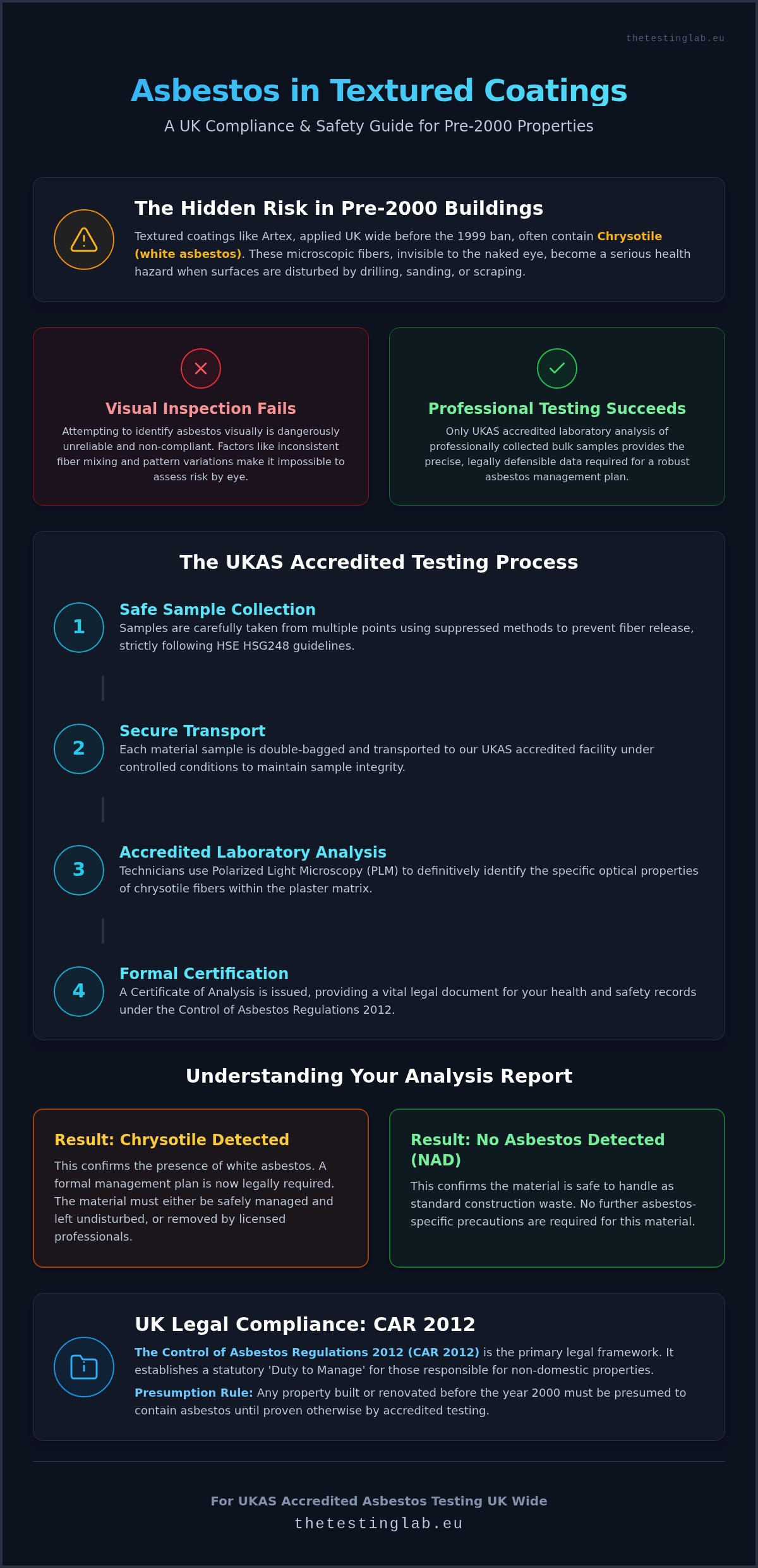
Artex is a brand name that became synonymous with the textured decorative finishes popular throughout the 20th century. While many manufacturers produced similar Artex coating products, they shared a common ingredient until the final UK ban in 1999: chrysotile, or white asbestos. This mineral was added to the plaster matrix to provide strength and durability. Because these fibers are microscopic and thoroughly mixed into the material, they’re invisible to the naked eye. Property owners across the country often don’t realize that this material is only “non-friable” when left undisturbed. It becomes an immediate health hazard if you sand, drill, or scrape the surface, releasing fibers into the air.
Historical Use and UK Legislation
The Control of Asbestos Regulations 2012 (CAR 2012) serves as the primary legal framework for managing these risks. Legally, any property constructed or renovated before the year 2000 should be presumed to contain asbestos until proven otherwise. This precautionary approach is essential because trade formulations often contained higher concentrations of asbestos than standard retail versions. Understanding the specific age of your property is the first step in a professional risk assessment strategy used UK wide to ensure occupant safety.
Why DIY Identification Fails
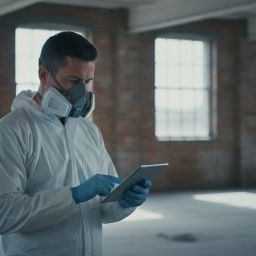
Attempting to identify asbestos through visual inspection alone is a dangerous mistake. Many people believe they can spot the fibers or rely on the specific pattern of the texture to determine risk. However, the distribution of asbestos within a single ceiling can be inconsistent. This “shadow effect” means a single sample might not be representative of the entire surface. Disturbing the material without professional asbestos consultancy risks releasing thousands of fibers into the environment, creating a long-term contamination issue in your living or working space.
The UKAS Accredited Testing Process for Textured Ceilings
Reliability in asbestos identification depends entirely on the technical competence of the laboratory. UKAS (United Kingdom Accreditation Service) accreditation is the definitive standard, ensuring that testing methodologies are both rigorous and reproducible. For property owners investigating textured coatings, this accreditation provides the legal and scientific certainty required for compliance. We deliver these specialized testing services UK wide, ensuring that every sample is handled with engineering precision and methodological consistency.
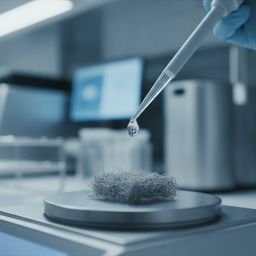
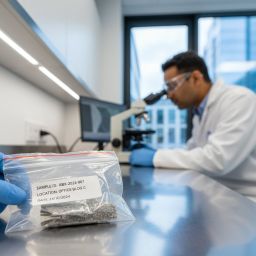
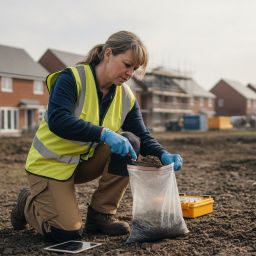
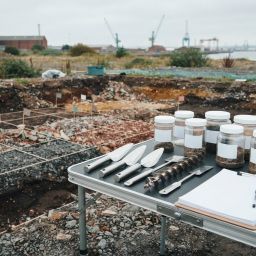
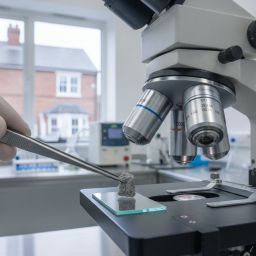
The bulk sampling process for textured coatings is more complex than it appears. Because asbestos fibers were often added manually to the mix, their distribution can be highly localized within the material. A representative sample must include material from several points across the surface to avoid false negatives. In our laboratory, we utilize Polarized Light Microscopy (PLM) to analyze these samples. This technique allows our technicians to identify the specific optical properties of chrysotile fibers, even when they are embedded deep within a dense plaster matrix.
Step-by-Step: From Sample to Certificate
- Safe Collection: Samples are taken using suppressed methods to prevent fiber release, strictly following HSE HSG248 guidelines.
- Secure Transport: Material is double-bagged and transported to our UKAS accredited facility under controlled conditions to maintain sample integrity.
- Formal Certification: We issue a Certificate of Analysis, which serves as a vital document for your health and safety records under the Control of Asbestos Regulations 2012.
Understanding Your Analysis Report
Your report will provide a clear binary result. “No Asbestos Detected” (NAD) means the material is safe to handle as standard waste. Conversely, “Chrysotile Detected” confirms the presence of white asbestos. When addressing the legacy of textured decorative finishes, a positive result necessitates a formal management plan. This strategy ensures the material remains in good condition or is safely removed by licensed professionals. If you require clarity on your findings, you can request a technical consultation to outline your next steps.
Compliance and Risk Management for UK Property Owners
The legal responsibility for managing asbestos depends on the building’s use and the nature of any planned works. Under Regulation 4 of CAR 2012, the “Duty to Manage” falls on those responsible for non-domestic premises. This requires a systematic approach to identifying, assessing, and managing any asbestos-containing materials. While many property owners start their search looking for information on asbestos in artex ceiling Doncaster, the statutory obligations remain consistent UK wide. You must maintain an up-to-date asbestos register and share this data with anyone likely to disturb the fabric of the building.
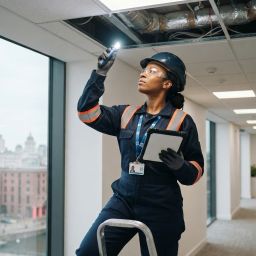
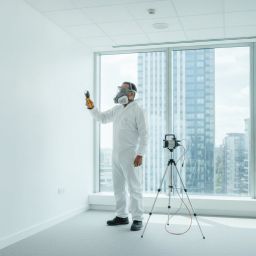
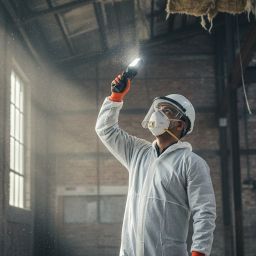
Choosing the correct survey type is a critical strategic decision. A Management Survey is suitable for normal occupancy, but any intrusive work requires a more detailed Refurbishment and Demolition (R&D) Survey. If removal becomes necessary, ensuring air safety before re-entry is paramount. A professional 4-stage clearance procedure provides the analytical proof that an area is safe for re-occupation. The Asbestos Testing and Consultancy Association emphasizes that using an independent laboratory for this clearance avoids the inherent conflicts of interest that arise when removal contractors self-certify their work.
Managing Asbestos in Domestic Properties
Homeowners aren’t bound by the same “Duty to Manage” as commercial landlords, yet the health risks are identical. If your home was built before 2000, don’t sand, scrape, or drill into textured finishes. If you’re planning a renovation, it’s vital to commission a professional asbestos survey to map out potential risks. This proactive step prevents accidental exposure and ensures that any asbestos in artex ceiling Doncaster queries are handled with the same technical rigor applied to industrial projects.
Commercial and Industrial Compliance
For commercial duty holders, compliance is an ongoing process rather than a one-time event. You must review and update your management plan regularly to reflect the current condition of the material. Integrating these protocols with broader occupational hygiene services ensures a holistic approach to site safety. By partnering with a UKAS accredited consultancy, you shift the burden of technical liability to experts who understand the intersection of engineering precision and UK legislation.
Securing Your Property Through Methodical Testing
Managing textured coatings is a matter of technical precision and legal necessity. Identifying the presence of chrysotile requires more than a visual check; it demands the accuracy of a UKAS accredited laboratory and a robust sampling strategy. Whether you’re a homeowner or a commercial duty holder, complying with the Control of Asbestos Regulations 2012 is the only way to ensure long-term safety. While you might be specifically researching asbestos in artex ceiling Doncaster, the methodology for risk reduction remains consistent UK wide. Professional intervention is the only reliable way to move from uncertainty to verified safety.
Since 2002, we’ve operated as an independent professional consultancy and testing laboratory, serving the UK and Ireland with the data-driven insights needed to manage hazardous materials effectively. We take the burden of technical liability off your shoulders by delivering clear, actionable results. Don’t leave your safety to chance or uncertified home kits. You can Request a Quote for UKAS Accredited Asbestos Testing today to begin your journey toward a fully compliant and safe environment. Taking this proactive step today protects your property and the health of everyone within it for years to come.
Frequently Asked Questions
Is Artex with asbestos dangerous if left alone?
Artex containing asbestos is generally not dangerous if it remains in good condition and is left undisturbed. The chrysotile fibers are firmly bound within the plaster matrix, which prevents them from becoming airborne under normal circumstances. Danger only arises when the material is mechanically disturbed through sanding, drilling, or scraping. You should periodically inspect the ceiling for signs of flaking or water damage, as these can compromise the encapsulation of the fibers.
How much does it cost to test a textured ceiling for asbestos UK wide?
Many property owners researching asbestos in artex ceiling Doncaster find that professional testing costs depend on the property scale and the required sample volume. A robust assessment requires material from several points to ensure a representative result. While prices vary UK wide, the value of a UKAS accredited report lies in its legal defensibility and technical accuracy, which generic home testing kits simply cannot provide for your health and safety records.
Can I take my own asbestos sample from a ceiling?
It’s technically possible to take your own sample, but we strongly discourage this practice due to the risk of accidental exposure. Professional surveyors follow strict HSE protocols to suppress dust and prevent fiber release during the sampling process. An expert also understands how to identify the most likely areas of contamination. DIY sampling often results in false negatives, which can lead to dangerous and costly mistakes during future renovation work or property sales.
What should I do if I accidentally disturbed an Artex ceiling?
If you’ve disturbed a textured coating, you should stop work immediately and seal the affected room to prevent dust migration. Don’t attempt to clean the area with a domestic vacuum, as this will spread microscopic fibers into the air. Your next step should be to contact a specialist for professional air monitoring and an asbestos survey. This ensures that any contamination is professionally managed and that the space is safe for re-entry.

Article by
P J F Thomas
CEO and Founder of TTL plc.
Disclaimer
Items declared are AI generated but do reflect our services. Please get in contact if you have any questions.