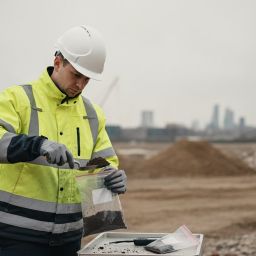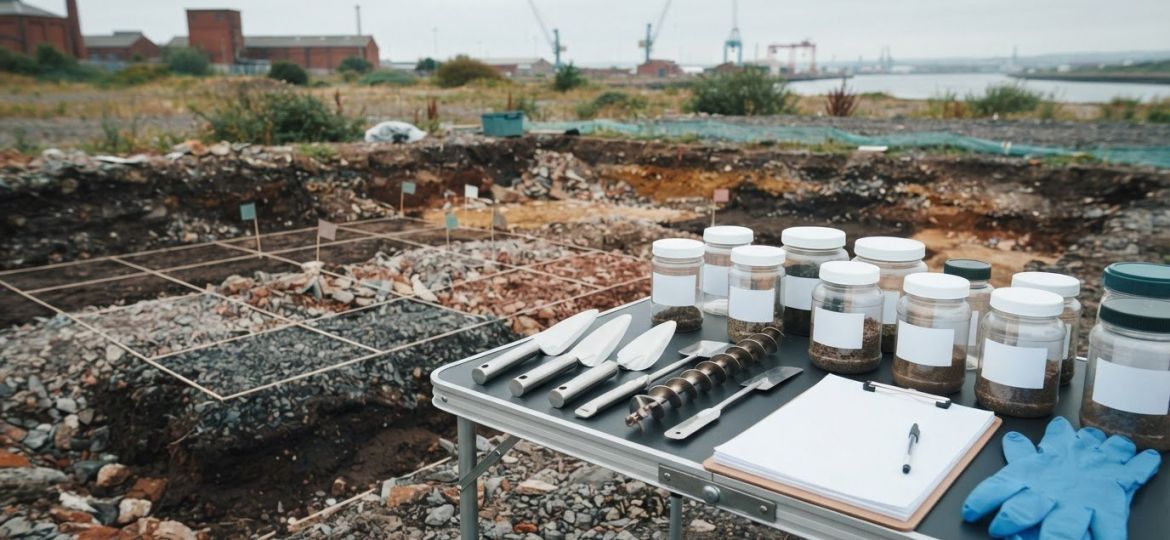
What matters in an asbestos soil screening report is not only whether asbestos was detected, but what the findings mean for your next decision. On a Sunderland brownfield site, uncertainty about asbestos in made ground can affect excavation plans, design choices and waste decisions. A useful asbestos soil screening report Sunderland brownfield redevelopment teams can act on should explain the evidence, what it covers and where its limitations lie.
This article explains what to look for in a report, how screening results can inform proportionate planning and when further project-specific investigation may be needed. Screening provides evidence about the samples tested; it is not automatically a complete site investigation. The Testing Lab PLC is an independent, accredited testing laboratory serving projects UK-wide, with its head office in Doncaster. The sections below also explain how UK asbestos legislation relates to redevelopment decisions.
Key Takeaways
- Understand what an asbestos soil screening report can establish for Sunderland brownfield redevelopment. Findings relate to the samples assessed and do not confirm that every part of a site is clear.
- Review the project context, sample identifiers, methods, findings and stated limitations to judge how the report can inform excavation planning and decisions about further investigation.
- Use the Control of Asbestos Regulations 2012 as a UK legal context, while considering how the requirements apply to the specific site and planned work.
- Prepare useful enquiry details, including site history, redevelopment stage and the decision the testing must support. The Testing Lab PLC serves customers UK-wide, with Doncaster as the national service provider’s head office.
What an asbestos soil screening report can establish for Sunderland redevelopment
Brownfield sites can contain made ground or other materials that warrant investigation, but a site’s past use alone does not establish whether asbestos is present. Brownfield land covers a broad range of previously developed places, so assessment needs to reflect the specific site and the decisions ahead. Soil screening examines submitted or sampled material for suspected asbestos and records the findings within the agreed scope of the work.
An asbestos soil screening report records findings from the soil samples assessed and sets them in context to support proportionate redevelopment decisions. For an asbestos soil screening report Sunderland brownfield redevelopment teams should look for evidence that helps them consider excavation planning, appropriate controls and whether further investigation is needed. A result applies to the material tested. It does not automatically represent every area or depth across the site.
Use the findings to identify where uncertainty remains before work progresses. They do not, by themselves, determine every control or waste decision. Consider next steps against the project scope, relevant guidance and applicable UK legislation, including the Control of Asbestos Regulations 2012 where relevant to the work. How requirements apply depends on the circumstances, the site and the planned activities.
How screening results differ from a complete site investigation
Laboratory findings describe the samples received and the testing completed. Their usefulness depends on the sampling context and coverage: locations, depths and material selection all affect what the evidence can represent. A screening report is not universal site clearance. Before applying results to areas or activities beyond those assessed, check the report’s scope and limitations. Then consider whether the evidence is sufficient for the decision in hand.
The Testing Lab PLC provides asbestos-in-soils testing UK-wide. Doncaster is the head office of this national service provider.
How to assess an asbestos soil screening report before redevelopment proceeds
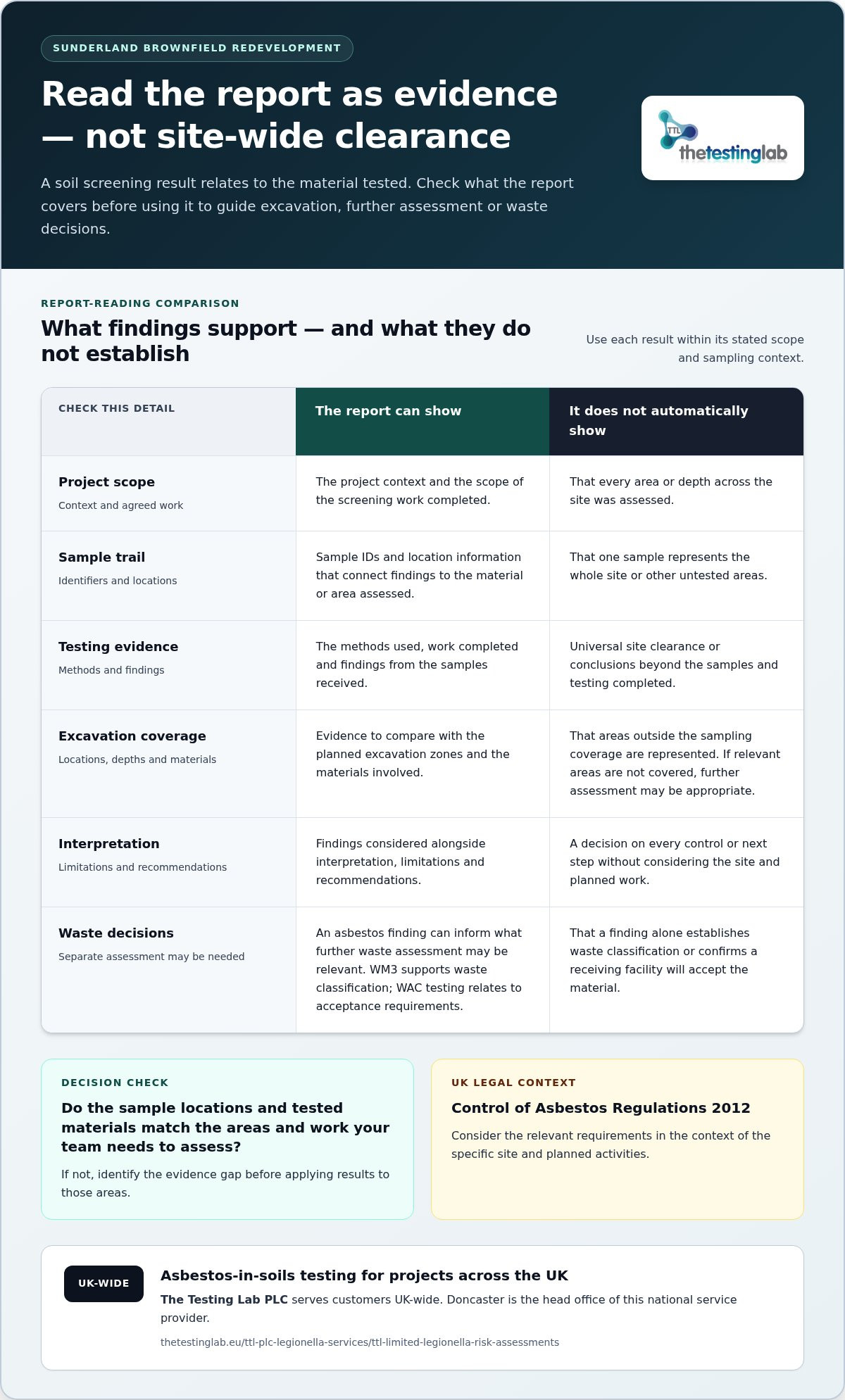
Before using results to shape site decisions, check that the report clearly states its scope. Look for the project context, sample locations or identifiers, methods used and work completed. These details connect each result to the relevant material or area, rather than implying that one sample represents the whole site.
Next, review the findings alongside their interpretation, limitations and recommendations. Ask what the evidence supports, where uncertainty remains and whether the report addresses the decision your team needs to make. For Sunderland projects, an asbestos soil screening report Sunderland brownfield redevelopment teams rely on should be read in light of the site-specific work and applicable requirements under the Control of Asbestos Regulations 2012. The UK guidance on asbestos in soil can also inform interpretation.
Which report details help teams make defensible next-step decisions?
Use clear sample IDs and location information to map findings to the areas under consideration. Compare those locations and the testing scope with planned excavation zones. If they do not cover the areas or materials relevant to the work, further assessment may be appropriate. Review the laboratory evidence alongside asbestos-in-soils testing information so your team understands what was tested and how the findings relate to the project.
An asbestos finding alone does not establish a waste classification or confirm that a receiving facility will accept the material. Those decisions may require separate assessment: WM3 supports waste classification, while Waste Acceptance Criteria (WAC) testing relates to acceptance requirements. Consider the relevant assessment before finalising waste routes. The Testing Lab PLC serves projects UK-wide, with Doncaster as the national service provider’s head office. Request a quote for project-specific testing to define the evidence needed for your next decision.
Plan Sunderland brownfield next steps with a UK-wide asbestos testing partner
Start your testing brief with the decision the evidence needs to support. Share the Sunderland site location, redevelopment stage, available site history and any existing reports or sample information. Explain whether you are planning excavation, refining a design or assessing suspected asbestos in particular soil materials. This context helps shape a relevant scope and keeps the results connected to the project’s practical needs.
The Control of Asbestos Regulations 2012 provide important UK context for managing asbestos risks, but how requirements apply depends on the site and planned work. A screening report can inform decisions; it does not replace project-specific assessment or establish that every area is free of asbestos.
From Sunderland site context to a clear testing brief
Bring together what is already known: site plans, previous investigation findings, areas of concern and the next decision your team faces. Note any gaps in the information. This helps define what the submitted or sampled material should represent and whether the requested evidence aligns with the work. For related project context, explore asbestos consultancy services.
The Testing Lab PLC provides asbestos-in-soils testing for customers UK-wide, with Doncaster as the head office of this national service provider. For an asbestos soil screening report Sunderland brownfield redevelopment project, include the site details and intended use of the findings in your enquiry. A tailored quote can start a focused discussion about the testing requirements and the evidence needed to support your next step.
Move your Sunderland redevelopment forward with clearer evidence
A screening report is most useful when its findings are linked to the samples assessed, the project scope and the decisions your team needs to make. Review the limitations as carefully as the results, and consider whether further assessment is needed before excavation or waste decisions proceed. The Control of Asbestos Regulations 2012 provide relevant UK context, with requirements depending on the site and planned work.
For asbestos soil screening report Sunderland brownfield redevelopment planning, The Testing Lab PLC provides a UK-wide service from its head office in Doncaster. As an independent, accredited laboratory, it provides asbestos-in-soils testing to support evidence-led project planning.
Share your site context and the decision the testing needs to support. Get instant Quote to take a clear, considered next step for your redevelopment.
Frequently Asked Questions
What does an asbestos soil screening report include?
Contents depend on the agreed scope and evidence collected. A report may identify the samples tested, present laboratory findings, interpret results and explain relevant limitations. Check how sample identifiers relate to the site and what work the report covers. Reports can differ, and screening results alone do not prove that every part of a site is free from asbestos.
Is asbestos soil screening enough for a Sunderland brownfield redevelopment?
Not automatically. Screening can inform redevelopment decisions, but it is not necessarily a complete site investigation or proof of site-wide absence. For an asbestos soil screening report, Sunderland project teams should consider the redevelopment question, sampling scope, findings and stated limitations. Use these conclusions to determine whether further project-specific assessment is needed, with the Control of Asbestos Regulations 2012 providing relevant UK context where applicable.
Can an asbestos soil report determine whether excavated soil is waste?
No. Asbestos findings alone do not establish every waste classification or acceptance decision. The appropriate assessment depends on the material, its intended route and applicable requirements. WM3 testing may support waste classification, while WAC testing relates to acceptance criteria. These assessments address different questions and do not automatically replace asbestos assessment, so consider which evidence is relevant to the planned waste route.
Does The Testing Lab PLC provide asbestos soil testing across the UK?
Yes. The Testing Lab PLC serves customers UK-wide, and Doncaster is the head office of this national service provider. Coverage includes Sunderland, Carlisle, Chester, Lancaster, Liverpool, Manchester, Preston, Salford, Berwick-upon-Tweed, Durham, Middlesbrough, Newcastle upon Tyne, Bradford, Doncaster, Huddersfield, Hull, Leeds, Sheffield and Wakefield. Include the site location, project stage and testing objective in your enquiry. Get instant Quote to start a project-specific discussion.

Article by
P J F Thomas
CEO and Founder of TTL plc.
Disclaimer
Items declared are AI generated but do reflect our services. Please get in contact if you have any questions.