The £15 DIY kit on your screen might look like a bargain for peace of mind, but it could actually be the most expensive mistake you make this year. It’s understandable why you’d want a quick answer; the anxiety of discovering potential hazards in a pre-2000 building is significant, and conflicting online reviews only add to the confusion. However, when evaluating asbestos testing kit accuracy, the hardware in the box is only half the story. While the lab analysis might be technically sound, the human element of sampling remains the most critical point of failure for property safety UK wide.
In this guide, we’ll bridge the gap between mail-in convenience and the rigorous standards required by the Control of Asbestos Regulations 2012. You’ll discover the vital difference between laboratory precision and sampling errors, ensuring your property remains compliant and your occupants stay protected. We’ll also provide a clear roadmap for managing risks without the hidden costs of DIY failures. For those managing assets in the capital, our London asbestos surveying services offer the strategic precision needed to navigate these complex health and safety requirements across the country.
Key Takeaways
- Learn why asbestos testing kit accuracy is fundamentally limited by sampling integrity, even when the laboratory analysis itself is technically precise.
- Discover how professional Polarised Light Microscopy (PLM) provides the definitive identification needed to manage hazardous materials safely.
- Understand your legal obligations under the Control of Asbestos Regulations 2012 to ensure your property remains compliant UK wide.
- Evaluate the hidden costs of DIY failures, from potential health exposure to results that are insufficient for insurance or property transactions.
- Establish a clear, professional path for asbestos management that shifts the burden of technical responsibility to accredited experts.
Understanding Asbestos Testing Kit Accuracy vs. Professional Lab Analysis
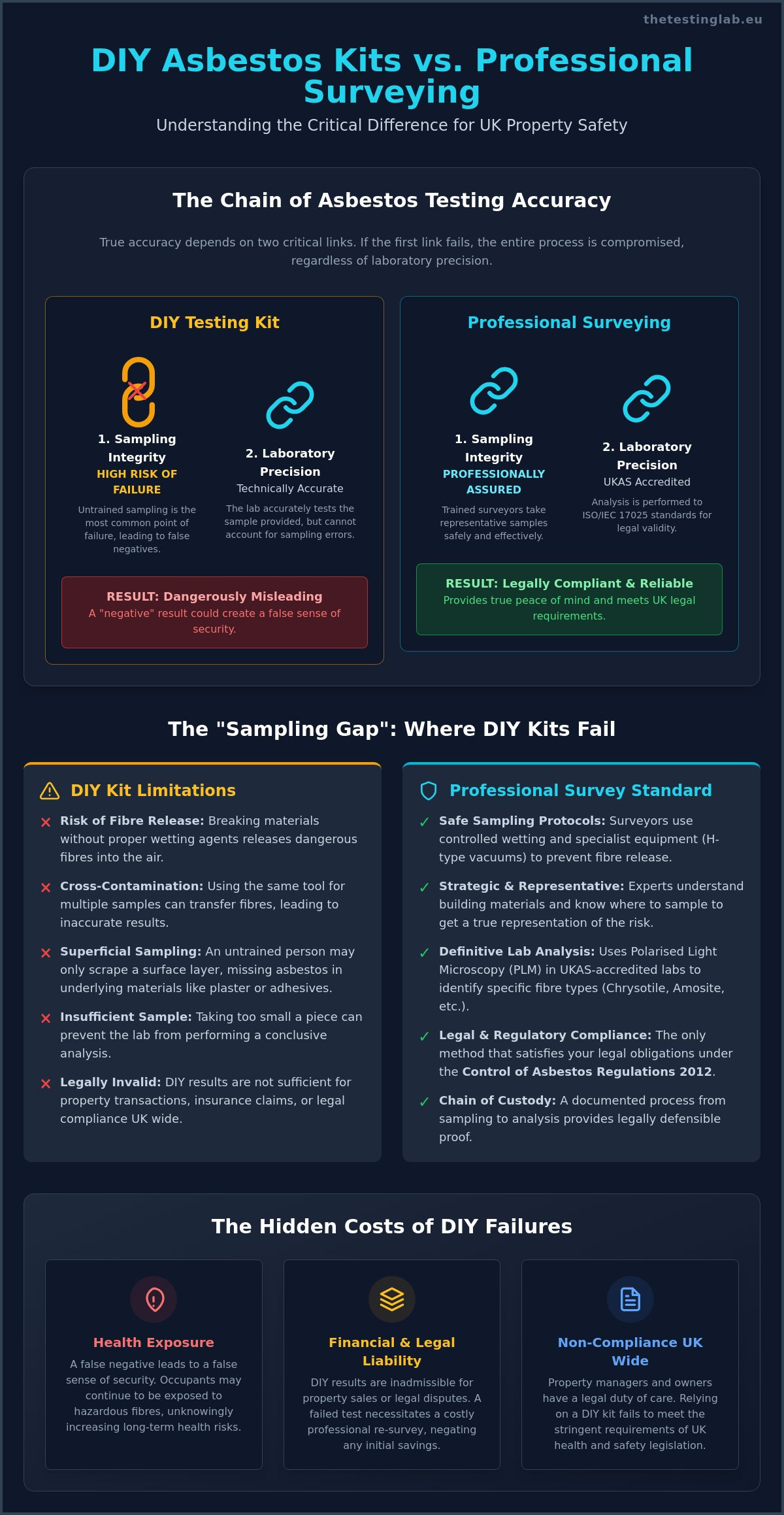
Real asbestos testing kit accuracy isn’t a single metric. It’s a two-link chain consisting of sampling integrity and laboratory precision. If either link breaks, the final result is compromised. Most DIY kit providers claim high accuracy because they use accredited labs, but this is often a half-truth. The lab can only be accurate regarding the specific material inside the bag. If you’ve missed the asbestos-containing layer during your DIY attempt, the “negative” result you receive is technically correct for that scrap, yet dangerously wrong for your property.
False negatives are the primary concern for homeowners and site managers UK wide. An untrained person might scrape the surface of a textured coating but fail to include the underlying plaster, or take a piece of floor tile while leaving behind the hazardous bitumen adhesive. Professional testing remains the gold standard because it ensures the right material reaches the microscope in the first place, providing the legal certainty required for property management.
Lab Accuracy: The Role of UKAS Accreditation
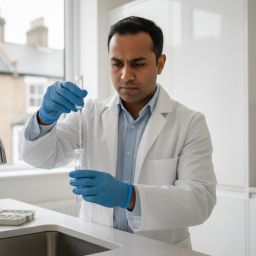
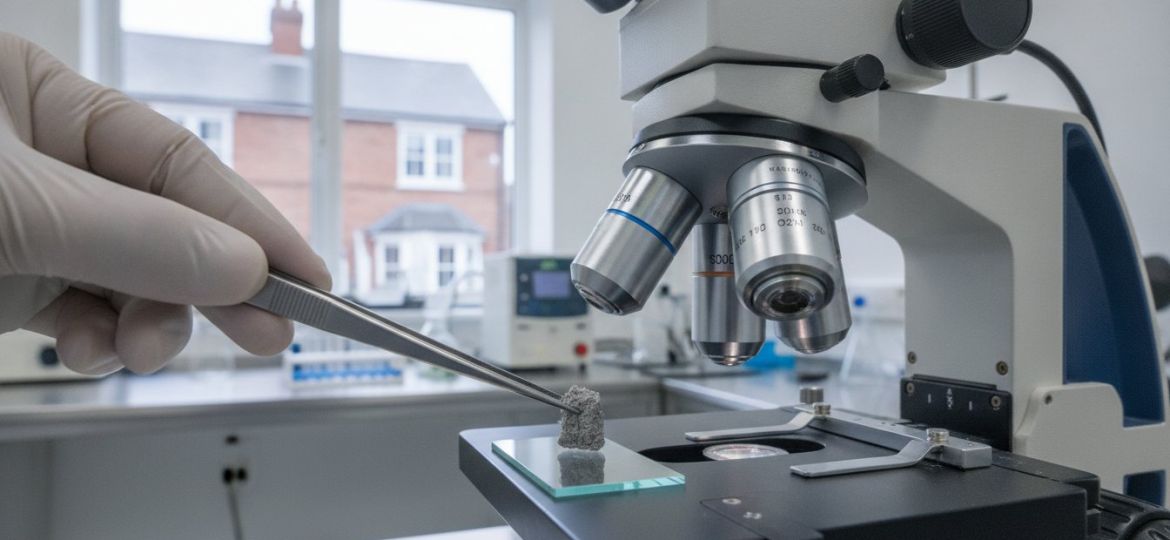
Accreditation by the United Kingdom Accreditation Service (UKAS) isn’t just a badge; it’s a legal necessity for valid results under the Control of Asbestos Regulations 2012. UKAS accredited laboratories must adhere to ISO/IEC 17025 standards, which involve rigorous annual audits and proficiency testing for bulk analysis. These facilities utilize specialized asbestos identification methods like Polarised Light Microscopy (PLM) to detect even trace amounts of fibres that the naked eye cannot see. Without this level of oversight, a test result holds no weight in a legal or safety context.
The “Sampling Gap”: Where DIY Kits Often Fail
The most common failures occur during the physical collection of the sample. Improper depth, insufficient sample volume, or disturbing the material without adequate wetting can all lead to misleading data and unnecessary exposure. Representative sampling is the strategic process of ensuring a collected specimen accurately reflects the chemical and physical composition of the entire material batch. Strategic asbestos consultancy removes this uncertainty by deploying qualified surveyors who understand how various materials were manufactured and installed. This professional oversight ensures that “negative” means safe, not just missed.
The Variables That Impact the Reliability of Your Asbestos Results
Technical reliability isn’t just about the equipment; it’s about the methodology behind the lens. While a DIY kit provides a sample bag and a pair of gloves, it doesn’t provide the controlled environment necessary to prevent cross-contamination. If you take multiple samples without cleaning your tools or changing gloves, you risk a positive result for a safe material. This lack of procedural control directly undermines asbestos testing kit accuracy and creates a chain of unreliable data that can lead to expensive, unnecessary removals or, worse, overlooked hazards.
Investing in professional asbestos consultancy ensures that every sample is taken under strict hygiene protocols. While the initial price of a kit seems low, the hidden costs of a failed sample are high. These include the potential for legal liability, health risks, and the requirement for a re-test when a surveyor eventually discovers the DIY work wasn’t compliant with UK wide safety standards.
Fibre Identification and Scientific Precision
Specialists in accredited labs use Polarised Light Microscopy (PLM) to identify specific fibre types. They look for the unique optical properties of chrysotile, amosite, and crocidolite. This level of professional lab analysis accuracy is achieved through high-magnification equipment and refractive index liquids that DIY users simply don’t have access to. It’s the difference between a guess and a scientific certainty. Labs must distinguish between these fibres because their presence dictates different management strategies under UK law.
The Risk of Asbestos Fibre Release
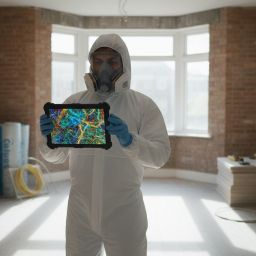
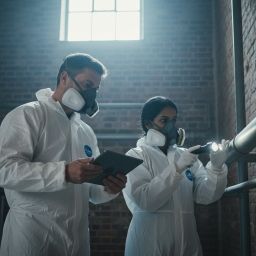
The physical act of breaking a piece of material to fit into a DIY bag can release thousands of microscopic fibres into your breathing zone. Without professional wetting agents or H-type vacuums, these fibres linger in your home or workplace. Professional surveys mitigate this by including fibre suppression techniques and, where necessary, air monitoring to confirm the area remains safe. If you’re unsure about the materials in your property, requesting a professional assessment quote is a safer first step than disturbing the material yourself.
Ensuring UK Compliance: Why Professional Sampling Surpasses DIY Kits
The Control of Asbestos Regulations 2012 (CAR 2012) sets a high bar for safety that retail products simply cannot meet. Compliance isn’t a checkbox; it’s a rigorous framework designed to protect lives. While a homeowner might use a kit for personal curiosity, those results rarely hold weight during property sales or insurance claims. The fundamental issue is that asbestos testing kit accuracy cannot be legally verified without a documented chain of custody. Professional sampling provides this audit trail, ensuring every result is tied to a specific location by a competent person. This creates a legally defensible record for properties UK wide.
For those in the capital, see our asbestos surveying in London for local expertise within a UK-wide framework. Our approach follows a proven 4-step process: comprehensive survey, strategic sampling, UKAS accredited analysis, and detailed management recommendations. This methodology ensures your property isn’t just tested, but managed according to the highest safety standards. It removes the guesswork that often accompanies DIY attempts.
Meeting Legal Standards for Commercial and Residential Assets
The “Duty to Manage” applies to all non-domestic premises UK wide. Under the law, duty holders must identify the location and condition of asbestos. A lab analysis certificate from a UKAS accredited facility is a vital legal document, but it’s only one piece of the puzzle. Without a professional survey report to contextualize the findings, you remain liable for any mismanagement. Adhering to UK compliance for asbestos sampling protects your tenants and your investment from the risks associated with unverified DIY data.
How to Move Forward After a Suspected Asbestos Discovery
If you suspect asbestos, don’t reach for a retail kit. Follow these steps to ensure safety and compliance:
- Isolate the area: Stop all work and prevent access to the suspected material immediately.
- Contact a UKAS accredited lab: Speak with experts who provide technical guidance on the specific risks involved.
- Arrange a professional survey: Ensure a qualified surveyor assesses the entire property to identify all potential hazards, not just the obvious ones.
The Testing Lab PLC serves as your strategic partner for UK-wide testing and consultancy. We take the technical burden off your shoulders, providing the engineering precision and certainty required to manage or remove hazardous materials safely. Trusting a professional ensures that your property remains a safe, compliant environment for years to come.
Securing Your Property with Professional Certainty
Relying on a retail kit for hazardous material identification introduces a margin for error that most property owners can’t afford. True asbestos testing kit accuracy depends on more than just a microscope; it requires a systematic approach to sampling that accounts for material layers and potential cross-contamination. By choosing professional surveying over DIY attempts, you ensure your records meet the stringent requirements of UK legislation and provide a clear, legally defensible path for management or removal UK wide.
The Testing Lab PLC operates as a UKAS Accredited Laboratory, delivering expert bulk asbestos identification and independent consultancy. We remove the professional responsibility from your shoulders by providing data grounded in scientific precision. Don’t leave your health and legal standing to chance with unverified methods. Get a Professional UKAS Accredited Asbestos Quote Today and move forward with the confidence that your property is in expert hands. Taking the right steps now ensures a safe and compliant environment for the future.
Frequently Asked Questions
Are home asbestos testing kits as accurate as professional surveys?
No, they aren’t. While the laboratory analysis of a single sample might be precise, a kit cannot replicate the comprehensive nature of a professional survey. A surveyor identifies every potential asbestos-containing material throughout a property, whereas a kit only provides data on the specific scrap you choose to disturb. This systemic oversight means that asbestos testing kit accuracy is often compromised by the user’s lack of technical training.
Can a DIY asbestos test result be used for a UK property sale?
Usually not. Solicitors, lenders, and surveyors involved in UK property transactions require a formal survey report conducted by a competent person. A DIY result lacks a documented chain of custody and professional liability insurance. For those navigating the legal complexities of a move, Triangle Legal Services Limited provides the expert guidance needed to ensure all due diligence is correctly handled. Without these elements, the result holds no legal weight, meaning you’ll likely need to pay for a professional survey regardless of your DIY findings.
What is the risk of a false negative result with an asbestos testing kit?
The risk is significant and primarily stems from sampling errors. An untrained person might only sample the surface of a material, missing the hazardous layer beneath, such as the adhesive behind a tile or the core of a fire door. In these cases, the lab correctly reports that the specific material they received is safe, while the actual hazard remains undetected in your property.
Is it legal to take my own asbestos samples in the UK?
It isn’t illegal for domestic homeowners to take samples, but it’s highly discouraged by the Health and Safety Executive. For non-domestic premises, the Control of Asbestos Regulations 2012 requires a “Duty to Manage,” which necessitates using competent, trained professionals. Homeowners who attempt DIY sampling assume all health risks and potential legal liability for any fibre release that occurs during the process.
How much does professional asbestos testing cost compared to a kit?
Kits have lower upfront prices but often hide additional laboratory fees and the cost of necessary protective equipment. Professional testing by a UKAS accredited laboratory provides a comprehensive service that includes surveyor expertise, fibre suppression techniques, and a legally valid report. This investment prevents the far higher costs of accidental exposure, decontamination, or failed property sales that often follow inaccurate DIY results. For those looking for resources to manage their broader financial planning or health data, you can visit Calchubtool for access to their suite of free utility tools.

Article by
P J F Thomas
CEO and Founder of TTL plc.
Disclaimer
Items declared are AI generated but do reflect our services. Please get in contact if you have any questions.