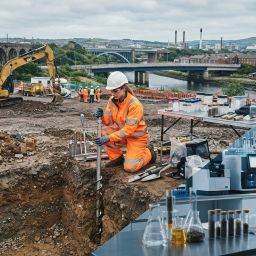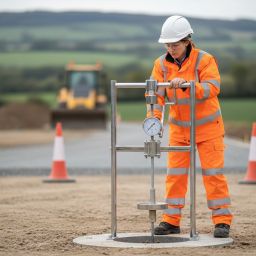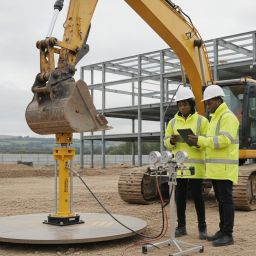
Did you know that the systematic reuse of ground investigation data is estimated to contribute £1.2 billion annually to the UK economy? For developers and site managers, this figure highlights the massive financial stakes involved in site preparation. If your soil suitability for construction report isn’t precise, you aren’t just risking a timeline delay; you’re risking the structural and legal integrity of your entire project. We understand that navigating the shift toward the mandatory NHBC Standards 2026 and the new UK Geotechnical Data Bill can feel like a moving target. It’s frustrating when non-compliant testing leads to unforeseen contamination costs or planning rejections that could have been avoided with better data.
This guide provides a professional framework to help you secure a legally defensible report that meets all UK-wide requirements. We’ll show you how to mitigate environmental risks and ensure your testing aligns with BS 1377-2:2022 and ISO/IEC 17025 standards. By the end of this article, you’ll have a clear path to planning permission through UKAS-accredited soil investigation. For projects requiring integrated site safety, including specialist surveying and testing, establishing a robust technical foundation is the first step toward operational excellence.
Key Takeaways
- Learn how to satisfy Part A and Part C of the UK Building Regulations through comprehensive site assessments.
- Understand the critical geotechnical parameters, such as shear strength and load-bearing capacity, required for structural stability.
- Identify how chemical analysis prevents building material degradation by detecting sulfates and other subsurface contaminants.
- Discover why a UKAS-accredited soil suitability for construction report is the only way to ensure your data is accepted by local authorities and lenders UK wide.
- Master the 2026 legislative landscape and integrate your ground data with specialist surveying and testing to mitigate long-term financial risks.
What is a Soil Suitability for Construction Report and Why is it Mandatory?
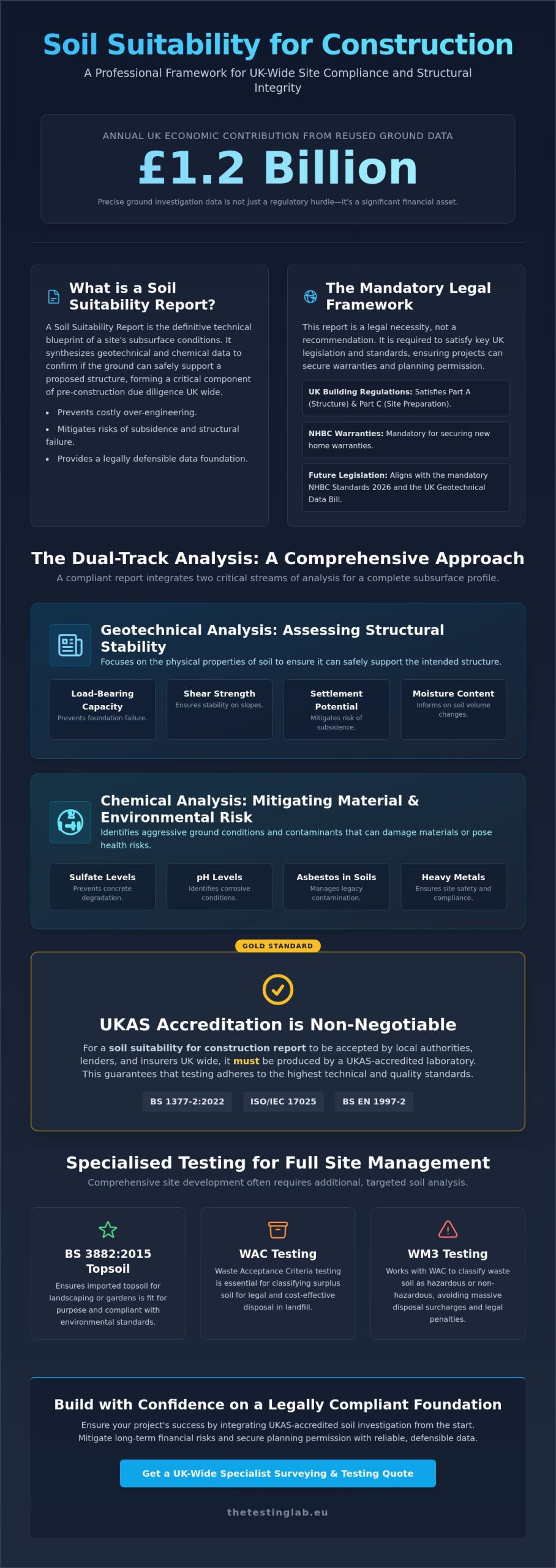
A soil suitability for construction report serves as the definitive technical blueprint for a site’s subsurface conditions. It’s a professional synthesis of geotechnical data and chemical profiling designed to determine if the ground can safely support a new structure. This document isn’t merely a recommendation; it’s a legal necessity required to satisfy Part A (Structure) and Part C (Site preparation) of the UK Building Regulations. Without this data, developers can’t secure NHBC warranties or satisfy the stringent demands of modern insurance providers.
At its core, every report relies on a thorough Geotechnical investigation. This foundational process identifies the physical properties of the soil, such as its bearing capacity and settlement characteristics. For projects UK wide, this data ensures that foundation designs are both safe and cost-effective, preventing the over-engineering of substructures while mitigating the risk of subsidence.
The Legal Framework for Ground Investigations
In 2026, all soil testing must adhere to the British Standards, specifically BS EN 1997-2, which dictates the technical requirements for ground characterization and laboratory testing. A robust suitability report acts as a strategic shield, preventing catastrophic structural failures and protecting developers from long-term environmental litigation. By identifying potential issues like asbestos in soils early, you can manage liabilities before they escalate into project-ending costs.
UK Wide Application: From Greenfields to Brownfields
The scope of a soil suitability for construction report varies depending on the project scale, yet the underlying standards remain consistent. A small residential extension might require focused load-bearing tests, whereas a large-scale commercial development necessitates complex multi-stage analysis. Regardless of site history, local authorities UK wide demand standardized documentation to ensure national safety levels are maintained. This consistency is vital for the specialist surveying and testing landscape, providing a clear path to planning approval for every developer.
Technical Requirements: Chemical and Geotechnical Soil Analysis
A high-quality soil suitability for construction report requires a dual-track approach. It’s not enough to know if the ground can hold weight; you must also understand if the ground will react with your building materials. The UK site investigation process highlights that modern site assessment is an iterative, multi-stage discipline. Geotechnical analysis focuses on physical properties like load-bearing capacity, shear strength, and moisture content to ensure structural stability. Simultaneously, chemical profiling identifies aggressive ground conditions, such as high sulfate levels, which can cause concrete to deteriorate over time.
For brownfield sites UK wide, asbestos in soils testing is a non-negotiable component of the suitability framework. Identifying legacy contaminants early prevents costly remediation delays later in the project lifecycle. If your site plan includes soft landscaping or gardens, integrating BS 3882:2015 topsoil testing ensures that the imported or stockpiled material is fit for purpose and compliant with environmental standards.
WAC and WM3 Testing: Beyond Basic Suitability
Managing surplus soil effectively depends on accurate classification. While suitability reports focus on what stays on-site, WAC testing is essential for any material destined for landfill. This works in tandem with WM3 testing requirements to classify soil as hazardous or non-hazardous. Getting this wrong can lead to massive disposal surcharges and legal complications with the Environment Agency. If you’re managing complex waste streams, you can request a technical quote to streamline your disposal strategy.
Asbestos and Microbiological Risks in Soil
Navigating UK Legislation with UKAS Accredited Laboratory Testing
UKAS accreditation isn’t just a badge; it’s the gold standard for laboratory competence and data reliability across the construction sector. Local authorities and mortgage lenders frequently reject a soil suitability for construction report if the underlying data lacks this rigorous verification. Without accredited testing, you’re essentially presenting unverified claims, which can lead to immediate planning refusals or the withdrawal of project funding. This level of precision is essential for adhering to the UK Government Code of Practice for Soils, ensuring that every scientific conclusion is legally defensible.
Professional asbestos consultancy plays a vital role in validating site suitability, especially when transitioning from investigation to active development. It’s about more than just finding contaminants; it’s about providing a framework for safe site operation. The Testing Lab PLC offers this expert support UK wide, helping developers manage complex structural-risk assessments with technological confidence. We don’t just provide data; we act as a strategic partner to ensure your project remains compliant from the ground up.
Mitigating Risk Through Authoritative Reporting
Precision starts in the field. We utilize a strict ‘Chain of Custody’ process that ensures soil samples remain uncontaminated and fully traceable from the site to the laboratory bench. This meticulous approach prevents data corruption that could otherwise lead to false positives or missed hazards. Utilizing UKAS-accredited data often reduces professional indemnity insurance premiums for developers by providing a verified audit trail of site safety and risk mitigation.
Next Steps: Securing Your Suitability Report
The workflow for a soil suitability for construction report follows a logical path from the initial site survey to the final delivery of an accredited analysis certificate. This systematic process removes the technical burden from your team, allowing you to focus on delivery. For total site compliance, many developers choose to integrate their soil investigations with specialist surveying and testing. Combining your ground data with Legionella risk assessments and fire safety monitoring creates a robust compliance strategy that protects both your investment and your reputation.
Securing Your Project’s Foundation for 2026
Building on a solid foundation requires more than just mechanical stability; it demands a comprehensive understanding of the ground’s chemical and structural profile. By prioritizing a UKAS-accredited soil suitability for construction report, you ensure that your project meets the highest standards of safety and regulatory compliance. We’ve explored how technical precision in geotechnical and chemical analysis protects against structural failure and environmental liabilities. This methodical approach doesn’t just satisfy building regulations; it provides the data-driven confidence needed to navigate the evolving UK legislative landscape.
Managing subsurface risks shouldn’t be a burden on your development timeline. Our team acts as your strategic partner, delivering independent structural risk assessments and expert asbestos in soils testing across all site types. We provide the technical clarity required to move from initial survey to successful planning approval without the friction of non-compliant data. Ensure your site compliance with our UK wide asbestos and soil surveying services and benefit from our UKAS-accredited laboratory analysis. Let’s work together to build a safer, more resilient future for your next construction project.
Frequently Asked Questions
Is a soil suitability for construction report a legal requirement in the UK?
A soil suitability for construction report is a legal requirement across the UK to ensure compliance with Building Regulations Part A (Structure) and Part C (Site preparation). Local authorities and building control bodies mandate these reports to verify that the ground can support the proposed structural loads and that site preparation is environmentally safe. For residential projects started after January 1, 2026, meeting the updated NHBC Standards also requires this formal documentation to secure insurance warranties.
How long does it take to receive a UKAS accredited soil analysis report?
Receiving a UKAS accredited soil analysis report generally takes between 10 and 14 working days from the date samples reach the laboratory. While basic geotechnical results might be available sooner, comprehensive chemical testing for contaminants or sulfates requires precise incubation and analysis periods to ensure data reliability. For projects requiring integrated compliance UK wide, combining this with specialist surveying and testing ensures all environmental risks are managed within your project’s critical path.
What is the difference between a geotechnical survey and a soil suitability report?
A geotechnical survey refers to the physical investigation and data collection process, while a soil suitability report is the final evaluative document required for planning and construction. The survey involves the actual site work, such as boreholes and trial pits. The report then synthesizes that raw data with laboratory analysis to provide a definitive verdict on site safety, structural load-bearing capacity, and chemical compatibility with building materials.
Can I use a soil report from a previous developer for my new project?
Relying on an old report is risky because soil conditions and UK legislation change frequently. A report from a previous developer might not reflect the mandatory BS 1377-2:2022 standards or the specific requirements of the new UK Geotechnical Data Bill. Unless you have a formal letter of reliance from the original consultant and the data is current, most lenders and local authorities UK wide will insist on a fresh, project-specific assessment to mitigate liability.

Article by
P J F Thomas
CEO and Founder of TTL plc.
Disclaimer
Items declared are AI generated but do reflect our services. Please get in contact if you have any questions.