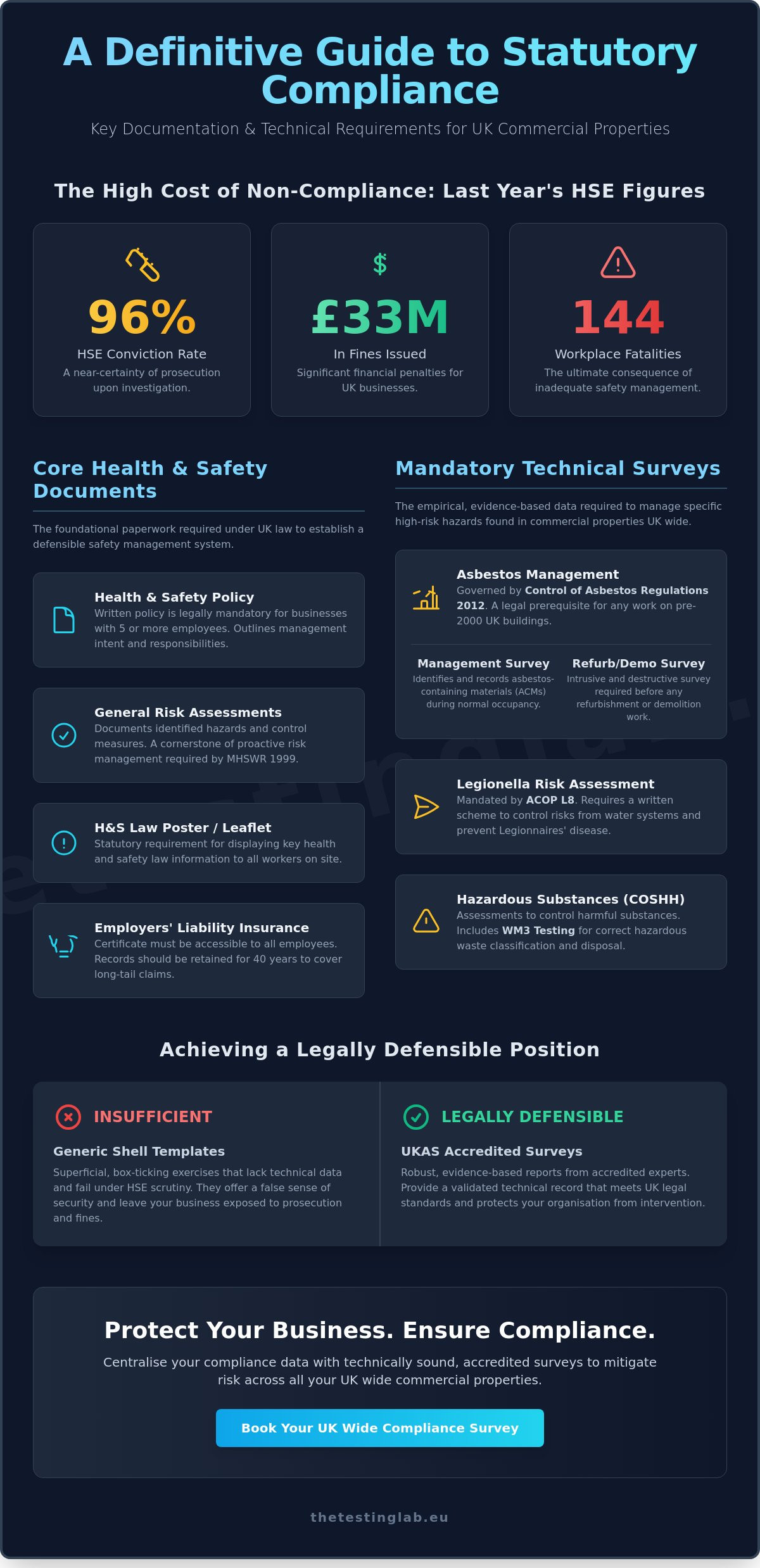
Did you know that the HSE secured a 96% conviction rate last year, resulting in approximately £33 million in fines for UK businesses? It’s a sobering figure that highlights the risk of treating health and safety as a box-ticking exercise rather than a technical necessity. Transitioning away from a ‘check-box’ approach often requires a shift in leadership and communication; experts like Toby and Kate McCartney provide training in NLP to support professional growth and help managers build a more proactive safety culture. We understand that managing statutory compliance for commercial properties UK wide often feels like a battle against fragmented data and complex legislation, particularly with the Building Safety Regulator now operating as an independent entity.
This guide provides a definitive breakdown of the mandatory documentation required to maintain legal compliance and operational safety in 2026. You’ll learn how to distinguish between a superficial shell template and a robust, evidence-based survey that holds up under regulatory scrutiny. We’ll outline the essential requirements for asbestos management, Legionella risk assessments, and soil testing, ensuring your compliance position is technically sound and legally defensible. By the end of this guide, you’ll have a clear methodology for centralising your compliance data and mitigating the risk of workplace fatalities, which reached 144 in the last reporting year.
In the same way that precision in scientific research helps us understand health at a cellular level—you can learn more about the role of specific research compounds in recent studies—precision in property surveys is essential for protecting the people within them.
Key Takeaways
- Identify the core documentation required for statutory compliance for commercial properties UK wide, from safety policies to hazard identification.
- Understand why the Control of Asbestos Regulations 2012 necessitates a living management plan rather than a simple one-off survey.
- Learn how to achieve a legally defensible position by utilizing UKAS accredited surveys instead of generic, non-technical shell templates.
- Discover the precise requirements for Legionella risk assessments and water system documentation to ensure compliance with ACOP L8 standards.
- Explore how centralising technical data across multiple UK sites can protect your business from HSE intervention and significant financial penalties.
Core Health and Safety Compliance Documents for UK Businesses
Maintaining statutory compliance for commercial properties UK wide requires a systematic approach to documentation that goes beyond simple administrative filing. At the heart of this system is the Health and Safety Policy. This document serves as a clear statement of intent, outlining how management accepts and distributes responsibility throughout the organisation. Every business needs a plan, and for those focusing on the physical upkeep of their premises, you can learn more about CPT Services and their professional maintenance standards. While a written policy is only legally mandated for businesses with five or more employees, documenting your approach is a critical component of establishing a defensible position for insurance and liability purposes.
General Risk Assessments form the operational backbone of safety management. These documents must record identified hazards and the specific control measures implemented to mitigate them, such as maintaining high hygiene standards with help from The Rutland Cleaning Company. Beyond internal records, certain documents must be visible to everyone on site. The Health and Safety Law Poster is a statutory requirement for information distribution; alternatively, businesses may provide each worker with the approved leaflet version. Additionally, the Employers’ Liability Insurance Certificate must be accessible to all employees, either in hard copy or via a shared digital folder. Professionals recommend retaining these records for 40 years to cover long-tail industrial disease claims.
The Health and Safety at Work etc. Act 1974 Framework
Under Section 2 of the Act, employers hold primary duties to ensure the health, safety, and welfare of employees and visitors. This high-level framework is given practical structure by the Management of Health and Safety at Work Regulations 1999, which requires a proactive, documented risk management process. To ensure technical accuracy, many organisations refer to the broader UK health and safety regulations to align their internal protocols with national standards. Under current UK law, any business employing five or more people must maintain a written record of their health and safety policy and significant findings from risk assessments.
COSHH Assessments and Hazardous Materials
Control of Substances Hazardous to Health (COSHH) assessments are vital for identifying substances that could harm workers and documenting precise control strategies for occupational hygiene. This process often intersects with waste management protocols. For example, WM3 testing plays a decisive role in accurately classifying hazardous waste within your compliance files. This ensures that materials are handled and disposed of according to strict environmental and safety standards, protecting your statutory compliance for commercial properties UK position.
Technical Compliance: Mandatory Surveys and Management Plans
Policies set the intent, but technical surveys provide the empirical evidence required for statutory compliance for commercial properties UK wide. You can’t manage what you haven’t accurately measured. This stage moves beyond administrative templates into the territory of laboratory-backed data and expert site inspections. For those managing complex sites, a local asbestos and legionella survey provides the baseline data needed for a defensible management plan.
Asbestos Documentation and UKAS Surveys
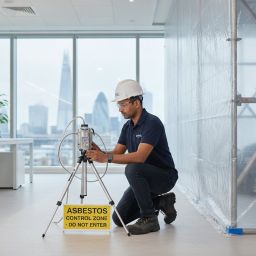
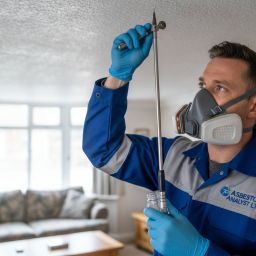
The Control of Asbestos Regulations 2012 demands more than a folder on a shelf. A compliant Management Plan is a living document that tracks the condition of identified materials over time. You must distinguish between a Management Survey, used for day-to-day occupancy, and a Refurbishment or Demolition Survey, which is intrusive. An asbestos survey is a legal prerequisite for any UK building work on pre-2000 structures. Engaging a professional asbestos consultancy ensures your register isn’t just a list, but a validated technical record that withstands HSE scrutiny.
Water Safety and Legionella Management
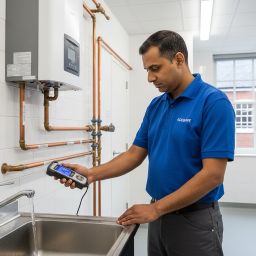
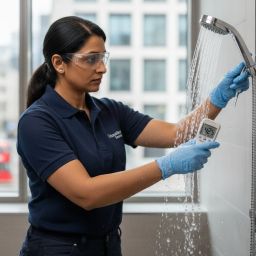
Achieving compliance with ACOP L8 requires a rigorous written scheme of control. This isn’t just about testing temperatures; it’s about documenting the entire lifecycle of your water system to prevent Legionnaires’ disease. Regular legionella risk assessments serve as primary evidence for the HSE that you’re actively managing biological risks. These assessments identify dead legs, stagnant storage, and aerosol risks that generic checklists often miss.
Fire Risk Assessments (FRA) are equally vital, documenting adherence to the Regulatory Reform (Fire Safety) Order 2005. These assessments must be reviewed whenever building use changes or renovations occur. Similarly, Structural Condition Reports provide essential evidence for infrastructure integrity, particularly across large commercial portfolios where age-related degradation poses a silent risk. Understanding tenant health and safety responsibilities is vital here, as the “Responsible Person” must ensure these technical checks are current, actionable, and backed by empirical findings. This technical depth is what transforms a simple document into a shield against litigation.
Achieving Defensible Compliance with Accredited Verification
Defensible compliance represents the highest standard of risk management. It’s the technical difference between merely holding a document and possessing verified, empirical evidence that can withstand legal scrutiny. When you manage statutory compliance for commercial properties UK wide, your safety file must be built on a foundation of accredited data. This protects your organization from litigation and direct intervention from the Health and Safety Executive (HSE). A robust chain of custody ensures that every sample, whether it’s water for Legionella testing or bulk asbestos samples, follows a rigorous, documented process from site collection to the final laboratory report.
The Value of UKAS Accredited Laboratory Reports
UKAS accredited reports aren’t just a preference; they’re the primary documents accepted by regulators during formal investigations. Without this accreditation, your data lacks the independent validation required to prove technical accuracy in a court of law. Utilizing professional UK-wide surveying provides this vital technical foundation. By integrating independent laboratory analysis into your annual health and safety review, you ensure your safety file remains a dynamic, accurate reflection of site conditions rather than a collection of outdated templates.
Maintaining Your Compliance Library
If you’re unsure about the technical validity of your current safety file, requesting a technical compliance quote is an effective way to audit your existing documentation. This proactive step identifies critical gaps in your statutory compliance for commercial properties UK strategy before they result in enforcement action. We view this not as a simple administrative task, but as a precision-led process that secures the future of your infrastructure and the safety of its occupants.
Establishing a Legally Defensible Framework for 2026
Achieving statutory compliance for commercial properties UK wide is a continuous process of verification rather than a static administrative goal. We’ve explored how the transition from generic templates to evidence-based surveys creates a robust shield against regulatory intervention. By prioritizing technical accuracy in asbestos management and Legionella risk assessments, you transform your documentation from a liability into a strategic asset. Each survey and lab report adds a layer of protection that protects your business from the significant financial and legal risks identified by the HSE earlier in this guide; similarly, for those focusing on personal health milestones, Conceive Plus UK offers the technical expertise needed to navigate reproductive wellness.
Maintaining this standard requires a partnership with experts who understand the nuances of the laboratory chain of custody. As an independent and accredited consultancy, we provide the technical depth necessary to validate your safety file. Our UKAS accredited testing laboratory ensures that every finding is backed by empirical data; this provides you with absolute confidence across your entire property portfolio. Our comprehensive UK-wide service coverage ensures that your sites receive consistent, high-quality assessment without geographic gaps. This commitment to quality extends to the physical preservation of your property’s exterior; you can learn more about Surfprep and their specialist masonry cleaning and restoration services to ensure long-term structural safety.
Don’t leave your legal standing to chance. Secure your UK-wide compliance with expert surveying and accredited testing. Taking this proactive step today ensures your operations remain safe, compliant, and ready for future regulatory shifts. We’re here to help you navigate these complexities with precision and professional integrity.
Frequently Asked Questions
What health and safety documents are legally required for a UK business?
Core legal requirements include a health and safety policy, general risk assessments, and a valid employers’ liability insurance certificate. For those maintaining statutory compliance for commercial properties UK wide, this list extends to technical documents like fire risk assessments, asbestos management plans, and Legionella risk assessments. You must also display the Health and Safety Law Poster or provide employees with the equivalent approved leaflet.
How long must a business keep health and safety compliance records in the UK?
Is a written health and safety policy mandatory for businesses with fewer than five employees?
A written policy isn’t a statutory requirement if you employ fewer than five people, but it’s a vital tool for establishing a defensible legal position. Even without the legal mandate for a physical document, you still hold the same duty of care under the Health and Safety at Work etc. Act 1974. Documenting your procedures ensures you can prove your safety protocols to insurers, clients, and regulators if an incident occurs.
What is the difference between a risk assessment and a method statement (RAMS)?
Do I need a professional to conduct my fire risk assessment or can I do it myself?
What happens if a UK business fails to produce compliance documents during an HSE inspection?
Failure to produce mandatory documentation often triggers immediate enforcement action and “Fee for Intervention” (FFI) charges. The HSE can issue improvement notices that mandate changes within a specific timeframe or prohibition notices that stop work entirely if they identify a serious risk. Lack of documented evidence significantly weakens your legal defense, making the business vulnerable to prosecution and the heavy fines discussed earlier in this guide.

Article by
P J F Thomas
CEO and Founder of TTL plc.
Disclaimer
Items declared are AI generated but do reflect our services. Please get in contact if you have any questions.