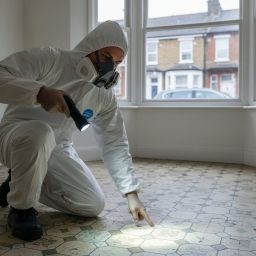
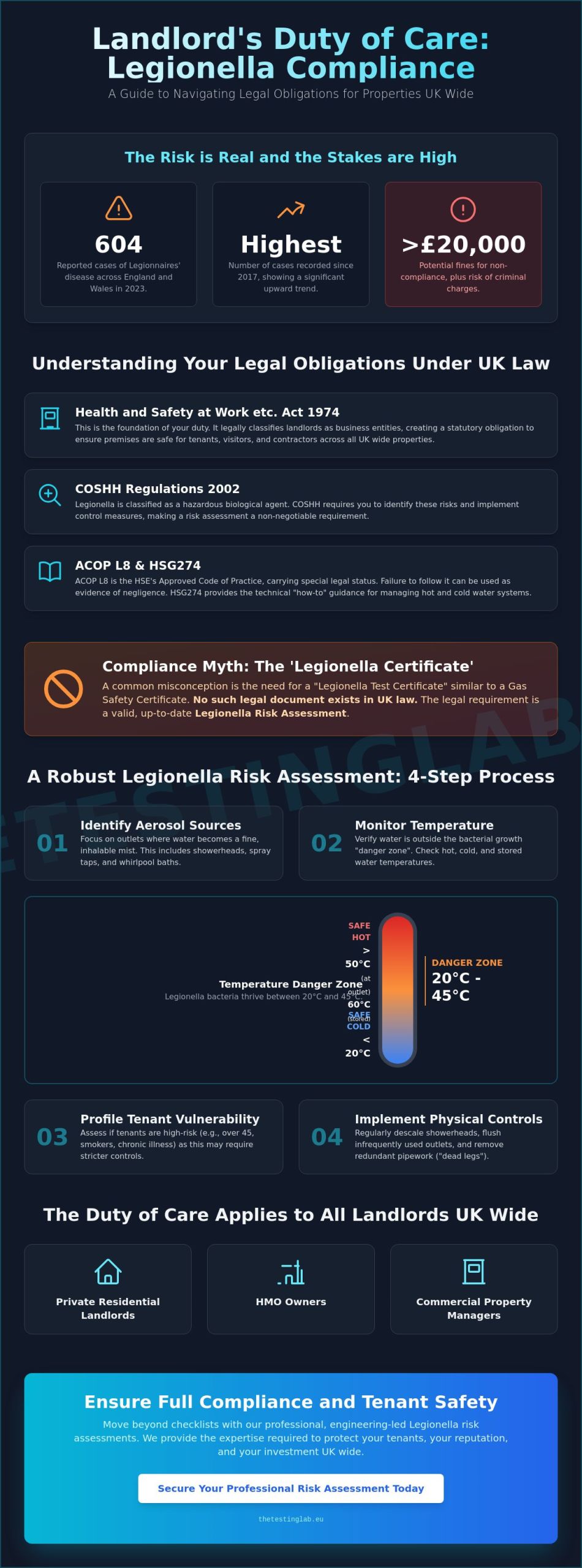
Did you know that 604 cases of Legionnaires’ disease were reported across England and Wales in 2023, the highest number recorded since 2017? For property owners operating UK wide, managing the landlord duty of care legionella responsibilities is a serious matter of public health and legal liability. You might feel uncertain about whether a professional assessment is mandatory or how domestic rules differ from commercial ones. It’s a common concern, especially when the risk of prosecution for non-compliance can lead to fines exceeding £20,000 and even criminal charges.
We understand that you need more than just a certificate; you need a strategic partner to help navigate the complexities of ACOP L8 and the HSG274 guidance. This authoritative guide will help you master your legal obligations and ensure tenant safety through precise, engineering-led risk management. We’ll provide a practical checklist for your water systems and explain how professional Legionella risk assessments can protect your reputation and your tenants. By the end of this article, you’ll have the clear understanding and confidence required to manage your liabilities with total precision.
Key Takeaways
- Ground your compliance strategy in the Health and Safety at Work etc. Act 1974 to clearly define your landlord duty of care legionella responsibilities for properties UK wide.
- Master the technical steps of a robust risk assessment, from identifying aerosol-generating outlets to monitoring temperature “danger zones” between 20°C and 45°C.
- Determine when a standard inspection is insufficient and why UKAS accredited laboratory testing is vital for the safety of complex or high-risk water systems.
- Gain a clear roadmap for implementing ACOP L8 and HSG274 guidance to move from simple checklists to a professional, engineering-led water management framework.
- Access our expert resources to streamline your compliance process and ensure your risk management protocols meet the highest technical standards.
Understanding the Legislative Framework for Landlord Duty of Care
Under the Health and Safety at Work etc. Act 1974, landlords are legally regarded as self-employed business entities. This classification creates a statutory obligation to ensure that their premises are safe for tenants, visitors, and even contractors. Specifically, the landlord duty of care legionella requires a proactive approach to risk management across all UK wide rental properties. It isn’t just a recommendation; it’s a legal mandate to prevent exposure to hazardous substances. If a tenant contracts Legionnaires’ disease due to neglected water systems, the landlord can be held liable for criminal negligence.
The Control of Substances Hazardous to Health (COSHH) Regulations 2002 provide the specific framework for managing biological risks. Because the Legionella bacterium is classified as a biological agent, it falls directly under COSHH. Landlords must identify potential risks and implement measures to prevent or adequately control exposure. This involves a “practical and proportionate” risk assessment rather than an exhaustive, industrial-scale audit for every small domestic flat. The goal is to identify if a risk is present and decide how to manage it effectively.
Many property owners mistakenly search for a “Legionella Test Certificate” similar to a Gas Safety Certificate. It’s vital to clarify that no such legal document exists in UK law. The legislation requires a valid Legionella risk assessment, which serves as a living record of your safety protocols. While microbiological testing isn’t always mandatory for low-risk domestic systems, the assessment itself is a non-negotiable requirement to prove compliance during an inspection or after an incident.
The Role of ACOP L8 and HSG274
The Approved Code of Practice L8 (ACOP L8) is the primary guidance for compliance. It has a special legal status; if you’re prosecuted, failing to follow ACOP L8 can be used as evidence of negligence. While HSG274 Part 2 provides the technical “how-to” for hot and cold water systems, ACOP L8 sets the standard for management. Critically, the HSE states that the person carrying out the assessment must be “competent” to do so. This means having the necessary skills, knowledge, and experience to identify risks accurately. If a landlord lacks this expertise, they must appoint a strategic partner to handle the technical details.
Who is Legally Classified as a Landlord?
The duty of care applies to anyone who provides residential or commercial accommodation. This includes private residential landlords, HMO owners, and commercial property managers. UK legislation, specifically the Landlord and Tenant Act 1985, often applies these duties to leases of less than seven years. For these shorter-term agreements, the responsibility for the structural integrity and safety of water systems remains firmly with the landlord. Whether you manage a single apartment or a large commercial portfolio, the legal expectation of safety remains consistent.
Conducting a Robust Legionella Risk Assessment
Effective risk management begins with a methodical examination of the entire water system. To fulfill the landlord duty of care legionella requirements, you must identify where conditions might allow bacteria to multiply and become airborne. This isn’t a surface-level check; it’s a technical audit of your property’s infrastructure. A robust assessment follows a clear, engineering-led logic to ensure no potential hazard is overlooked.
- Step 1: Identify aerosol sources. Legionella is only dangerous when inhaled as a fine mist. Your assessment must focus on showerheads, spray taps, and any whirlpool baths where aerosols are generated.
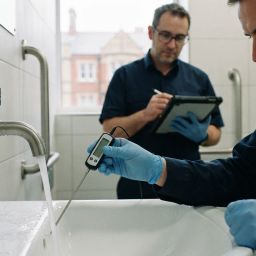
- Step 2: Temperature monitoring. Bacteria thrive in the “danger zone” between 20°C and 45°C. You must verify that cold water remains below 20°C and hot water is stored at 60°C, reaching outlets at a minimum of 50°C.
- Step 3: Tenant profiling. Assess if residents are particularly vulnerable. This includes individuals over 45, smokers, or those with chronic respiratory or kidney disease.
- Step 4: Physical controls. Implement a schedule for descaling showerheads and removing “dead legs” (redundant pipework) where water can sit undisturbed.
Following these steps ensures you meet your legal responsibilities for landlords as defined by the HSE. While the process is logical, the precision of your measurements determines the validity of your liability protection.
Managing Risks During Property Void Periods
Water stagnation is a primary driver of bacterial growth in vacant UK properties. When water sits in pipes for more than a week, biofilms form, providing a protective environment for Legionella. If a property is empty, you should implement a weekly flushing protocol. Run all taps and showers for at least two minutes to move fresh, treated water through the system. For landlords managing portfolios UK wide, securing professional Legionella risk assessment services during void periods is a proactive way to ensure the system is safe before new tenants take occupancy.
Tenant Communication and Education
You can’t monitor a property daily, so tenant cooperation is vital. Part of your duty of care involves educating tenants on simple risk reduction measures. Provide clear instructions on cleaning and descaling showerheads at least once every three months. Tenants should also be encouraged to report issues immediately, such as a failing water heater or reduced flow at a tap. This collaborative approach ensures that the “practical and proportionate” measures you’ve put in place remain effective throughout the tenancy, and for a complete property refresh between occupants, you can discover Dynamic Pro Clean Ltd for professional end-of-tenancy cleaning.
Professional Monitoring and UKAS Accredited Testing
While the risk assessment establishes the strategy, professional monitoring provides the empirical data required to maintain a defensible position during health and safety audits. A visual inspection might identify a dirty tank, but it cannot detect the presence of pathogens. This is where microbiological water testing becomes essential to fulfilling your landlord duty of care legionella responsibilities. By utilizing UKAS accredited laboratory analysis, you ensure that every sample is processed under strict quality controls. This level of precision is vital for legal accuracy. If a sample lacks a documented chain of custody, its validity as evidence in a court of law is significantly diminished. According to UK Health and Safety Executive (HSE) Guidance, landlords must take all reasonable steps to manage risks. Professional testing is often the most reliable way to prove those steps were taken for properties managed UK wide.
When is Professional Testing Mandatory?
Record Keeping and Review Cycles
Legislative requirements dictate that you must keep all Legionella records for at least five years. This includes your initial risk assessment, any monitoring data, and records of remedial work. You shouldn’t treat this as a static document. Review your assessment every two years or immediately if the building’s water system changes significantly. To ensure your portfolio remains compliant, you can request a professional UK-wide Legionella survey to establish a long-term management plan.
Securing Your Property Portfolio with Engineering-Led Compliance
We’ve detailed how the statutory requirements under ACOP L8 and the technical necessity of rigorous temperature monitoring form the backbone of a safe rental property. Transitioning from basic checklists to a comprehensive water management plan is essential for any property owner operating UK wide. By understanding the distinction between a simple visual check and UKAS accredited microbiological analysis, you move from surface-level compliance to true risk mitigation. This methodical approach ensures that your safety protocols are grounded in scientific accuracy rather than guesswork.
Take the next step in professionalizing your water management strategy today to ensure your assets are fully protected. Book your UK-wide Legionella Risk Assessment with The Testing Lab PLC and gain the confidence that your compliance is in expert hands. Proactive management today builds a more resilient and compliant portfolio for tomorrow.
Frequently Asked Questions
Is a Legionella risk assessment a legal requirement for landlords in 2026?
Yes, conducting a risk assessment is a mandatory legal requirement under the Health and Safety at Work etc. Act 1974 and the COSHH Regulations 2002. This obligation applies to all UK wide rental properties regardless of their size or type. You must identify and assess potential sources of risk and implement control measures to protect your tenants from exposure to the bacteria.
Do I need a professional certificate for Legionella compliance?
No, there’s no specific legal requirement for a “Legionella test certificate” in the same way you’d require a Gas Safety Certificate. The law mandates that you have a valid risk assessment and a record of your control measures. While some providers issue certificates, the primary proof of compliance is the depth and technical accuracy of your written risk assessment and monitoring logs.
How often should a landlord carry out a Legionella risk assessment?
Legislation doesn’t set a fixed annual deadline, but a review is typically recommended at least every two years. You must also conduct a new assessment if the water system is altered, the building’s usage changes, or if new health and safety guidance is issued. Maintaining a regular review cycle ensures your landlord duty of care legionella remains fully discharged as property conditions evolve.
Can a landlord do their own Legionella risk assessment?
Yes, you can carry out the assessment yourself if you’re “competent” to identify risks and implement control measures. For simple domestic properties with modern combi-boilers, this is often straightforward. However, for complex HMOs, commercial units, or properties with large water storage tanks, most landlords lack the technical engineering knowledge required and should appoint a strategic partner to ensure total legal accuracy.
What are the penalties for landlords who fail to manage Legionella risks?
Failure to manage these risks can lead to severe legal consequences, including fines that can exceed £20,000. In cases where a tenant becomes ill or dies, landlords may face criminal prosecution for negligence and substantial civil claims. Professional risk management is the most effective way to protect both your tenants’ health and your own financial and legal standing across your property portfolio.

Article by
P J F Thomas
CEO and Founder of TTL plc.
Disclaimer
Items declared are AI generated but do reflect our services. Please get in contact if you have any questions.