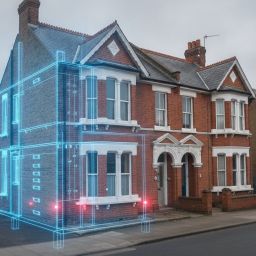
Could the hairline fracture in your masonry be a symptom of a deeper, systemic failure rather than a simple cosmetic issue? For property managers across the UK, building safety uncertainty often creates a heavy burden of legal liability and the fear of escalating repair costs. We recognize that staying ahead of the 2026 compliance landscape requires a precise, engineering-led approach. This article provides a definitive list of structural warning signs and explains why a UKAS-accredited structural integrity assessment is vital for your peace of mind. We’ll explore the critical link between soil stability and structural health, ensuring your assets meet the highest safety standards UK wide. From identifying red flags to navigating UK-wide asbestos and legionella surveying requirements, we’ll guide you through the professional verification process required for modern compliance.
Key Takeaways
- Distinguish between harmless settlement and critical masonry shear cracks that signal active building movement and potential failure.
- Identify how expansive clay soils and poor drainage across UK-wide developments lead to subsidence and structural heave.
- Secure your legal standing by commissioning a UKAS-accredited structural integrity assessment to meet 2026 compliance and insurance standards.
- Integrate environmental safety by managing asbestos and legionella risks during any structural alterations or remedial works to avoid regulatory breaches.
Common Visual Signs of Structural Problems in UK Properties
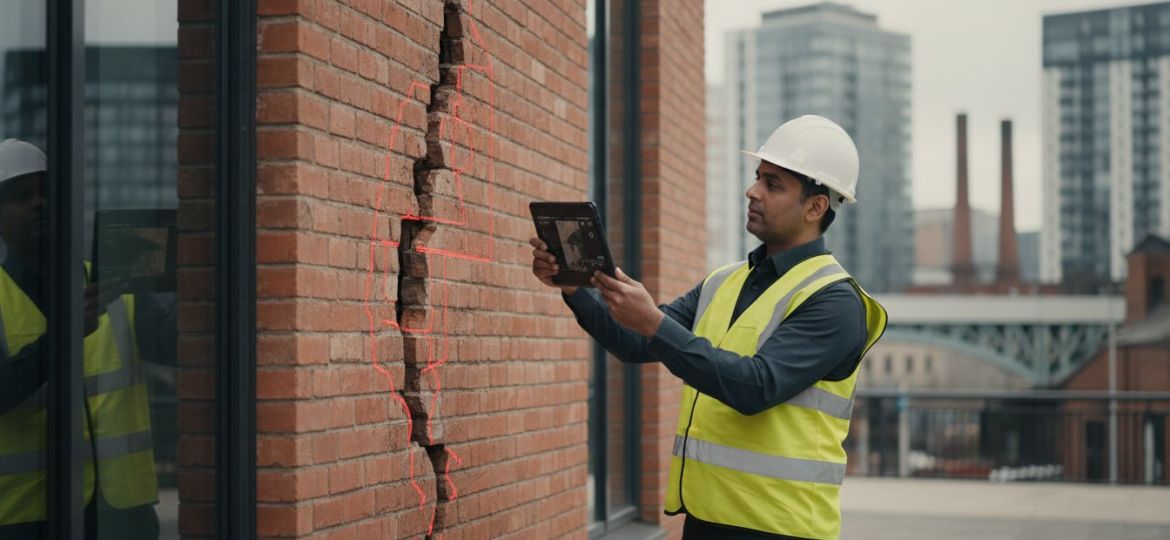
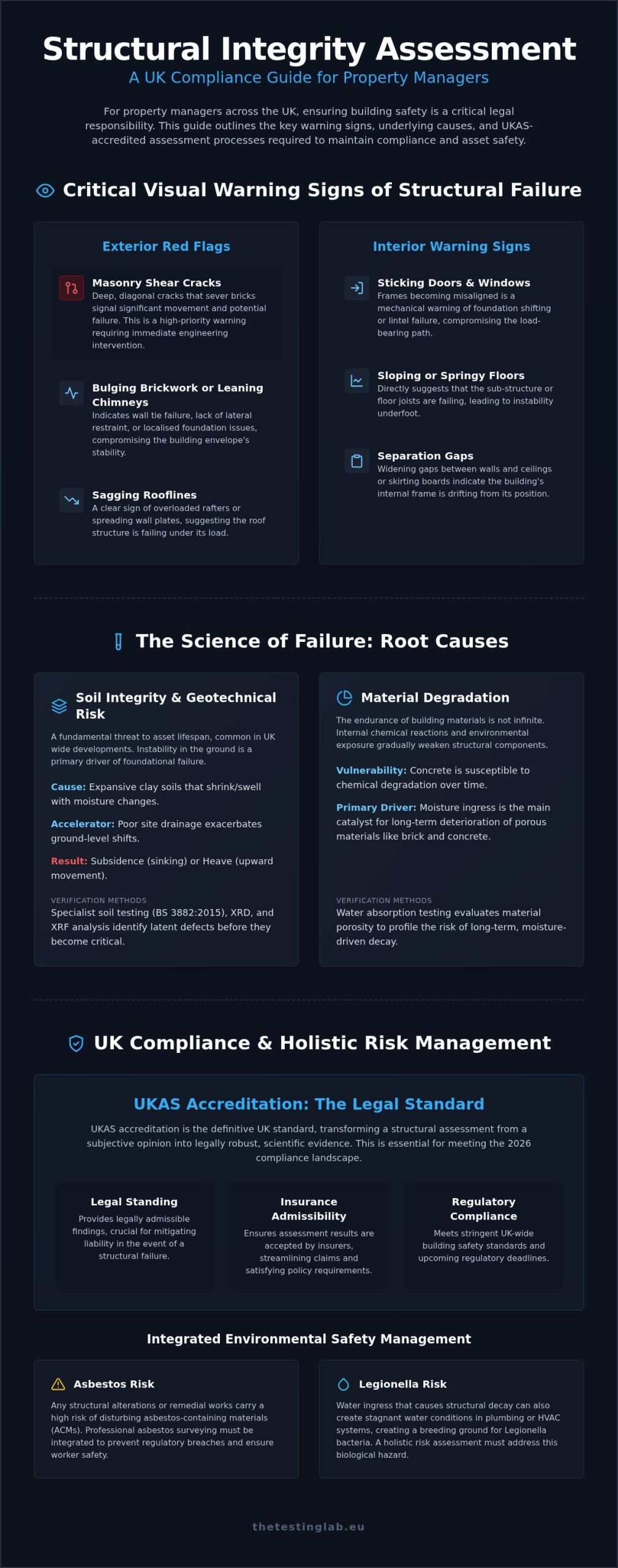
Identifying potential failure starts with a methodical observation of the building envelope. While hairline settlement cracks are common in new builds, progressive masonry cracking demands a professional structural integrity assessment. Deep, diagonal shear cracks that sever brick units rather than following mortar joints suggest significant structural integrity and failure risks that require immediate engineering intervention.
The “sticking door” phenomenon serves as a mechanical warning. When door or window frames become misaligned, it typically indicates foundation shifting or localized lintel failure. This isn’t merely an operational nuisance; it’s a clear sign that the load-bearing path is compromised. We see this UK wide across varied property archetypes, from Victorian terraces to modern steel-framed commercial units.
External red flags often appear as clear deviations from the building’s original geometry. High-priority indicators include:
- Leaning chimneys: Suggesting stack instability or localized masonry failure.
- Bulging brickwork: Indicating a lack of lateral restraint or wall tie failure.
- Sagging rooflines: Signalling overloaded rafters or spreading wall plates.
Inside, sloping floors or springy timbers suggest the sub-structure is failing. Ignoring these signs delays a necessary structural integrity assessment, which can lead to exponentially higher repair costs and safety breaches. To learn more about advanced diagnostics for industrial safety, visit ULTRARENT and explore their NDT solutions.
Interior vs. Exterior Warning Signs: A Comparison
Exterior distress frequently manifests as stair-step cracking in mortar, which often points toward foundation subsidence or heave. In contrast, internal warning signs include widening separation gaps between walls and ceilings or skirting boards. These “separation zones” signal that the building’s internal skeleton is drifting from its original position. Per UK building standards, a structural defect is defined as any compromise of the load-bearing integrity that threatens the safety or stability of the asset. For complex sites, integrating these findings with local asbestos and legionella surveying ensures a holistic approach to building health and compliance.
The Science of Failure: Soil Integrity and Material Degradation
Understanding why a building fails requires looking beneath the surface. UK wide developments often face significant risks from expansive clay soils that shrink or swell in response to moisture changes. Poor drainage typically accelerates these ground-level shifts, leading to subsidence or heave. These aren’t just surface issues; they represent a fundamental threat to the lifespan of the asset. Before any remediation begins, a rigorous structural integrity assessment supported by specialist soil testing is essential to identify latent defects that a visual survey might miss.
Structural health also depends on material endurance. Concrete is susceptible to chemical degradation, where internal reactions weaken the cement matrix over time. We utilize water absorption testing to evaluate the porosity of materials, as moisture is the primary driver of long-term deterioration. A comprehensive structural integrity assessment integrates these material findings with geotechnical data to provide a complete safety profile of the property.
Soil Investigation and Geotechnical Risk
Adhering to BS 3882:2015 topsoil testing ensures ground stability and regulatory compliance during redevelopment. Our laboratory utilizes XRD analysis and XRF analysis to pinpoint mineralogical changes. These precise methods identify chemical markers that weaken building foundations long before visible cracks appear.
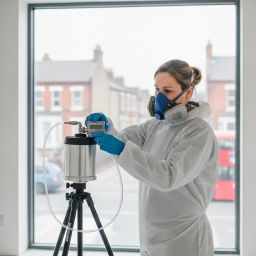
Environmental risks frequently overlap with physical instability. Water ingress doesn’t just erode masonry; it creates environments where legionella can thrive in stagnant plumbing or HVAC systems. A holistic risk assessment must address both the physical stability of the structure and the biological safety of its inhabitants. If you’re managing complex site risks, you can request a specialist consultation to ensure every variable is covered by professional analysis.
UK Compliance: Why UKAS Accredited Testing is Essential
Compliance in the UK construction sector isn’t just about observation; it’s about evidentiary weight. UKAS accreditation ensures that every finding in a structural integrity assessment is legally robust and admissible for insurance claims. Without this independent verification, building owners face significant liability if a failure occurs. It’s the difference between a subjective opinion and a scientifically validated report that stands up to regulatory scrutiny.
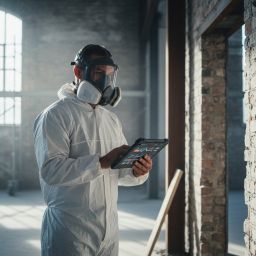
When structural problems require physical intervention, environmental risks often surface. Altering load-bearing walls or foundations can disturb hidden hazardous materials. Engaging an asbestos consultancy early prevents legal breaches under the Control of Asbestos Regulations 2012. Additionally, if remediation involves significant excavation, WAC testing is mandatory to classify soil waste correctly before removal from UK wide sites.
The Value of Independent Structural Risk Assessments
Furthermore, if structural remediation involves work on or near public highways, navigating the Traffic Management Act becomes essential. Specialist consultancy from Corehard Ltd ensures that all such developments remain compliant with the New Roads and Street Works Act (NRSWA).
Independent laboratories provide objective data that contractor-led inspections may lack. A contractor might have a vested interest in the repair scope, whereas an independent lab focuses solely on the empirical health of the building, soil, and materials. This holistic approach future-proofs assets by ensuring all testing meets stringent standards across the country. Our local surveying services provide this technical depth to ensure your project remains compliant from the ground up.
Strategic risk management involves transferring the technical burden to specialists. By commissioning a comprehensive structural integrity assessment, property managers remove the “burden of responsibility” from their own shoulders. This ensures that every decision is backed by UKAS-accredited analysis, providing a clear path to safety and long-term compliance without the guesswork often found in non-accredited surveys.
Securing Your Assets for the 2026 Compliance Landscape
Navigating the complexities of building safety requires moving beyond visual inspections to a methodology rooted in scientific precision. We’ve identified that while masonry cracks and misaligned frames are critical indicators, the true risk often resides in soil instability or material chemical degradation. Proactively commissioning a structural integrity assessment isn’t just a regulatory checkbox; it’s a strategic move to protect your liability and your property’s longevity. As an independent consultancy and UKAS accredited laboratory, we provide the objective data needed to satisfy UK legislation across your entire portfolio. Don’t leave your compliance to chance when professional verification is available UK wide. Secure your building integrity with UKAS accredited structural and environmental testing from The Testing Lab PLC today. Taking these steps now ensures your assets remain safe, compliant, and structurally sound for years to come.
Frequently Asked Questions
What are the most dangerous signs of structural problems in a building?
The most dangerous signs include diagonal shear cracks wider than 5mm, bulging external masonry, and leaning chimney stacks. These symptoms often point to active foundation failure or a loss of lateral restraint. UK wide, these issues pose immediate safety risks and require an urgent structural integrity assessment to determine the extent of the instability before remedial work begins.
Can structural problems be fixed without major excavation?
Stabilisation doesn’t always require deep trenching. Modern methods like resin injection or helical pinning provide non-invasive alternatives for many subsidence cases. Success depends entirely on the underlying ground conditions. We recommend conducting a professional structural integrity assessment first to identify whether the soil integrity supports these targeted, less disruptive engineering solutions without compromising long-term safety.
How much does a professional structural risk assessment cost in the UK?
Fees for professional assessments depend on the building’s scale and the specific lab tests required. While a basic visual survey for a small property might be relatively low, comprehensive industrial reports involving soil and material analysis are quoted on a bespoke basis. It’s best to consult a UKAS accredited laboratory to receive an accurate estimate for your site’s needs.
Does insurance cover structural damage caused by subsidence?
Standard UK policies generally cover subsidence damage, though they often carry a specific excess, typically around £1,000. Coverage usually depends on providing evidence that the movement is active and not a result of historic settlement or neglect. Professional reports from an independent laboratory are vital for substantiating these claims and ensuring the insurer accepts the proposed remediation strategy.
How do I know if a crack in my wall is structural or just cosmetic?
Cosmetic cracks are typically thin hairline fractures caused by minor thermal expansion or plaster drying. Structural cracks are more concerning if they are wider than 3mm, run diagonally, or appear on both internal and external surfaces. If you can see daylight through a crack or if it widens progressively, it’s a priority red flag that suggests foundation movement.
Why is UKAS accreditation important for structural testing?
Accreditation from UKAS is the gold standard for technical competence and impartiality. It ensures that the testing procedures, equipment, and staff meet rigorous national standards. For property managers, this provides a legally robust paper trail. Reports from non-accredited sources may be rejected by insurers or local authorities, leaving the building owner with the full burden of professional liability.

Article by
P J F Thomas
CEO and Founder of TTL plc.
Disclaimer
Items declared are AI generated but do reflect our services. Please get in contact if you have any questions.