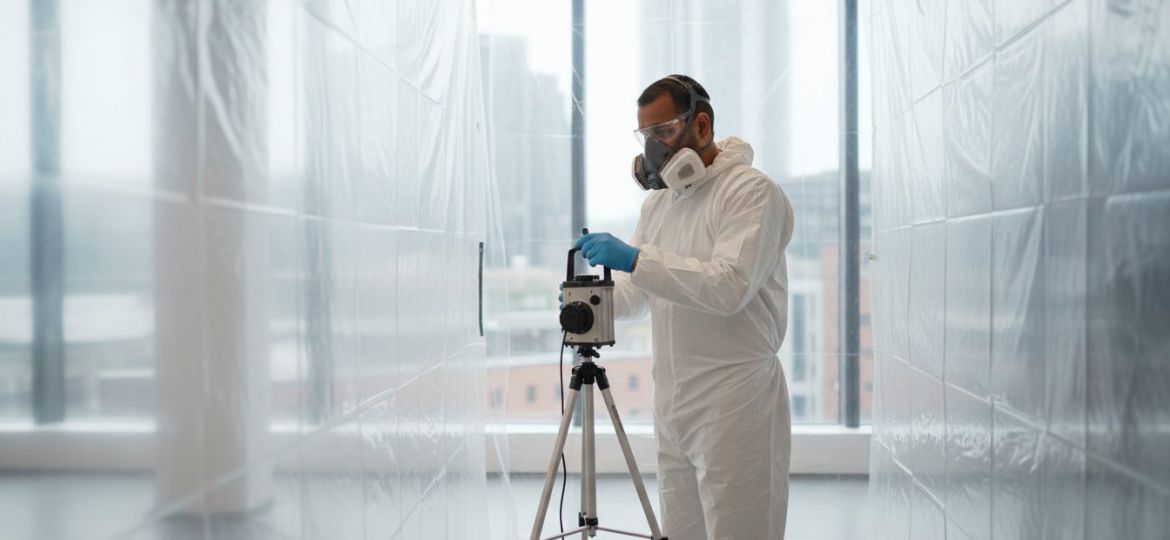
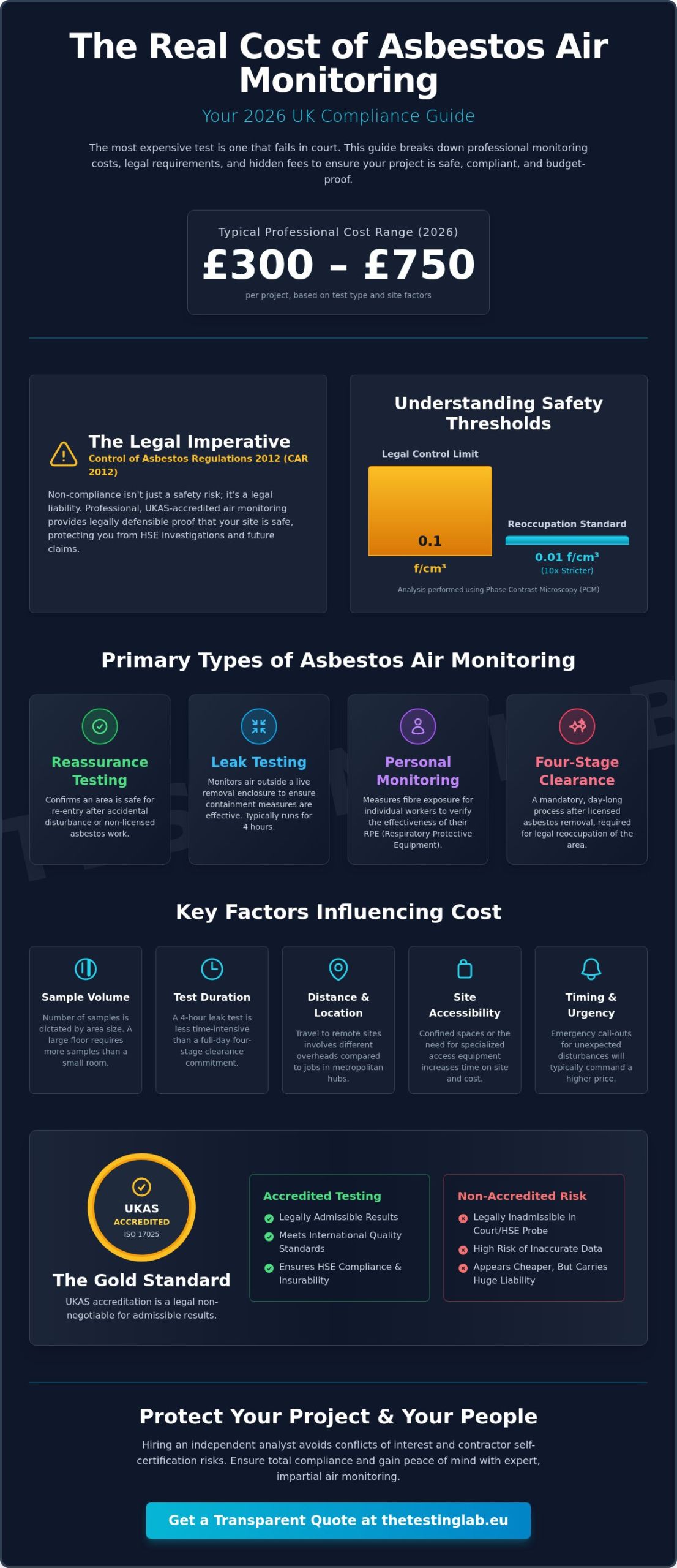
The most expensive asbestos air test isn’t the one with the highest quote; it’s the one that fails to stand up in a court of law under the Control of Asbestos Regulations 2012. While you might see DIY kits online for a few pounds, the professional asbestos air monitoring cost for UK wide projects in 2026 typically ranges from £300 to £750. This price fluctuates based on whether you require background, leak, or reassurance testing, but the investment secures the safety of your occupants and the legal standing of your project.
We understand that opaque pricing from consultants and the fear of hidden fees during asbestos removal can make budgeting feel like guesswork. This guide provides the transparent data you need to plan effectively, ensuring your site meets the 0.01 f/cm³ reoccupation limit required for a successful Stage 3 clearance. You’ll learn the specific breakdown of 2026 pricing for mandatory four-stage clearances, the legal necessity of UKAS accreditation, and why appointing an independent analyst is now the gold standard for avoiding conflicts of interest and ensuring total compliance.
Key Takeaways
- Understand the current 2026 asbestos air monitoring cost structures, typically ranging from £300 to £750, and learn how to identify quotes that include all necessary site consumables.
- Discover why UKAS accreditation is a legal non-negotiable under the Control of Asbestos Regulations 2012 for any air clearance or reassurance testing project.
- Learn the critical technical differences between reassurance testing and the mandatory four-stage clearance process required after licensed asbestos removal.
- Identify potential hidden fees, such as failed stage costs or laboratory courier charges, to ensure your UK wide project stays within its original budget.
- Gain confidence in the 0.01 f/cm³ safety standard and why hiring an independent analyst protects your organization from the liability of contractor self-certification.
What is Asbestos Air Monitoring and Why Does It Have a Cost?
Scientific precision is the foundation of site safety. Asbestos air monitoring is a quantitative process that measures the concentration of airborne fibres within a specific environment. Unlike a standard survey that identifies the presence of material, air monitoring uses Phase Contrast Microscopy (PCM) to count fibres collected on a filter over a set period. This provides a numerical value, typically expressed in fibres per cubic centimetre (f/cm³). Before commissioning a test, it’s necessary to understand What is Asbestos? and why its microscopic nature requires laboratory analysis to detect.
The Control of Asbestos Regulations 2012 (CAR 2012) mandates these tests to ensure that airborne fibre levels remain below the legal control limit of 0.1 f/cm³. For reoccupation after removal work, the standard is even stricter, requiring levels below 0.01 f/cm³. The asbestos air monitoring cost you pay covers specialized equipment, mobile laboratory setup, and the expertise of a qualified analyst who can legally perform a maximum of 12 tests per day under HSG248 guidelines. While bulk sampling tells you if a floor tile contains chrysotile, air monitoring tells you if the air you’re breathing is safe for your team.
The Purpose of Air Monitoring in 2026
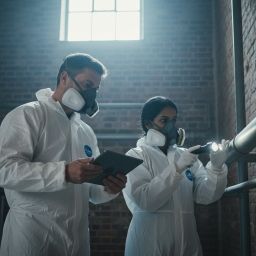
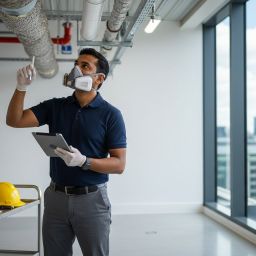
In 2026, air monitoring serves three primary technical functions across UK wide sites. Reassurance testing is deployed after the accidental disturbance of materials or following the removal of non-licensed products to confirm the area is safe for general use. Leak testing occurs outside a live enclosure during active removal projects to verify that containment measures are functioning correctly. Finally, personal monitoring evaluates the effectiveness of respiratory protective equipment (RPE) by measuring the exposure levels of the workers themselves. Each of these tests provides a critical data point in your site’s safety record.
UKAS Accreditation: Why It Affects the Price
The price of professional testing reflects the rigorous auditing required by the United Kingdom Accreditation Service (UKAS). To maintain ISO 17025 accreditation, a laboratory must undergo frequent inspections of its equipment, staff competency, and data integrity. Choosing a non-accredited provider might seem cheaper, but these results are often legally inadmissible in the event of an HSE investigation or insurance claim. UKAS accreditation represents the gold standard for UK wide asbestos compliance, ensuring every sample meets international quality requirements. Understanding the factors behind the asbestos air monitoring cost helps duty holders avoid the pitfalls of high-risk alternatives. For businesses seeking a strategic partner to manage these risks, our asbestos consultancy services provide the engineering-led precision needed to maintain total site safety.
Key Factors Influencing Asbestos Air Testing Prices
Understanding the asbestos air monitoring cost requires a look at the logistical and technical variables involved in a UK wide operation. Distance is the first major factor. While we operate across the country, a project requiring an analyst to travel to a remote industrial site involves different overheads compared to a scheduled visit in a major metropolitan hub. Accessibility also dictates price. If an analyst must navigate confined spaces or use specialized access equipment to position pumps, the time on site increases, which directly impacts the final quote. It isn’t just about the time spent looking through a microscope; it’s about the engineering required to get the equipment where it needs to be.
Sample volume is determined by scientific necessity, not guesswork. Following Professional Asbestos Air Monitoring guidelines, the number of air samples is dictated by the volume of the area being tested. A small residential room might only require two samples, whereas a large commercial floor could require ten or more to ensure a representative data set. The duration of the monitoring also plays a role. A standard leak test typically runs for 4 hours to capture a representative air volume, while a full four-stage clearance is a day-long commitment that can’t be rushed without compromising legal compliance and safety protocols.
Timing is the final piece of the pricing puzzle. Emergency call-outs for accidental disturbances often command a higher rate due to the immediate redeployment of resources. In contrast, scheduled compliance visits allow for more efficient route planning. If you’re planning a large-scale renovation, integrating an asbestos consultancy early in the process helps avoid these reactive costs and ensures a smoother project timeline.
Site Complexity and Volume
Large-scale commercial environments present different challenges than residential settings. Testing a 50,000 sq. ft. warehouse involves complex pump arrays and significant setup time to ensure airflow is correctly monitored across the entire footprint. If your project requires “out-of-hours” or weekend work to minimize business disruption, labor costs will naturally reflect the premium for unsociable hours. High-volume projects often require multiple analysts on site to stay within the HSE’s limit of 12 samples per analyst per day, which ensures the precision of every count.
Analytical Turnaround Times
Data speed is a major cost driver for modern projects. While standard 24-48 hour reporting is sufficient for most routine checks, many high-stakes projects require on-site mobile laboratory analysis. These mobile setups allow for “while-you-wait” results, which is essential for contractors who need to move to the next phase of work immediately. This on-site capability carries a premium because it involves bringing the precision of a UKAS accredited lab directly to your gate. If you need a clear budget for your next project, you can request a tailored quote to see how these factors apply to your specific site.
Average Costs for UK Wide Asbestos Air Monitoring
Budgeting for compliance requires a clear look at specific service tiers. The average asbestos air monitoring cost in 2026 reflects the complexity of the laboratory work involved and the legal weight of the resulting certificate. For most UK wide projects, you’ll encounter four primary categories of testing. Reassurance monitoring is frequently requested by residential clients or landlords following a small disturbance, providing documented proof that airborne fibre levels are below the 0.01 f/cm³ threshold. Background and leak testing are standard requirements for active construction sites, ensuring that containment remains intact and that baseline levels are established before work begins.
The most intensive service is the four-stage clearance. This is a mandatory legal requirement under CAR 2012 following the removal of licensed asbestos-containing materials. It involves a preliminary site check, a thorough visual inspection, air monitoring under “disturbed” conditions, and a final assessment after the enclosure is dismantled. Because this process can take an entire working day, the pricing reflects the analyst’s dedicated time on site. When evaluating the asbestos air monitoring cost, it’s vital to distinguish between a simple site visit and a full-day clearance that carries significant legal liability for the laboratory.
Personal monitoring serves a different purpose, focusing on occupational hygiene. These tests measure the exposure levels of individual operatives to ensure their respiratory protective equipment (RPE) provides an adequate protection factor. This data is essential for your health and safety records and demonstrates a commitment to worker welfare that goes beyond basic site-wide checks.
2026 Price Comparison Table
The following data represents typical price ranges for UK wide services as of May 2026. These figures include the site visit and standard analytical reporting but may vary based on sample volume. For an accurate budget tailored to your project, we recommend requesting a formal quote.
| Service Type | Typical Duration | 2026 Price Range (Est.) |
|---|---|---|
| 4-Stage Clearance | 4 – 8 Hours | £325 – £650 + VAT |
| Reassurance Testing | 1 – 3 Hours | £300 – £750 |
| Leak Testing | 4 Hours | £300 – £750 |
| Background Testing | 1 – 2 Hours | £300 – £500 |
The DIY Kit Trap: Why Low Cost Equals High Risk
Avoiding Hidden Fees in Asbestos Air Clearance
Transparency in pricing is more than just an ethical choice; it’s a financial necessity for project management. When you evaluate the asbestos air monitoring cost, the most significant variable often isn’t the day rate, but the potential for “failed stage” fees. If a site fails a clearance, the analyst must stop the process, the contractor must re-clean, and the entire testing sequence must restart. This doesn’t just double the laboratory time; it can lead to liquidated damages on major UK wide construction projects. A professional quote should clearly outline the costs associated with re-testing to ensure you aren’t hit with unexpected surcharges during the final phase of your project.
Hidden extras like consumables, laboratory courier fees, and “per sample” surcharges can quickly inflate a budget. Some consultants offer a low headline rate but charge extra for the slides, filters, and chemicals used during the PCM analysis. We believe in an engineering-led approach where every cost is accounted for upfront. Ensuring your provider includes the final UKAS certificate of reoccupation within the initial asbestos lab testing quote prevents administrative fees from appearing on the final invoice. Precision in the lab must be matched by precision in the boardroom.
The 4-Stage Clearance Breakdown
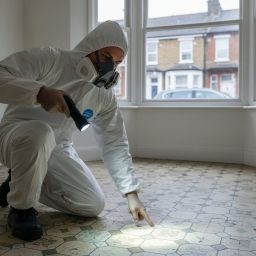
The four-stage process is a rigorous technical audit designed to ensure a building is safe for reoccupation. Stage 1 involves a preliminary check of the site condition and the contractor’s paperwork. Stage 2 is a thorough visual inspection of the entire work area; this is the most common point of failure, often due to microscopic debris left in hard-to-reach areas. Stage 3 is the actual air monitoring and fibre counting, where pumps are used to simulate occupied conditions. Finally, Stage 4 is the post-reoccupation assessment conducted after the enclosure has been removed. Understanding these steps helps you prepare the site correctly, reducing the risk of a failure that would increase your overall asbestos air monitoring cost.
Contractual Clarity
Independence is the most critical factor in a clearance contract. The Health and Safety Executive (HSE) strongly recommends that the analyst is appointed directly by the property owner, not the removal contractor. This ensures an unbiased assessment of the work, protecting you from the legal risks of contractor self-certification. Your contract should explicitly state that the analyst is UKAS accredited and that the final fee includes the digital delivery of all compliance documentation. For a strategic partner who prioritizes this level of detail, you can secure a comprehensive project quote that eliminates the guesswork from your compliance budget.
Professional Asbestos Air Monitoring with The Testing Lab PLC
The Testing Lab PLC approaches site safety through the lens of engineering-led precision. We don’t view testing as a box-ticking exercise; it’s a critical point of quality control in the lifecycle of a building. For our UK Wide clients, this means every asbestos air monitoring cost is backed by the technical magabiztosság of a UKAS accredited laboratory. Our mobile units are equipped to provide on-site analysis, which is essential for maintaining project momentum on tight construction schedules. By integrating our expertise early, you gain a strategic partner who understands the nuances of complex site logistics and the stringent requirements of the Control of Asbestos Regulations 2012.
Our capabilities extend beyond the air we breathe. We provide comprehensive analytical services, including specialized asbestos in soils testing, ensuring that every aspect of your site’s ground and air quality is verified. This holistic approach to testing allows us to take the weight of quality assurance off your team’s shoulders, providing a single point of contact for high-stakes environmental compliance. We don’t just count fibres; we provide the data-driven confidence you need to sign off on safe reoccupation.
Why Independence Matters
Impartiality isn’t just a recommendation; it’s a shield against professional liability. An independent, third-party laboratory provides a transparent audit of the removal contractor’s work, ensuring that no shortcuts are taken during the cleaning or encapsulation phases. Our reports are designed to be legally robust, providing property owners with a clear audit trail that stands up to the most rigorous regulatory scrutiny. We’ve invested heavily in our digital infrastructure to ensure that reporting is as agile as our on-site teams. This allows for the rapid delivery of data across our UK Wide network, ensuring that your project stays on track without sacrificing the scientific integrity of the results.
Get Your UK Wide Quote Today
Securing a reliable budget for your compliance needs shouldn’t be a process of trial and error. We’re committed to transparent, fixed-fee pricing that eliminates the uncertainty often found in consultant quotes. Whether you’re managing a single residential renovation or a multi-site commercial portfolio, we provide tailored site inspections that reflect the actual volume and complexity of your project. Our goal is to ensure that your asbestos air monitoring cost is clearly defined from day one, allowing you to focus on your core business while we handle the precision of the laboratory work. You can Request an Asbestos Air Monitoring Quote today to experience a more professional, partner-centered approach to asbestos management.
Securing Your Site Compliance and Safety
Navigating the complexities of environmental compliance doesn’t have to be a source of project delay or financial uncertainty. By understanding the variables that define the asbestos air monitoring cost, you’ve moved from guesswork to strategic planning. The most successful UK wide projects in 2026 are those that prioritize UKAS accredited precision and absolute analyst independence. This approach ensures that your four-stage clearances and reassurance tests provide a robust legal defense while meeting the 0.01 f/cm³ safety threshold required by the Health and Safety Executive.
As a partner in your quality assurance process, we provide the laboratory expertise needed to de-risk your operations. Our engineering-led methodology means you receive clear, fixed-fee site inspections backed by ISO 17025 standards. Don’t leave your regulatory standing to chance with unaccredited providers or opaque pricing structures. We focus on delivering the technical accuracy your project demands, ensuring every count is precise and every certificate is legally sound.
Get a transparent, UKAS-accredited quote for your asbestos air monitoring today and ensure your project remains compliant, safe, and on schedule. We’re ready to help you maintain the highest standards of site safety with confidence.
Frequently Asked Questions
How much does a standard asbestos air test cost in the UK?
A standard asbestos air test typically costs between £300 and £750 for UK wide projects as of May 2026. This fee includes the site visit, the analyst’s time on site, and the laboratory analysis of the collected samples. The final asbestos air monitoring cost depends on whether you require background, leak, or reassurance testing, with prices fluctuating based on the number of samples required by HSG248 guidelines.
Is a 4-stage clearance mandatory after all asbestos removal?
A four-stage clearance is legally mandatory under the Control of Asbestos Regulations 2012 only after the removal of licensed asbestos-containing materials. While it isn’t a strict legal requirement for non-licensed or notifiable non-licensed work (NNLW), it’s the gold standard for safety. Many property managers choose this comprehensive audit to provide a robust legal defense and ensure the area is safe for reoccupation.
Can I stay in the building while asbestos air monitoring is conducted?
Occupancy depends on the specific type of monitoring being performed. During a four-stage clearance, the work area must remain vacant until the final Stage 4 certificate is issued. However, for leak testing or background monitoring, building occupants can usually continue their normal activities because the analyst works outside the containment area. This allows for continuous safety verification without disrupting your business operations.
How long does it take to get asbestos air monitoring results?
Standard laboratory reporting typically takes 24 to 48 hours from the time of sample collection. For projects requiring immediate data, on-site mobile laboratories can provide “while you wait” results on the same day. This expedited service is essential for construction projects where any delay in the clearance process can lead to significant liquidated damages and project overruns.
What is the difference between a DIY asbestos kit and professional air monitoring?
DIY kits are passive dust collection tools that only identify if fibres have settled on a surface in the past. Professional air monitoring is a quantitative scientific process that uses calibrated pumps to pull a specific volume of air through a filter. This is the only method recognized by the HSE for determining if the air you’re breathing is below the 0.01 f/cm³ safety limit.
Why do prices for asbestos air testing vary so much between providers?
Variations in the asbestos air monitoring cost usually reflect the provider’s technical accreditation and independence. Quotes from non-UKAS accredited firms may be lower, but their results are often legally inadmissible during an HSE investigation. Professional quotes include the rigorous auditing costs required by ISO 17025 standards and ensure that the analyst has no conflict of interest with the removal contractor.
What happens if the air monitoring test fails?
If a test fails during the visual inspection or the air counting stage, the removal contractor is required to re-clean the entire area. The clearance process must then be restarted from the beginning of the failed stage to ensure the environment is safe. It’s vital to check your contract terms to understand how re-testing fees are structured to avoid unexpected budget increases.
Does the air monitoring cost include the certificate of reoccupation?
A professional quote from a UKAS accredited laboratory should always include the final certificate of reoccupation as part of the total fee. This certificate is the primary compliance document required by the Control of Asbestos Regulations 2012 for your health and safety files. You should ensure that your provider doesn’t charge additional administrative fees for the digital delivery or archival of these critical safety records.

Article by
P J F Thomas
CEO and Founder of TTL plc.
Disclaimer
Items declared are AI generated but do reflect our services. Please get in contact if you have any questions.