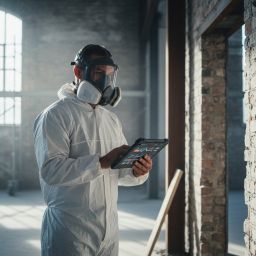
Did you know that asbestos remains the single largest cause of work-related deaths in Great Britain, claiming approximately 5,000 lives every year? Even in 2026, the legacy of this material continues to pose a dual threat: a long-term biological risk to health and an immediate legal liability for property duty holders UK wide. It’s completely natural to feel a sense of anxiety when faced with the potential presence of hazardous materials. You likely worry about the long-term health of occupants or the staggering fines, which can reach £20,000 or more in lower courts, associated with non-compliance under the Control of Asbestos Regulations 2012.
Understanding exactly what to do if you suspect asbestos in your property is the first step toward regaining control and ensuring safety. We agree that the complexity of UK compliance can be overwhelming, but managing these risks doesn’t have to be a burden you carry alone. This guide provides a definitive analysis of the medical, legal, and financial impacts of exposure. We’ll examine the latest HSE enforcement trends, clarify your specific legal duties, and outline a precise, methodical path toward professional risk mitigation and operational excellence.
Key Takeaways
- Understand the precise biological mechanism of asbestos fibres and why the 20 to 60-year latency period makes proactive risk management a critical priority for long-term safety.
- Clarify the legal obligations under the Control of Asbestos Regulations 2012 (CAR 2012) to protect duty holders UK wide from unlimited fines and potential custodial sentences.
- Learn exactly what to do if you suspect asbestos in your property to ensure you follow a compliant, professional protocol that prevents accidental fibre release.
- Identify the necessity of UKAS-accredited surveys and 4-stage clearance procedures in verifying that a building is safe for re-occupation after remedial works.
- Gain a clear, methodical framework for transitioning from regulatory vulnerability to a state of robust, professional compliance and risk mitigation.
The Health Consequences: Long-Term Biological Impacts of Asbestos
Asbestos exposure represents a significant biological risk because the material’s microscopic fibres, once airborne, are easily inhaled. These mineral fibres become permanently lodged in the delicate lung tissue, where the body’s natural defense mechanisms are unable to break them down or expel them. For a comprehensive overview of asbestos and its mineral properties, it’s clear that the durability that made it useful in construction is exactly what makes it lethal to human biology. Because these fibres are invisible to the naked eye, knowing what to do if you suspect asbestos in your property is vital to preventing accidental disturbance and protecting occupants UK wide.
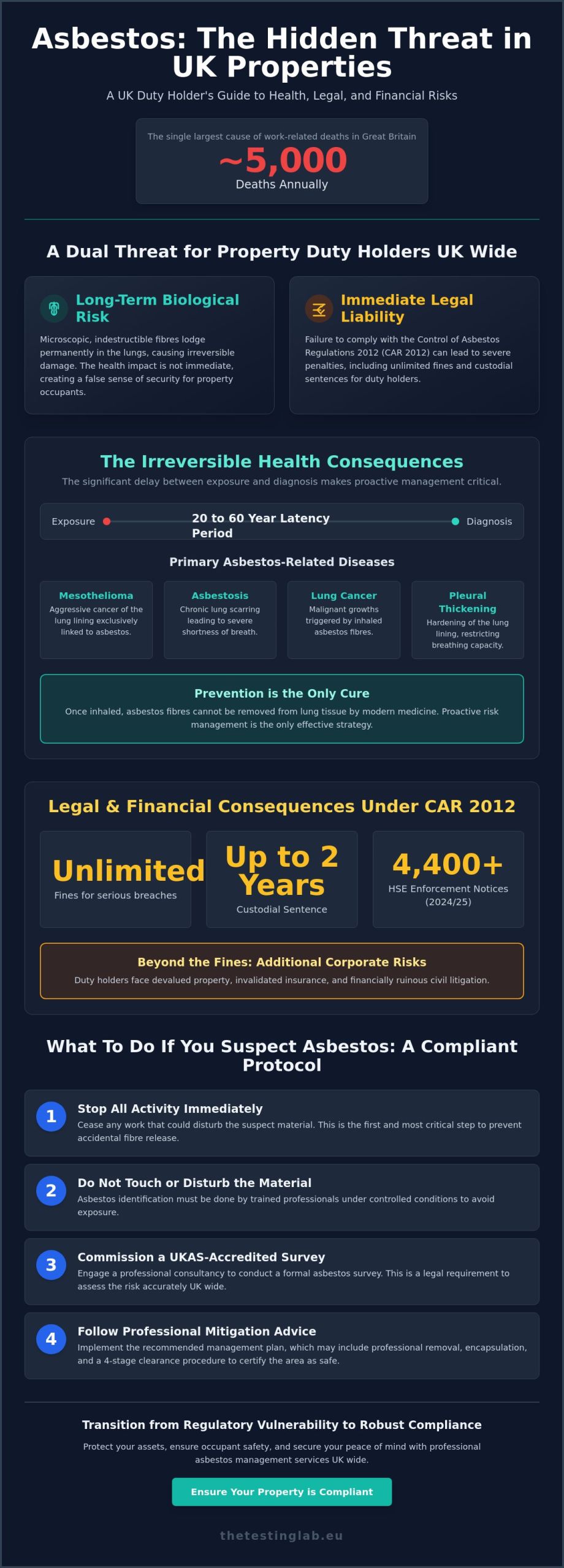
The danger is rarely immediate. Latency period is defined as the interval between initial exposure and clinical diagnosis. In the UK, symptoms typically don’t manifest for 20 to 60 years after the initial contact. This delayed reaction often creates a false sense of security among property owners, yet the cumulative risk remains high. Even low-level, intermittent exposure over several years can trigger severe respiratory conditions as the fibres cause ongoing cellular damage and inflammation within the thoracic cavity.
Primary Asbestos-Related Diseases
The clinical outcomes of exposure are often terminal and life-altering. Mesothelioma is a rare, aggressive cancer of the lung lining exclusively linked to asbestos contact. Asbestosis involves chronic scarring of the lungs, which leads to permanent damage and severe shortness of breath. Additionally, inhaled fibres can trigger malignant growths in the form of lung cancer or cause pleural thickening, where the lung lining hardens and restricts the organ’s ability to expand during normal breathing.
The Hidden Consequence: Why Prevention is the Only Cure
Modern medicine currently lacks the technology to remove asbestos fibres once they’re deeply embedded in the pulmonary system. This reality makes prevention the only effective strategy for duty holders. High-risk materials such as Asbestos Insulating Board (AIB) and sprayed coatings are particularly dangerous because they’re friable, meaning they can easily be crushed into a fine powder. If you’re wondering what to do if you suspect asbestos in your property, the priority is always containment and professional assessment before any physical contact occurs. Managing these risks with precision is the only way to avoid the irreversible biological consequences of fibre inhalation.
While asbestos prevention is a priority for lung health, a comprehensive approach to safety should include regular health screenings for all employees; for those in the South Essex area, you can learn more about Castle Opticians and their commitment to independent eye care.
Legal and Financial Consequences for UK Duty Holders
Compliance with the Control of Asbestos Regulations 2012 (CAR 2012) isn’t optional for property owners and managers UK wide. This legislation mandates a strict “duty to manage” asbestos in all non-domestic premises and common parts of residential buildings. When individuals fail to maintain a robust management plan, the legal repercussions are severe. Courts have the authority to impose unlimited fines for serious breaches. For the most egregious offences, custodial sentences of up to two years can be handed down to directors and duty holders. It’s vital to know what to do if you suspect asbestos in your property before any maintenance or refurbishment begins, as accidental disturbance is often the catalyst for prosecution.
The financial impacts extend beyond legal penalties. Asbestos presence can significantly devalue a commercial asset and complicate insurance renewals. Many providers will invalidate public and employer liability insurance if they discover a known risk has been left unmanaged. This creates a state of professional liability where the duty holder is personally responsible for the safety of all occupants. Exposure can lead to various asbestos-related diseases, and the resulting civil litigation can be financially ruinous for a business.
HSE Enforcement and Prosecution
The Health and Safety Executive (HSE) actively audits asbestos management plans to ensure they meet modern safety standards. In 2024/2025 alone, the HSE issued over 4,400 enforcement notices. Disturbing asbestos-containing materials without a prior survey or adequate professional protection is a high-risk action that almost certainly triggers an investigation. Engaging with asbestos consultancy services early in the process ensures you remain on the right side of the law while protecting your workforce.
Corporate and Insurance Risks
Risk mitigation is particularly complex during brownfield development projects. In these scenarios, asbestos in soils testing becomes an essential component of the site investigation. Failing to identify contaminated ground early can lead to project delays and unexpected remediation costs. If you need clarity on your current compliance status, our surveying and management services can help remove the burden of legal uncertainty from your shoulders.
Mitigating Consequences via Professional Management
Transitioning from a state of regulatory risk to one of robust compliance requires a methodical, engineering-led approach. While the health and legal risks are significant, they are entirely manageable through precise technical intervention. The foundation of any risk mitigation strategy is the commissioning of UKAS-accredited surveys. These surveys provide the empirical data necessary to identify the exact location, type, and condition of asbestos-containing materials (ACMs) UK wide. If you’re uncertain what to do if you suspect asbestos in your property, the first step is to isolate the area and prevent any further disturbance until a professional assessment is conducted.
Once works are underway, maintaining safety through air monitoring and 4-stage clearance is a legal necessity for licensed removals. This process ensures that a building is scientifically verified as safe for re-occupation. Beyond individual projects, duty holders must implement a living Asbestos Management Plan. This document tracks the lifecycle of ACMs, ensuring they are sealed, labelled, and monitored according to the official UK guidance on asbestos. Partnering with a specialist like The Testing Lab PLC allows you to transfer the burden of technical oversight to a strategic partner who understands the complexities of UK legislation.
The Role of Accredited Laboratory Testing
Visual inspection is never sufficient for a definitive diagnosis. Many modern materials look identical to asbestos-free alternatives, making bulk sample analysis in a controlled environment essential. UKAS accreditation is the gold standard here, as it ensures the highest levels of accuracy and provides a legally defensible record of your compliance. This scientific rigor extends to groundworks, where specialist soil and waste testing is required to prevent the illegal disposal of contaminated materials and avoid heavy HMRC landfill tax penalties.
Immediate Steps for Duty Holders
If you need a clear path forward, follow these three operational steps to secure your property:
- Step 1: Commission a Management or Refurbishment/Demolition survey from a UKAS-accredited provider to establish a baseline of risk.
- Step 2: Establish a digital asbestos register that’s easily accessible to all contractors and maintenance staff before they begin work.
- Step 3: Schedule regular air monitoring and visual inspections if you’ve chosen to manage ACMs in situ rather than removing them.
Taking these steps ensures you’re not just reacting to a crisis but proactively managing your professional liabilities. Knowing exactly what to do if you suspect asbestos in your property saves time, protects lives, and preserves the long-term value of your assets. For those planning a roof replacement after their assessment, you can learn more about ALG Roofing Limited and their professional installation services.
Securing Your Property and Limiting Long-Term Liability
Managing the legacy of asbestos requires a shift from reactive fear to proactive, methodical management. We’ve explored the irreversible biological impacts and the stringent legal framework that duty holders UK wide must navigate. By implementing a digital register and adhering to the 4-stage clearance process, you effectively neutralise the risks of accidental exposure and criminal prosecution. Knowing exactly what to do if you suspect asbestos in your property is the catalyst for a safer workplace and a more resilient business model.
As an independent asbestos consultancy with a UKAS accredited laboratory, we provide the technical magistery needed to handle these complexities. Our national UK wide coverage ensures that expert help is always accessible when you need it most. Ensure your building is compliant and safe with our UK wide asbestos surveying services. Our team is ready to act as your strategic partner, taking the weight of professional responsibility off your shoulders. You can move forward with confidence, knowing your compliance is in the best hands.
Frequently Asked Questions
Is a single exposure to asbestos enough to cause health consequences?
Medical consensus confirms there’s no established safe threshold for asbestos exposure. While the risk of developing a disease increases with the frequency and duration of contact, a single high-intensity event where fibres are inhaled can be sufficient to trigger cellular changes. This is why understanding what to do if you suspect asbestos in your property is critical before starting any maintenance work that might disturb the material.
What should I do if I think I have been exposed to asbestos fibres?
You should stop work immediately, wash your skin and hair, and dispose of contaminated clothing as hazardous waste if you suspect exposure. It’s essential to consult your GP and ensure the incident is recorded on your medical file for future reference. Because diseases take decades to manifest, having a documented history of the event is vital for any future health monitoring or legal requirements UK wide.
Who is legally responsible for asbestos management in a UK commercial building?
The legal responsibility falls on the “duty holder” as defined by the Control of Asbestos Regulations 2012. This is typically the person or organisation that has clear responsibility for the maintenance or repair of non-domestic premises. They’re mandated to identify the presence of asbestos and manage the risk to anyone using or working in the building, ensuring a management plan is active and accessible.
Can asbestos consequences be reversed with medical treatment?
No, medical science cannot currently reverse the damage caused by inhaled asbestos fibres or remove them from lung tissue. Treatment focus remains on managing symptoms and slowing the progression of related conditions through palliative care or surgical intervention in cancer cases. This permanent nature of the damage reinforces why professional surveying and laboratory testing are the only reliable methods for maintaining a safe environment.

Article by
P J F Thomas
CEO and Founder of TTL plc.
Disclaimer
Items declared are AI generated but do reflect our services. Please get in contact if you have any questions.