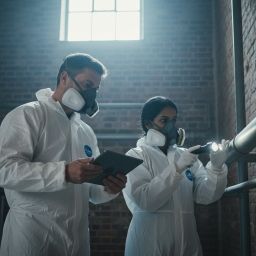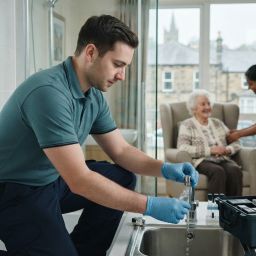
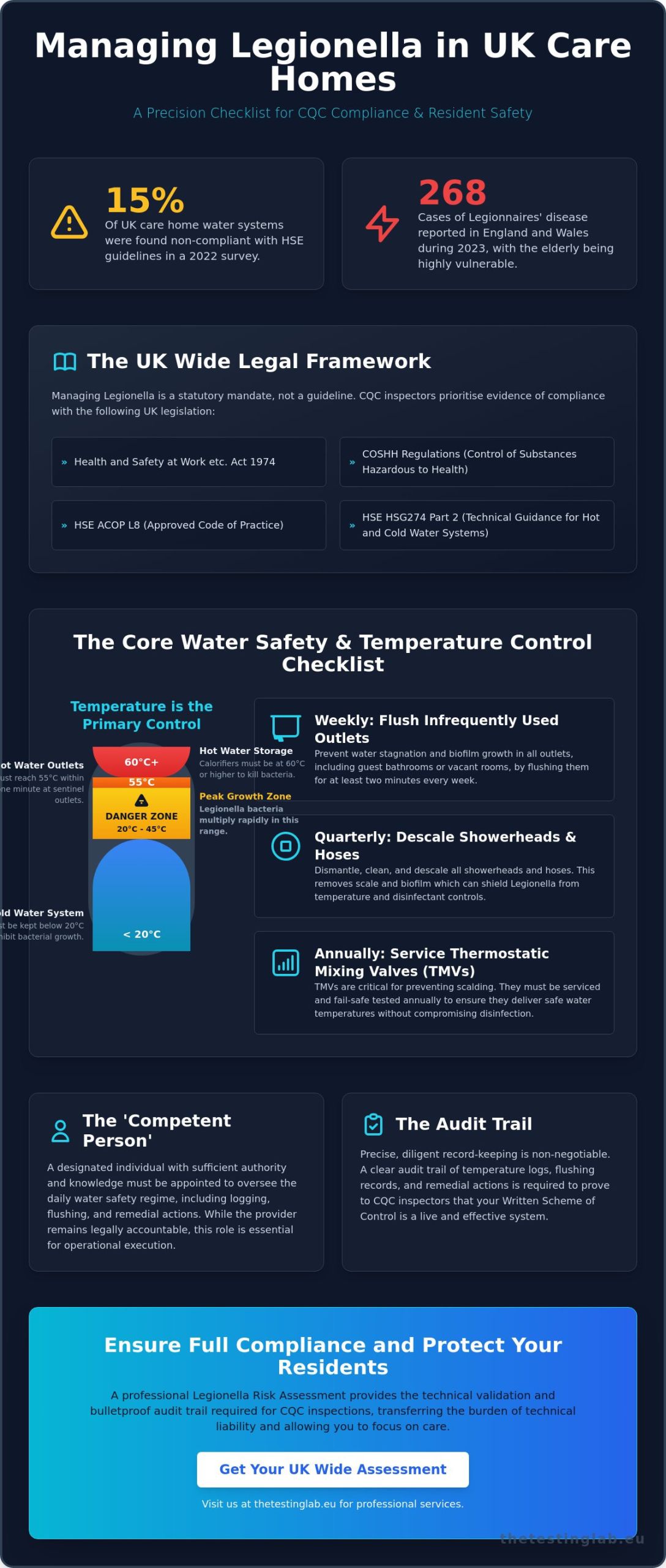
Did you know that a 2022 survey by the Water Management Society revealed 15% of care home water systems in the UK were non-compliant with HSE guidelines? For providers UK wide, managing legionella in care homes is a precision task that requires balancing the need for 60°C storage temperatures with the critical risk of scalding vulnerable residents. It’s understandable if the technicalities of ACOP L8 and the pressure of CQC Regulation 12 feel like a heavy responsibility on your shoulders.
Our goal is to act as your strategic partner, removing that weight by providing a methodical approach to water safety. This comprehensive checklist ensures you achieve full compliance with HSG274 while protecting your residents from the 268 cases of Legionnaires’ disease reported in England and Wales in 2023. You’ll learn how to implement a rigorous monitoring regime, from monthly sentinel testing to quarterly showerhead descaling. We also explore how professional Legionella risk assessments and water management services create the bulletproof audit trail required for a successful CQC inspection.
Key Takeaways
- Identify the core UK wide legislation, including COSHH and ACOP L8, that dictates your legal responsibilities for water safety.
- Master the precision of thermal control by maintaining hot water storage at 60°C and ensuring cold water remains below the 20°C danger zone.
- Implement a robust Written Scheme of Control that uses schematic diagrams and rigorous testing schedules to satisfy CQC inspectors.
- Streamline the process of managing legionella in care homes by following a systematic checklist designed for aging plumbing systems.
- Establish a professional audit trail through Legionella risk assessments and water management to transfer the burden of technical liability.
The Legal Framework for Managing Legionella in Care Homes
Managing legionella in care homes isn’t just a matter of best practice; it’s a statutory mandate UK wide under the Health and Safety at Work etc. Act 1974. The Control of Substances Hazardous to Health (COSHH) Regulations classify Legionella as a biological hazard, requiring providers to implement a systematic approach to risk prevention. To achieve technical compliance, dutyholders must follow the HSE’s Approved Code of Practice (ACOP) L8 and the specific technical guidance found in HSG274 Part 2. CQC inspectors prioritize these standards during audits, specifically looking for evidence of a live Written Scheme of Control and a risk assessment that reflects the current state of the facility’s water system.
The Role of the Legionella Risk Assessment
Residents in care settings are at a significantly higher risk of contracting Legionnaires’ disease due to age related vulnerability and underlying health conditions. A compliant risk assessment must involve a physical survey of the entire plumbing infrastructure. It’s not enough to check a few taps; the survey must identify “dead legs”—sections of pipework where water stagnates—and inspect cold water storage tanks for signs of contamination or temperature gains. This methodical survey establishes the “sentinel points,” which are the outlets closest and furthest from the heat source, used for monthly temperature monitoring to ensure the entire system remains within safe parameters.
Defining the Competent Person
The law requires the appointment of a “Competent Person” to manage daily water safety operations. This individual must have sufficient authority and specialized knowledge to oversee the Written Scheme of Control. While the care home provider remains the ultimate dutyholder with legal accountability, the competent person ensures that temperature logs, flushing regimes, and remedial works are executed with precision. Many providers find that partnering with professional Legionella risk assessment services provides the necessary technical validation to ensure their internal “Competent Person” is operating based on accurate, expert data. This collaborative approach transfers the burden of technical complexity away from the care staff, allowing them to focus on resident care while maintaining a robust audit trail for CQC inspections.
The Care Home Water Safety Checklist
Operational excellence in water safety requires more than just compliance; it demands a systematic maintenance regime. Care home providers UK wide have a legal duty to assess the risk and implement technical controls that prevent bacterial proliferation. Managing legionella in care homes is a technical balancing act where thermal disinfection must be achieved without compromising the safety of residents. To maintain a sterile environment, your facility should adhere to these precision benchmarks:
- Hot Water Storage: Maintain calorifiers at 60°C or higher to kill bacteria at the source.
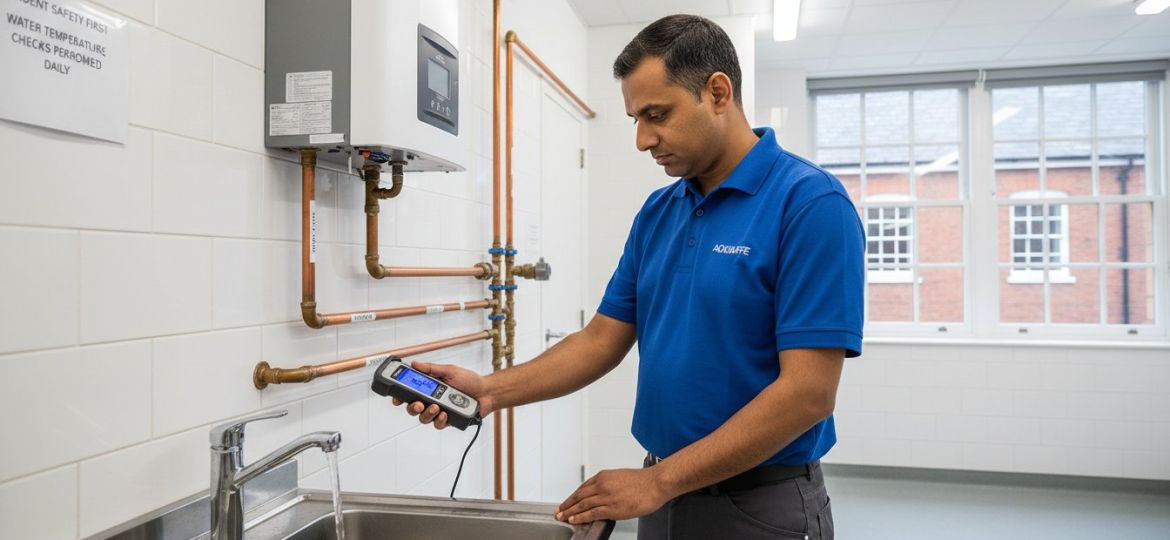
- Distribution Temperatures: Hot water must reach 55°C (the healthcare standard) within one minute at sentinel outlets.
- Cold Water Integrity: Ensure cold water remains below 20°C. Temperatures between 20°C and 45°C represent the peak growth zone for Legionella.
- Flushing Protocols: Execute weekly flushing of all infrequently used outlets, such as guest bathrooms or vacant wings, to prevent stagnation.
- Descaling Schedule: Perform quarterly cleaning and descaling of showerheads and hoses to remove the scale and biofilm that shield bacteria.
Managing the Scalding vs. Legionella Dilemma
The conflict between high storage temperatures and resident safety is resolved through Thermostatic Mixing Valves (TMVs). These devices allow water to be stored at 60°C for disinfection while delivering it at a safe 41°C to the user. For these to remain effective, they must be located as close to the outlet as possible to minimize lukewarm water runs. TMVs require annual servicing and fail-safe testing to ensure they protect residents from both scalding and infection. For those managing aging infrastructure, professional Legionella risk assessments and water management can provide the necessary technical oversight to keep these systems balanced.
Record Keeping and Audit Trails
Precision in record keeping is what separates a compliant facility from a liable one. CQC inspectors require a clear audit trail that proves your Written Scheme of Control is active. While paper logs are traditional, digital records offer better accessibility and transparency during unannounced inspections. You must record all temperature checks, flushing activities, and any remedial actions taken when a system fails its parameters. These records must be retained for at least five years to demonstrate a consistent history of safety management. It’s not just about doing the work; it’s about proving the work was done with methodological accuracy.
Implementing a Written Scheme of Control and Professional Monitoring
A Written Scheme of Control is the operational backbone of water safety. It transforms the findings of your risk assessment into a live, actionable management system. Managing legionella in care homes requires this document to be site-specific, featuring a clear schematic diagram of the entire water infrastructure. It must detail every testing frequency, from monthly temperature checks to annual TMV servicing. For multi-site operators, implementing these protocols UK wide ensures that every facility meets the same high standard of clinical safety, regardless of the building’s age or complexity.
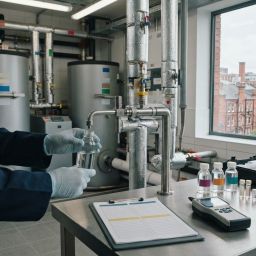
Professional monitoring goes beyond simple temperature logging. It involves systematic water sampling to validate that your control measures are actually working. This technical validation provides the empirical evidence needed to satisfy CQC inspectors that your facility is proactive, not just reactive. By establishing a rigorous schedule for inspection and testing, you create a transparent record of compliance that stands up to the closest scrutiny.
The Importance of UKAS Accredited Lab Testing
Verification is only as reliable as the laboratory performing the analysis. Independent, UKAS accredited lab testing is essential for care home environments because it provides legally defensible results. Using microbiological water testing allows you to detect the presence of Legionella bacteria before an outbreak occurs. This precise data is critical for protecting residents who lack the physiological resilience to fight off severe respiratory infections. It’s a vital layer of protection that moves your strategy from basic monitoring to advanced risk prevention.
Next Steps for Care Home Operators
Begin by conducting a thorough gap analysis of your current water management procedures. If your existing risk assessment is more than two years old, or if there have been significant changes to your plumbing system, it’s time to schedule a new survey. You can request a professional quote for water management to ensure your facility remains fully compliant with UK legislation. Moving from a reactive stance to a managed, methodological approach removes the burden of technical liability from your care team’s shoulders.
Achieving Long-Term Water Safety Excellence
Success in managing legionella in care homes is built on three pillars: legal accountability, technical precision, and meticulous record keeping. By implementing the benchmarks outlined in this checklist, you move beyond basic compliance toward a robust culture of resident safety. This methodological approach ensures that thermal disinfection and scalding prevention work in harmony rather than in conflict. It’s about creating a system where every temperature check and flushing event contributes to a bulletproof audit trail for CQC inspections.
As your strategic partner, we provide the technical expertise needed to navigate these complex regulations UK wide. Our UKAS Accredited Laboratory and professional consultancy team specialize in healthcare and social care compliance, ensuring your data is accurate and legally defensible. We take the professional responsibility for water safety off your shoulders, allowing your team to focus on delivering high-quality care.
Secure your care home with a professional Legionella risk assessment from The Testing Lab PLC and gain the peace of mind that comes with expert validation. You’re now equipped with the knowledge to maintain a safer environment for your residents and a more compliant facility for the future.
Frequently Asked Questions
Is a Legionella risk assessment a legal requirement for care homes?
Yes, conducting a Legionella risk assessment is a mandatory legal requirement for all care providers UK wide. This obligation falls under the Health and Safety at Work etc. Act 1974 and the COSHH Regulations. CQC inspectors expect to see a current, physical survey of the entire water system to ensure Regulation 12 compliance and to prove that risks are being actively managed.
How often should water temperatures be monitored in a care home?
Hot water storage and sentinel outlets must be checked monthly, while cold water tanks require inspection at least every six months. You should also monitor the temperature of the water returning to the calorifier monthly to ensure it stays above 50°C. These frequencies are defined by HSG274 Part 2 to maintain a consistent barrier against bacterial growth across the facility.
What is the “danger zone” for Legionella growth in water systems?
The danger zone for Legionella proliferation is between 20°C and 45°C. Within this temperature range, the bacteria multiply rapidly, especially if nutrients like scale or biofilm are present in aging pipework. To mitigate this risk, you must store hot water at 60°C and distribute it so it reaches at least 55°C in healthcare settings within one minute of opening the tap.
Can care home staff carry out Legionella testing in-house?
Staff can handle routine tasks like temperature logging and weekly flushing if they’ve been formally designated as a “Competent Person” and received adequate training. However, the technical complexity of a full risk assessment and microbiological sampling requires specialized expertise. Utilizing Legionella risk assessments and water management services ensures your facility benefits from UKAS accredited laboratory precision and legally defensible results.
What happens if Legionella is found in a care home water system?
You must take immediate remedial action, which typically involves emergency thermal or chemical disinfection of the water system and a review of your control measures. Managing legionella in care homes requires a pre-defined response plan within your Written Scheme of Control to protect vulnerable residents. It is also vital to identify the underlying cause, such as a faulty valve or a stagnant pipe section, to prevent the bacteria from returning.
Do I need to test for Legionella if I have a TMV installed?
Yes, you must still test and monitor your water system even if Thermostatic Mixing Valves (TMVs) are installed. TMVs are designed to prevent scalding by blending hot and cold water at the outlet, but they don’t kill bacteria. Because they create a localized area of lukewarm water, they can actually increase the risk of colonization if they aren’t serviced annually and monitored with precision.

Article by
P J F Thomas
CEO and Founder of TTL plc.
Disclaimer
Items declared are AI generated but do reflect our services. Please get in contact if you have any questions.