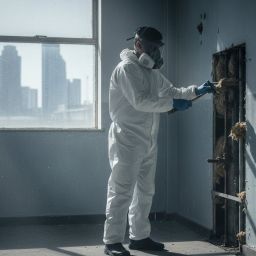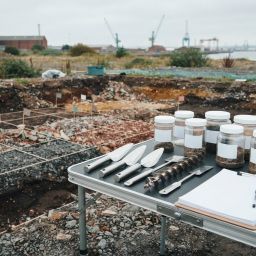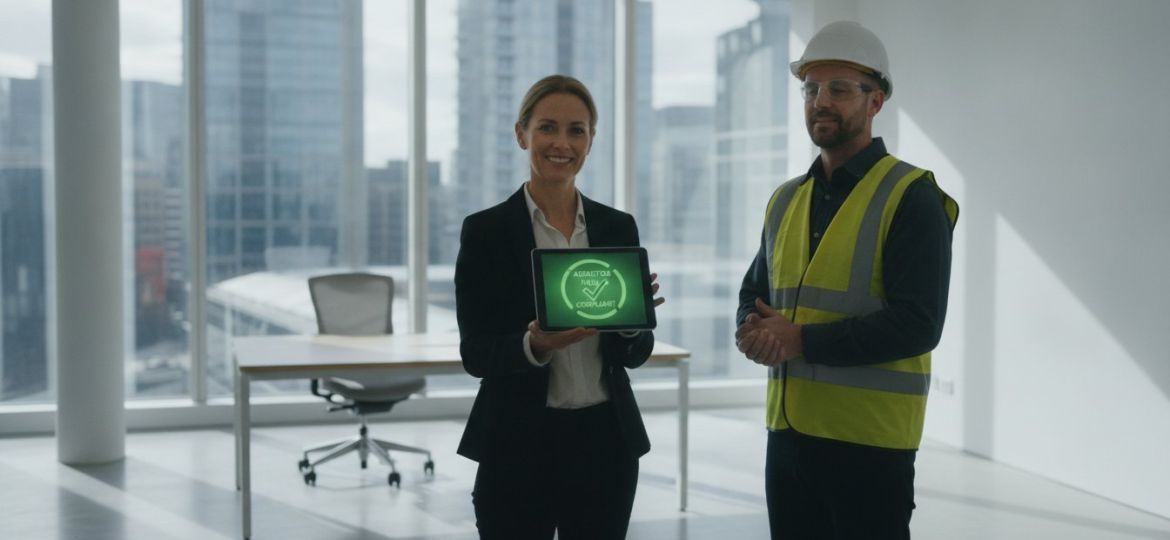
The assumption that an asbestos removal contractor can independently sign off on their own work is a dangerous misconception that leaves your business exposed to significant legal liability. Under the Control of Asbestos Regulations 2012, securing a valid asbestos certificate of reoccupation requires a rigorous 4-stage clearance process to ensure the area is truly safe for your team to return. We recognize the pressure you face to meet HSE standards while avoiding the site delays that often follow failed air tests. It’s a complex landscape where technical precision is your only real safeguard against risk.
This guide provides the clarity you need to master the technical stages of clearance and ensure your UK-wide premises are fully compliant. We’ll examine the four critical stages of inspection and air monitoring, while highlighting why the 2026 HSE emphasis on analyst independence is vital for your project. You’ll gain a clear roadmap to achieving 100% safety and a valid certificate for your premises, moving from regulatory confusion to methodological certainty.
Key Takeaways
- Understand the legal framework of CAR 2012 Regulation 20 and why independent verification is mandatory for UK-wide compliance.
- Breakdown the technical requirements of the 4-stage clearance process, from preliminary site checks to final air monitoring.
- Learn the specific documentation and safety thresholds needed to secure a valid asbestos certificate of reoccupation for your premises.
- Identify why UKAS accreditation is the essential benchmark for quality and impartiality in asbestos consultancy.
- Discover how strategic partnership with an independent analyst reduces professional liability and prevents costly project delays.
Understanding the Asbestos Certificate of Reoccupation and UK Legal Framework
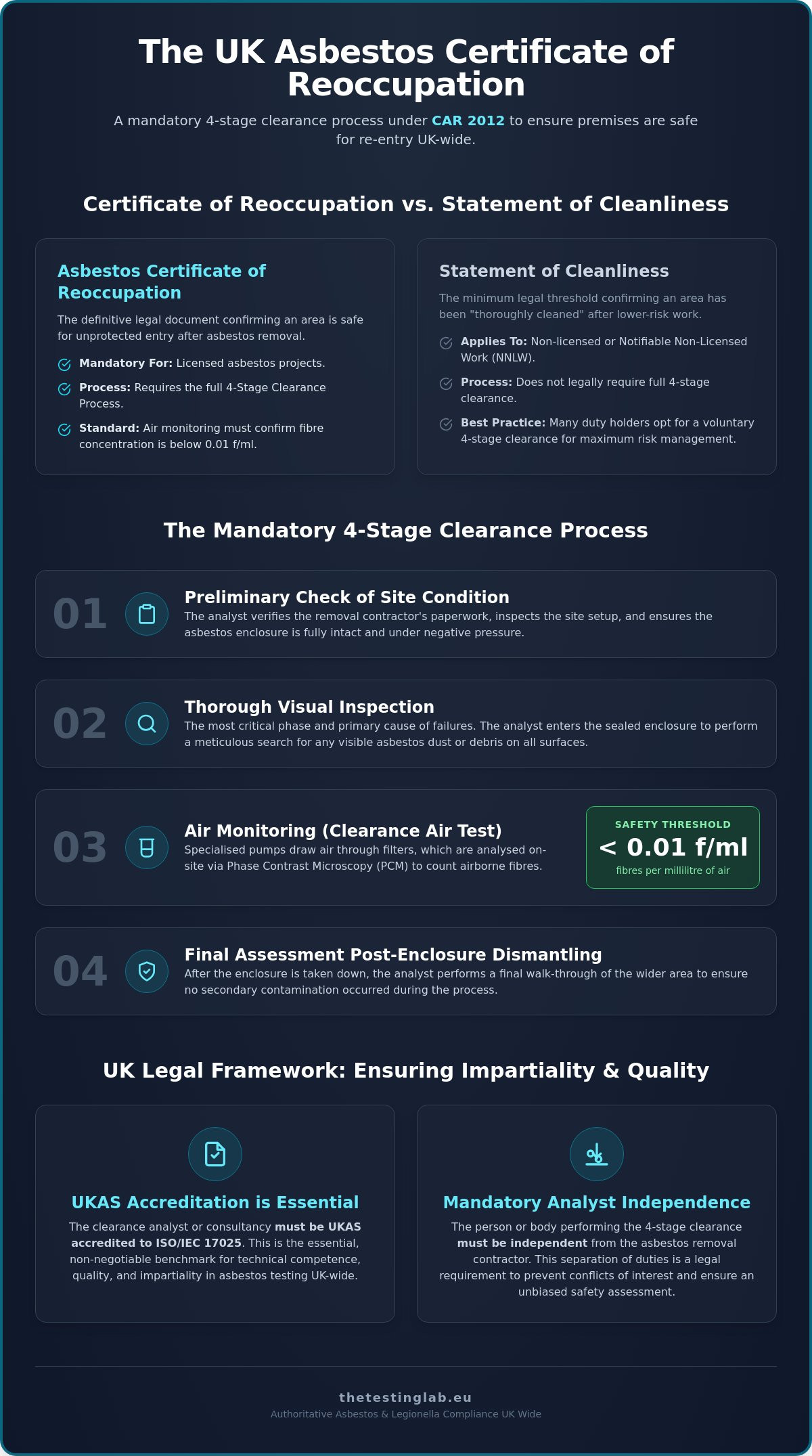
An asbestos certificate of reoccupation is the definitive legal document issued by a UKAS accredited analyst to confirm a work area is safe for unprotected entry. This isn’t merely a site sign-off; it’s a rigorous technical verification that follows the removal of Asbestos containing materials. The legal foundation for this process is firmly established in Regulation 20 of the Control of Asbestos Regulations 2012 (CAR 2012), which mandates that premises must be certified as safe before they’re handed back to the building owner.
To ensure compliance UK wide, the clearance process must adhere to the strict technical standards set out in HSG248, commonly referred to as The Analysts’ Guide. This guidance provides the framework for air monitoring and visual inspections, ensuring every test is conducted with engineering precision. A vital aspect of this framework is the mandatory independence of the analyst. The person performing the clearance must be separate from the removal contractor. This separation of duties eliminates potential conflicts of interest and ensures an unbiased safety assessment, protecting the duty holder from professional liability and operational risk.
Certificate of Reoccupation vs. Statement of Cleanliness
The specific documentation you require depends on the classification of the asbestos work. For licensed projects, a full 4-stage clearance and a formal asbestos certificate of reoccupation are non-negotiable legal requirements. This process includes thorough air monitoring to confirm that fibre concentrations are below the limit of 0.01 f/ml.
For non-licensed or Notifiable Non-Licensed Work (NNLW), Regulation 17 requires the area to be “thoroughly cleaned” and often results in a Statement of Cleanliness. While this is the minimum legal threshold, many proactive UK duty holders choose to commission a full 4-stage clearance even for non-licensed tasks. This approach offers a higher tier of risk management, providing documented proof that the environment is 100% safe for employees and tenants, effectively removing the weight of professional responsibility from the client’s shoulders.
The 4-Stage Asbestos Clearance Process: A Step-by-Step Breakdown
Executing a successful clearance requires a methodical approach that leaves no room for error. The process is a system of checks and balances designed to verify that the removal contractor has fulfilled their obligations. To obtain an asbestos certificate of reoccupation, the site must pass four distinct technical hurdles. This rigorous sequence ensures that the environment is safe for reoccupation UK wide, moving from documentation review to high-precision air analysis.
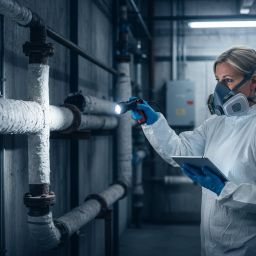
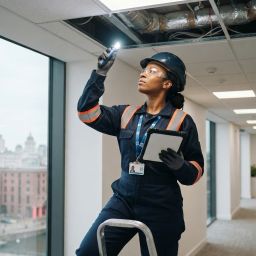
- Stage 1: Preliminary Check. The analyst verifies the site condition, reviews the contractor’s paperwork, and ensures the enclosure is intact.
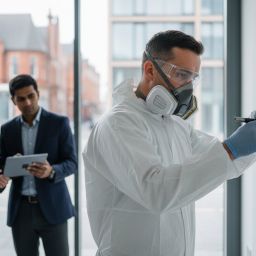
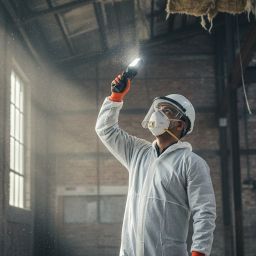
- Stage 2: Thorough Visual Inspection. This is the most critical phase. The analyst enters the work area to perform a meticulous search for any visible dust or debris.
- Stage 3: Air Monitoring. Precise air samples are taken to count any remaining airborne fibres.
- Stage 4: Final Assessment. After the enclosure is dismantled, the analyst performs a final walk-through to ensure no secondary contamination occurred during the pack-down.
Stage 3: Air Monitoring and Fibre Counting Standards
During the third stage, the analyst uses specialized pumps to draw a specific volume of air through a 25mm gridded filter. This filter is then prepared and examined on-site using a high-powered microscope. The Phase Contrast Microscopy (PCM) method is the industry standard for rapid on-site results. For a site to pass, the concentration must be below the clearance indicator of 0.01 fibres per millilitre of air. This threshold represents the limit of quantification and is the mandatory safety benchmark for all four-stage clearances conducted under UK legislation.
How to Avoid Common Clearance Failures
The primary cause of project delays is a failure at Stage 2. Even a small amount of dust on a “cleaned” surface will result in an immediate fail, requiring the contractor to re-clean the entire area. To prevent this, duty holders should ensure the contractor performs a comprehensive “wipe down” and a self-inspection before the analyst arrives. Site logistics are also vital. Analysts require consistent power and water to conduct their work. Ensuring these utilities are available prevents unnecessary downtime. If you’re managing a complex project, our asbestos consultancy team can provide the independent oversight needed to ensure a first-time pass and keep your project on schedule.
Ensuring Regulatory Compliance with UKAS Accredited Asbestos Consultancy
UKAS accreditation represents the non-negotiable gold standard for asbestos air monitoring and clearance. It serves as your guarantee that the analyst possesses the technical competence and impartial judgment required to issue a valid asbestos certificate of reoccupation. For duty holders managing large-scale UK-wide projects, this accreditation ensures consistency in reporting and compliance across multiple sites. By choosing a UKAS accredited partner, you effectively transfer the weight of professional liability to experts who operate under a rigorous quality management system.
Strategic partnership goes beyond simple testing. It involves a methodical approach to risk, where every stage of the clearance is documented with precision. This level of detail is essential for maintaining a robust health and safety file. Once the clearance is complete, you can confidently move from asbestos removal to safe reoccupation or proceed with structural-risk assessments. Our goal is to provide the technological confidence you need to reopen your premises without the fear of hidden liabilities.
The Importance of Analytical Independence
The HSE is clear in its recommendation: building owners should employ the analyst directly. When the analyst is independent of the removal contractor, it eliminates any potential conflict of interest. This separation ensures that the visual inspection and air monitoring are conducted with total objectivity. Organizations like the Asbestos Removal Contractors Association advocate for high industry standards, but the final safety check must remain impartial. You can explore our independent asbestos consultancy services to see how we support UK-wide compliance through unbiased analysis.
Coordinating Your Site Clearance
Timing is a critical factor in site reoccupation. For a standard UK commercial unit, a 4-stage clearance typically takes between 4 to 8 hours, depending on the size of the enclosure and the complexity of the removal work. Efficient coordination allows you to integrate this process with other environmental requirements, such as Legionella risk assessments, ensuring a holistic approach to building safety. To secure your asbestos certificate of reoccupation and maintain your project timeline, you can request a quote from our UKAS accredited specialists today.
Securing Your Premises with Methodological Certainty
Navigating the transition from asbestos removal to site reoccupation requires more than just a visual check. It demands a rigorous, evidence-based approach that aligns with the highest safety standards. By mastering the 4-stage clearance process and ensuring the total independence of your analyst, you protect your employees and your business from the risks of secondary contamination. This methodological precision is what transforms a complex regulatory requirement into a streamlined operational success.
Securing a valid asbestos certificate of reoccupation is your final step in fulfilling the legal obligations set out in CAR 2012. Our UKAS accredited laboratory and consultancy provides the independent, impartial analysis needed to guarantee full compliance with HSG248. Whether you’re managing a single unit or complex UK-wide projects, our team takes the weight of professional responsibility off your shoulders, ensuring every stage is executed with engineering accuracy and transparency.
Don’t leave your site safety to chance. Contact our UK-wide experts for 4-stage asbestos clearance certification and return to your premises with absolute confidence. We’re here to ensure your transition to a safe environment is seamless, compliant, and professionally managed.
Frequently Asked Questions
Is an asbestos certificate of reoccupation a legal requirement for all asbestos work?
A certificate is a strict legal requirement for all licensed asbestos removal projects under Regulation 20 of the Control of Asbestos Regulations 2012. While it isn’t legally mandated for non-licensed work, many duty holders across UK wide projects commission one to ensure the area is 100% safe. This provides a clear audit trail and significantly reduces your professional liability.
Can I use the same company for asbestos removal and the 4-stage clearance?
You should hire an independent analyst directly rather than using the removal contractor’s own services. HSE guidance and 2026 regulatory trends emphasize that independence is vital to prevent conflicts of interest. An impartial expert ensures the asbestos certificate of reoccupation is issued based on objective safety standards, not project timelines.
What happens if my site fails the stage 2 visual inspection?
If the analyst identifies any visible dust or debris, the clearance process stops immediately. The removal contractor must perform a comprehensive re-clean of the entire enclosure before the analyst can restart the stage 2 inspection. These failures are the primary cause of site delays, so ensuring a thorough contractor “wipe down” is essential before the analyst arrives.
How long is an asbestos certificate of reoccupation valid for?
The asbestos certificate of reoccupation is a point-in-time document that confirms the area was safe for entry at the moment the 4-stage clearance was completed. It doesn’t have a specific expiry date, but it only remains valid as long as the area stays undisturbed. If subsequent construction work occurs or if new asbestos materials are discovered, you’ll need a new assessment to verify the environment is still safe.

Article by
P J F Thomas
CEO and Founder of TTL plc.
Disclaimer
Items declared are AI generated but do reflect our services. Please get in contact if you have any questions.