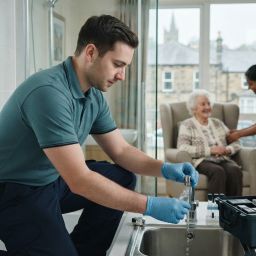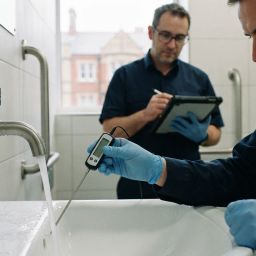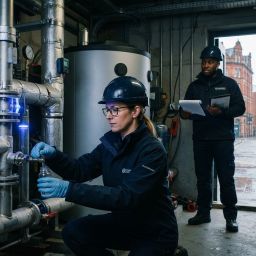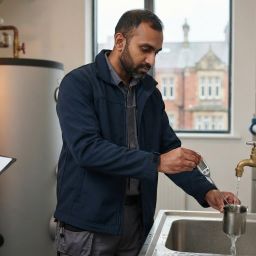
A workplace water safety compliance audit is useful when it tests whether records match the controls operating on site. Even complete-looking files may not reflect how people use and manage the water systems day to day.
The audit should examine responsibilities, written procedures and supporting evidence together. It’s understandable to be unsure which systems, checks and records to include, particularly because Legionella controls and drinking-water duties sit within different legislation and guidance.
This UK guide explains the relevant framework, including the Health and Safety at Work etc. Act 1974 and COSHH, and the evidence that can help demonstrate effective controls. You’ll learn how to identify gaps and turn findings into proportionate actions. The Testing Lab PLC is a national service provider serving workplaces across the UK, with its head office in Doncaster. Its water testing, Legionella risk assessments and water management services can support practical next steps.
Key Takeaways
- A workplace water safety compliance audit should test whether responsibilities, controls and records reflect conditions on site, not just whether paperwork exists.
- Prepare by identifying relevant water systems, responsible people, current procedures and evidence of monitoring, review and completed actions.
- Use UK legislation to understand legal duties, and distinguish those duties from supporting HSE guidance when assessing compliance.
- Record each finding, assign an owner and proportionate action, then document completion. Consider further assessment or water testing where the evidence points to a gap.
What a workplace water safety compliance audit should establish
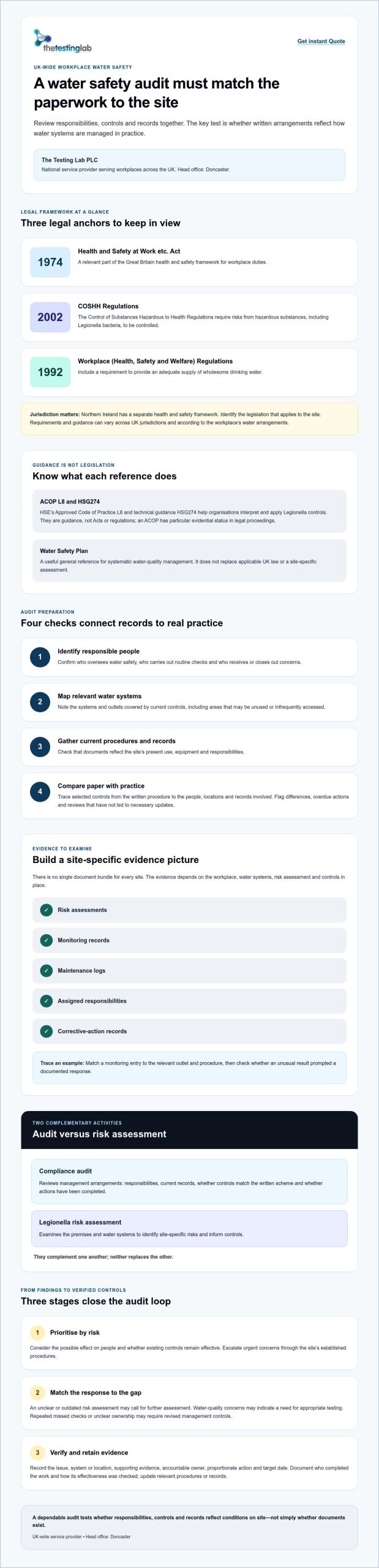
A workplace water safety compliance audit reviews who manages water safety, which controls are in place, what records support them and whether procedures are followed in practice. It tests whether the management arrangements work, rather than simply confirming that documents have been filed.
In Great Britain, relevant legal duties include those under the Health and Safety at Work etc. Act 1974 and the Control of Substances Hazardous to Health Regulations 2002 (COSHH), which require risks from hazardous substances, including Legionella bacteria, to be controlled. Northern Ireland has a separate health and safety framework, so identify the legislation that applies to the site. HSE’s Approved Code of Practice L8 and technical guidance HSG274 help organisations interpret and apply Legionella controls. They are guidance, not Acts or regulations, and an ACOP has particular evidential status in legal proceedings.
For drinking water, the Workplace (Health, Safety and Welfare) Regulations 1992 include a requirement to provide an adequate supply of wholesome drinking water. The precise requirements and guidance depend on the UK jurisdiction and the workplace’s water arrangements. A Water Safety Plan offers a useful general reference for systematic water-quality management, but it does not replace applicable UK law or site-specific assessment.
How an audit differs from a Legionella risk assessment
A compliance audit reviews management arrangements; a risk assessment evaluates site-specific risks. The audit checks whether responsibilities are clear, records are current, control measures match the written scheme and actions have been completed. A Legionella risk assessment examines the premises and water systems to identify risks and inform controls. These activities complement one another, but neither replaces the other. Where a site-specific assessment is needed, a Legionella risk assessment service can help identify the risks for comparison with the organisation’s management arrangements.
How to prepare for a workplace water safety compliance audit
Prepare the site and its evidence together. An audit is more useful when responsible people can explain how written controls work day to day and records make that practice traceable. Keep applicable UK legislation and guidance in view, recognising that requirements can differ between UK jurisdictions and according to the systems on site.
- Identify responsible people. Confirm who oversees water safety, who carries out routine checks and who receives or closes out concerns.
- Map relevant water systems. Note the systems and outlets covered by current controls, including areas that may be unused or infrequently accessed.
- Gather current procedures and records. Check that documents reflect the site’s present use, equipment and responsibilities.
- Compare paper with practice. Trace selected controls from the written procedure to the people, locations and records involved. Flag differences, overdue actions and reviews that have not led to necessary updates.
Which records and site details help make the review useful?
Core evidence may include risk assessments, monitoring records, maintenance logs, assigned responsibilities and corrective-action records. The evidence needed depends on the workplace, water systems, risk assessment and controls in place. There is no single document bundle for every site. For example, match a monitoring entry to the relevant outlet and procedure, then check whether an unusual result prompted a documented response. HSE’s guidance on hot and cold water systems can help teams understand the control approach for those systems.
A UK-wide review can also identify whether further Legionella risk assessment or water testing would help clarify a gap. The Testing Lab PLC provides water-safety services to workplaces across the UK, including Quick Water Testing, Legionella risk assessments and water management services. Request a quote for water-safety support when your evidence review points to a need for specialist input.
Turning audit findings into dependable UK-wide water-safety controls
An audit adds value when findings lead to actions that can be tracked and verified. Record each issue clearly, including the system or location involved, the evidence behind the finding and any immediate control concern. Assign an accountable owner, agree a proportionate action and target date, and define what evidence will show the work is complete. This supports the employer’s applicable UK health and safety duties, including duties under the Health and Safety at Work etc. Act 1974 and COSHH where relevant.
- Prioritise by risk. Consider the possible effect on people and whether existing controls remain effective. Escalate urgent concerns through the site’s established procedures.
- Match the response to the gap. An unclear or outdated risk assessment may call for further assessment. Results or conditions that raise water-quality concerns may indicate a need for appropriate testing. Repeated missed checks or unclear ownership may require revised management controls.
- Verify and retain evidence. Record the action taken, who completed it and how its effectiveness was checked. Update relevant procedures or records to help prevent the same gap recurring.
How specialist support can help close compliance gaps
Technical input can help interpret findings, review supporting evidence and clarify practical next steps. The appropriate support depends on the issue: water testing can help investigate a water-quality concern, a Legionella risk assessment can examine site-specific risks, and water management support can address weaknesses in ongoing controls. The Testing Lab PLC is a UK-wide national service provider, with its head office in Doncaster. Its UKAS-accredited laboratory supports water testing; this does not mean every audit activity falls within a particular accreditation scope.
For a tailored discussion of water-safety support, Get instant Quote.
Make water safety an ongoing management priority
Use the workplace water safety compliance audit as a point of reference, not a one-off exercise. Set a review point for actions and consider whether changes to building use, occupancy or water systems affect the controls in place. This helps keep water-safety management aligned with the workplace and applicable UK health and safety duties.
Keep responsibilities clear and decisions traceable as circumstances change. If an audit finding needs technical interpretation, specialist support can help clarify practical next steps and the evidence needed to support them.
Take the next step with a tailored discussion of your requirements. Get instant Quote for a clear, manageable approach to workplace water safety.
Frequently Asked Questions
Is a workplace water safety compliance audit a legal requirement in the UK?
No single UK-wide statute specifically prescribes a document called a workplace water safety compliance audit. Employers must still meet applicable health and safety duties, including relevant requirements under the Health and Safety at Work etc. Act 1974 and COSHH in Great Britain. Northern Ireland has separate legislation. An audit can help review arrangements, but it does not replace risk controls or legally required assessments.
What is the difference between a water safety audit and a Legionella risk assessment?
They serve connected but distinct purposes. For example, a risk assessment considers whether a seldom-used shower or stored-water arrangement creates a site-specific Legionella risk. An audit can then examine whether the organisation has responded to that finding and maintained appropriate arrangements. If system use, occupancy or equipment changes, review whether the existing risk assessment still reflects the site.
What records should a workplace have ready for a water safety audit?
Across Carlisle, Chester, Lancaster, Liverpool, Manchester, Preston, Salford, Berwick-upon-Tweed, Durham, Middlesbrough, Newcastle upon Tyne, Sunderland, Bradford, Doncaster, Huddersfield, Hull, Leeds, Sheffield and Wakefield, useful context can include outlet identifiers, current schematics or asset lists where available, contractor reports, changes in system use and document revision dates. Link evidence to the relevant system and period. The right records depend on the workplace and its controls.
When should a workplace arrange water testing after an audit?
Arrange testing when the audit or risk assessment identifies a defined question that sampling can help answer, such as an unexpected water-quality concern or a need to investigate whether a control is working as intended. Select sampling points and parameters to suit that question and applicable guidance. Results should inform decisions, not replace investigation, risk assessment or corrective action.

Article by
P J F Thomas
CEO and Founder of TTL plc.
Disclaimer
Items declared are AI generated but do reflect our services. Please get in contact if you have any questions.