Get instant Quote What if a water-management gap is not a missing test, but a sampling plan that does not reflect how your site operates? For operators seeking industrial water management services Middlesbrough chemical corridor sites need a joined-up view of water hygiene, process risks and discharge points, rather than disconnected results.
Protecting operations while keeping controls and records clear starts with a scope built around the site. This article explains how to map water uses, choose relevant sampling points and tests, and consider discharge monitoring under the Environmental Permitting (England and Wales) Regulations 2016. The Testing Lab PLC provides water testing and water management services UK-wide. It is a national service provider with its head office in Doncaster.
Key Takeaways
- Scope industrial water management services around the systems and risks present at each Middlesbrough chemical corridor site, not a standard test package.
- Map water uses, define the questions to answer, then select relevant sampling points and tests.
- Consider water hygiene, process risks and effluent discharge monitoring alongside applicable UK requirements, including the Environmental Permitting (England and Wales) Regulations 2016.
- Use clear laboratory reports and assessment findings to support site decisions. The Testing Lab PLC serves customers UK-wide from its Doncaster head office.
What industrial water management means for Middlesbrough’s chemical corridor
Industrial water management brings risk assessment, relevant testing and monitoring together with records that support informed site decisions. A single sample provides evidence about one point in time. To understand what that result means, consider it alongside how the water is used, the system’s operating conditions and the controls already in place.
Depending on the site, the scope may cover process water, cooling systems, water hygiene or effluent. These systems and their risks differ between facilities. The Wilton International industrial area provides context for the range of chemical and energy activities associated with the wider Teesside setting. Each Middlesbrough site still needs a scope based on its own equipment, processes and discharge arrangements.
A water test result describes the sample taken. Management decisions also depend on system conditions, site controls and applicable requirements. If industrial effluent is discharged under an environmental permit, monitoring should take account of the relevant permit conditions and the Environmental Permitting (England and Wales) Regulations 2016.
Which water risks should a Teesside industrial site consider?
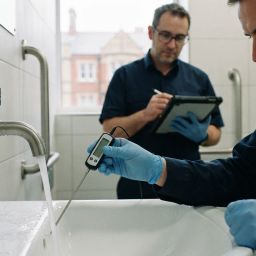
Start by identifying how water is used and where people or the environment could be exposed. Review system type, operating conditions, existing controls and any known concerns. This helps determine which systems warrant attention and what testing should establish. Where a water system presents a relevant legionella risk, a structured legionella risk assessment can help inform appropriate management.
For operators looking for industrial water management services Middlesbrough chemical corridor sites can use, The Testing Lab PLC provides water management services, water testing, legionella risk assessments and legionella testing. The company serves customers UK-wide as a national service provider, with its head office in Doncaster.
How to scope industrial water testing and monitoring in Middlesbrough
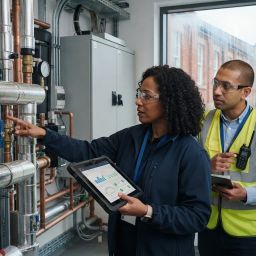
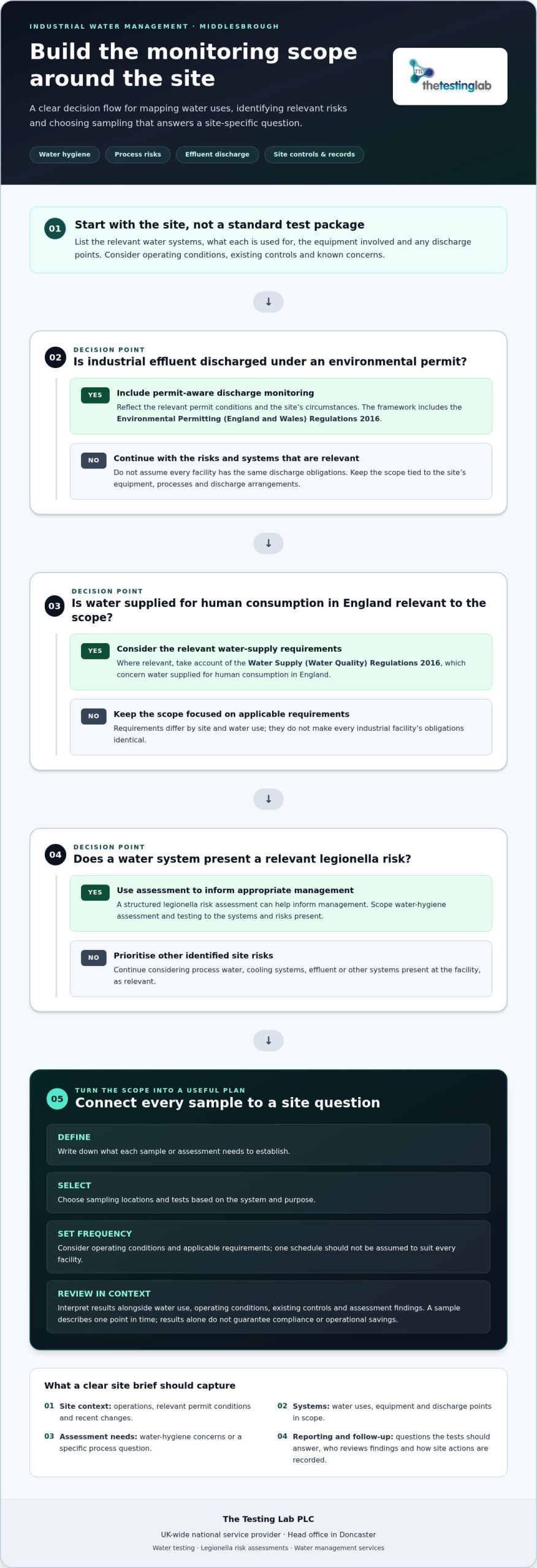
Build the scope from the site rather than starting with a default test panel. A practical sequence is to map water systems and their uses, identify relevant risks and requirements, define the questions to answer, select suitable testing, then review findings against operating conditions and existing controls.
- Map: List the relevant systems, their uses, equipment and discharge points.
- Identify: Note site-specific risks, existing controls and applicable requirements, including permit conditions where relevant.
- Define: Write down what each sample or assessment needs to establish.
- Select and review: Choose tests that answer those questions, then interpret results in context.
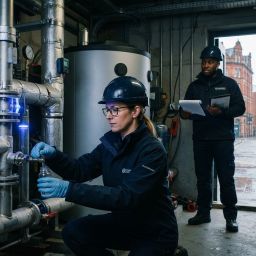
A useful monitoring plan links each sample to a specific site question. Choose sampling locations and parameters based on the system and purpose of the test. Set frequency with regard to operating conditions and applicable requirements, rather than assuming one schedule suits every facility.
How do permits, water hygiene and test results fit together?
For permitted effluent discharges, monitoring should reflect the relevant permit conditions and the site’s circumstances. The Environmental Permitting (England and Wales) Regulations 2016 provide the regulatory framework. The Water Supply (Water Quality) Regulations 2016 concern water supplied for human consumption in England, where relevant. These requirements do not mean every industrial site has identical obligations. Water hygiene assessment and testing should also be scoped to the systems and risks present. Records of sampling and results can help a site review relevant discharge conditions and water controls.
These steps help industrial sites turn testing into better-informed decisions. The Testing Lab PLC provides water testing and water management services UK-wide from its Doncaster head office. To discuss water testing for your site, request a water testing quote.
Choosing industrial water management support for a Middlesbrough site
A well-defined scope gives testing and assessment a clear purpose. Before work begins, gather the information needed to show what is being assessed and how the findings will be used:
- Site context: Summarise operations, relevant permit conditions and recent changes that could affect water systems.
- Systems: Identify water uses, equipment and discharge points in scope.
- Assessment needs: Describe concerns such as water hygiene risks or a specific process question.
- Testing and reporting: Set out the questions the tests should answer and the information the report needs to present.
- Follow-up: Decide who will review findings and record any site actions.
This approach helps distinguish laboratory results from assessment findings and from the management actions a site may take. Results provide evidence for decisions, but do not by themselves guarantee compliance or operational savings. For effluent discharges, consider the relevant permit conditions and the Environmental Permitting (England and Wales) Regulations 2016 in the context of the site. The Chemical Industries Association’s environmental policy offers broader sector context for environmental considerations.
What should a site expect from a structured water-service engagement?
Expect the scope to reflect the site’s systems, operating context and testing or assessment questions. The Testing Lab PLC is UKAS accredited, with accreditation applying to relevant activities within its scope. Its laboratory testing and assessment findings provide information for review, while site management remains responsible for deciding and recording subsequent actions. The company provides water testing, legionella risk assessments and water management services to customers UK-wide, with its head office in Doncaster.
For a tailored discussion of your site’s water testing or assessment needs, Get instant Quote.
Take the next step towards a site-specific water plan
Effective water management starts by matching systems, risks and monitoring questions to the site. A defined scope makes test results more useful: results provide evidence, while assessment findings and applicable permit conditions help inform what happens next. For industrial water management services Middlesbrough chemical corridor operators can use, connect testing to site controls and records, and consider applicable UK requirements such as the Environmental Permitting (England and Wales) Regulations 2016.
The Testing Lab PLC provides water testing, legionella risk assessments and water management services UK-wide. It is a national service provider with its head office in Doncaster, and its laboratory is UKAS accredited for activities within its applicable scope.
Start with your site context and the questions you need answered. Get instant Quote to discuss a relevant water testing or assessment scope.
Frequently Asked Questions
What does industrial water management include?
Industrial water management coordinates risk assessment, relevant testing, monitoring and record-keeping to support site decisions. It may cover process water, cooling systems, water hygiene or effluent, depending on the systems in use. For industrial water management services Middlesbrough chemical corridor operators can use, the scope should reflect site conditions and applicable UK requirements rather than treating one test as a complete management programme.
Does a Middlesbrough industrial site need a legionella risk assessment?
A legionella risk assessment is relevant where a site’s water systems could create exposure to legionella bacteria. The need and scope depend on the systems, how they operate and potential exposure pathways, so risks vary between sites. UK health and safety requirements, including the Control of Substances Hazardous to Health Regulations 2002, provide relevant context for assessing and managing exposure risks.
What water testing is relevant to an industrial site?
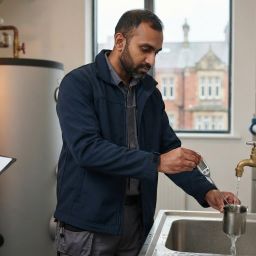
Relevant testing depends on the site’s water uses and the question to be answered. This may include microbiological water testing, legionella testing where relevant to the risk assessment, or effluent testing linked to applicable discharge permit conditions. Select sampling locations, parameters and frequency for the system and purpose, rather than relying on a universal schedule.
Does The Testing Lab provide industrial water services across the UK?
Yes. The Testing Lab PLC serves customers UK-wide, with its head office in Doncaster. Its service coverage includes Carlisle, Chester, Lancaster, Liverpool, Manchester, Preston, Salford, Berwick-upon-Tweed, Durham, Middlesbrough, Newcastle upon Tyne, Sunderland, Bradford, Doncaster, Huddersfield, Hull, Leeds, Sheffield and Wakefield. Relevant services include water testing, legionella risk assessments and water management services.

Article by
P J F Thomas
CEO and Founder of TTL plc.
Disclaimer
Items declared are AI generated but do reflect our services. Please get in contact if you have any questions.