In 2026, a “suitable and sufficient” legionella risk assessment for landlords UK is no longer just a recommendation; it’s a critical pillar of your professional liability management. You likely recognize that tenant safety is your primary duty, yet the technical complexities of ACOP L8 and COSHH regulations often feel like a moving target. It’s understandable to feel uncertain about water system safety, especially in older properties where risks aren’t always visible to the untrained eye.
This guide clarifies your exact legal obligations and demonstrates how professional, UKAS-accredited assessments provide the robust documentation needed for insurance and safety audits. We’ll explore the technical requirements of water system safety and the methodology used to eliminate the risk of prosecution UK wide. By understanding these professional legionella surveying standards, you can secure full compliance and the peace of mind that your property’s water management is in expert hands.
Key Takeaways
- Identify your mandatory legal responsibilities under the Health and Safety at Work Act 1974 and COSHH to ensure tenant safety.
- Learn how systematic surveys identify critical risks like “dead legs” and use temperature monitoring at sentinel points to inhibit bacteria.
- Understand why a professional legionella risk assessment for landlords UK provides the necessary legal defensibility and documentation for safety audits UK wide.
- Recognize the importance of UKAS accredited laboratory analysis in building a reliable, long-term water management strategy for your properties.
UK Landlord Legislation: The Legal Requirement for Legionella Risk Assessments
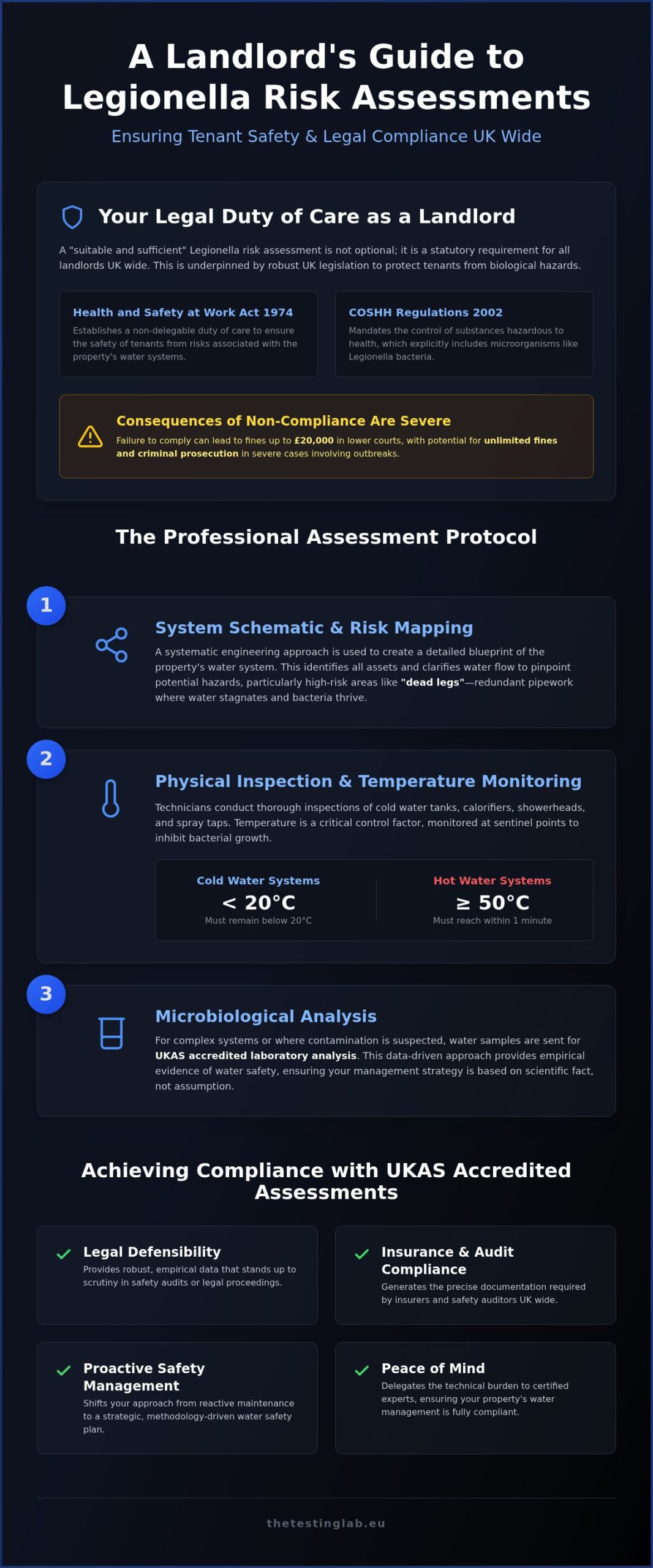
A legionella risk assessment for landlords UK is a systematic engineering evaluation designed to identify and control the proliferation of bacteria within domestic water systems. This isn’t a discretionary safety check; it’s a statutory requirement underpinned by the Health and Safety at Work etc. Act 1974 and the Control of Substances Hazardous to Health (COSHH) Regulations 2002. To understand the stakes, landlords should research What is Legionnaires’ Disease? and how it spreads through contaminated water droplets. These regulations apply UK wide, meaning every landlord has a non-delegable duty of care to ensure their properties don’t pose a biological hazard to tenants.
Navigating ACOP L8 and the Practical Responsibilities of Duty Holders
The HSE Approved Code of Practice L8 (ACOP L8) serves as the primary technical benchmark for compliance. Under this code, the landlord is designated as the “Duty Holder.” You’re responsible for identifying a “Responsible Person” with the technical competence to manage water safety. This involves mapping the water system, identifying risks like stagnant water, and implementing control measures. The legal and financial risks of neglect are substantial. Fines for safety failures can reach £20,000 in lower courts, while severe cases involving outbreaks can lead to unlimited fines or criminal prosecution. Engaging a strategic partner for a professional legionella risk assessment for landlords UK removes this burden of responsibility. It provides the precise documentation required for insurance and safety audits, shifting your property management from reactive maintenance to proactive, methodology-driven compliance.
Professional Methodology: How to Conduct an Effective Legionella Risk Assessment
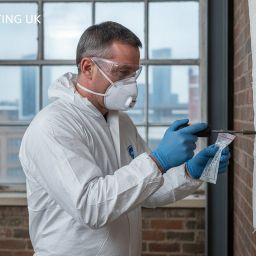
Effective water management begins with a comprehensive site survey that moves beyond a simple visual check. A professional legionella risk assessment for landlords UK doesn’t rely on guesswork; it uses a systematic engineering approach to map every outlet and pipe run. We specifically look for “dead legs,” which are redundant sections of pipework where water stagnates and bacteria multiply. This mapping is essential for creating a reliable risk profile, particularly in older properties with modified plumbing systems UK wide.
Physical inspections are the next critical phase of the methodology. We examine cold water storage tanks for debris and inspect calorifiers for signs of thermal stratification or corrosion. Since the bacteria are contracted through inhalation, we pay close attention to showerheads and spray taps where aerosols are generated. To verify compliance with UK Landlord Legislation: The Legal Requirement, we monitor temperatures at sentinel points. Cold water must remain below 20°C and hot water must reach at least 50°C within one minute of running to inhibit bacterial growth.
Identifying Technical Hazards in Hot and Cold Water Systems
Our process follows a rigorous three-step protocol to ensure no hazard is overlooked. First, we develop a system schematic. This blueprint identifies all assets and clarifies the flow of water throughout the building. Second, technicians conduct temperature profiling and sediment checks, looking for organic matter that provides nutrients for pathogens. Finally, we perform microbiological analysis. If a system is complex or shows signs of contamination, we use our UKAS accredited laboratory to detect specific bacteria. This data-driven approach ensures your safety strategy is based on empirical evidence rather than assumptions.
Achieving Compliance through UKAS Accredited Monitoring and Specialist Consultancy
UKAS accredited laboratory analysis isn’t a luxury; it’s the definitive benchmark for legal defensibility. If an incident occurs or a safety audit is triggered, a standard visual check won’t stand up to scrutiny. You need empirical data. Professional Legionella risk assessments act as the technical foundation for your long-term water management plans. By using an independent, accredited facility, you ensure that every sample processed UK wide follows a strict, documented chain of custody. This transparency is vital. It proves that your monitoring wasn’t just a “tick-box” exercise but a scientifically sound process that protects both your tenants and your professional reputation in a court of law.
Strategic Water Management and Remediation for Multi-Site Portfolios
Managing a diverse property portfolio requires a unified approach to environmental hygiene. A professional legionella risk assessment for landlords UK provides more than just a list of hazards; it delivers prioritized remediation strategies to fix pipework issues or temperature failures. We often integrate these findings with our asbestos consultancy services to provide a holistic building safety profile. Following the official HSE guidance for landlords ensures that your multi-site operations meet the same rigorous standards UK wide. Choosing a strategic partner who understands both microbiological water hazards and hazardous material management removes the fragmented nature of traditional compliance. It streamlines your documentation for insurance purposes and gives you the confidence that your most critical legal responsibilities are in the hands of a modern, agile expert team.
Securing Your Property Portfolio through Professional Water Management
Compliance in 2026 requires more than a cursory glance at a property’s plumbing. By implementing a rigorous legionella risk assessment for landlords UK, you move from basic occupancy to a state of total legislative defensibility. You’ve learned how systematic mapping and temperature profiling UK wide protect your tenants from biological hazards. It’s about building a foundation of trust through empirical data and precise engineering. Since 2002, our independent consultancy has helped landlords navigate these complexities with UKAS accredited laboratory analysis. Don’t leave your legal standing to chance when professional certainty is available. Book a Professional Legionella Risk Assessment with The Testing Lab PLC today and ensure your property assets remain safe, compliant, and fully insured. We’re here to take the weight of professional responsibility off your shoulders.
Frequently Asked Questions
What is a legionella risk assessment and is it mandatory for UK landlords?
A legionella risk assessment is a mandatory systematic evaluation of a property’s water systems to identify potential bacterial hazards. Under the Health and Safety at Work etc. Act 1974 and COSHH regulations, all UK landlords have a legal duty to assess and manage these risks. This requirement applies to all residential rental properties UK wide, ensuring that tenants aren’t exposed to health risks from aerosolized water.
How often should a landlord carry out a legionella risk assessment at their property?
Landlords must review their assessments regularly and whenever there’s a significant change to the water system or property use. While the law doesn’t specify a fixed timeframe, industry best practice suggests a review every two years. You should also conduct a new assessment if the property has been vacant for an extended period or if the tenant demographic changes, such as housing vulnerable individuals.
Can a landlord do their own legionella risk assessment or do they need a professional?
You can legally conduct your own assessment if you’re “competent” to do so, meaning you possess the necessary knowledge to identify risks. However, many landlords opt for a professional legionella risk assessment for landlords UK to ensure technical accuracy. Professional consultants provide UKAS accredited laboratory analysis and detailed schematics, which offer higher levels of legal defensibility and insurance compliance than a simple DIY check.
What are the penalties for non-compliance with legionella regulations in the UK?
Failure to comply with legionella regulations can result in severe legal and financial consequences. Fines in lower courts can reach £20,000; however, negligence leading to an outbreak can result in unlimited fines or imprisonment. Between 2005 and 2024, UK wide prosecutions for legionella failures totaled £8.6 million in fines. Maintaining professional documentation is the only way to mitigate these risks and demonstrate your commitment to tenant safety.

Article by
P J F Thomas
CEO and Founder of TTL plc.
Disclaimer
Items declared are AI generated but do reflect our services. Please get in contact if you have any questions.