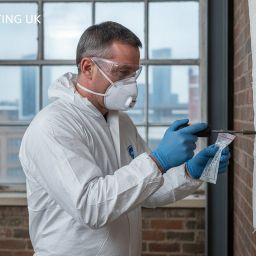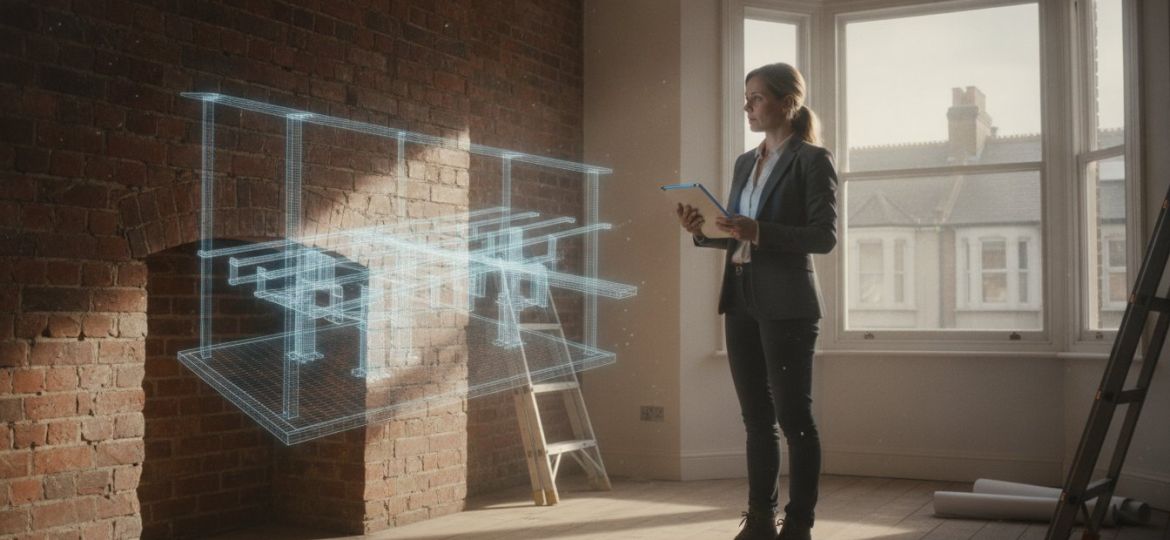
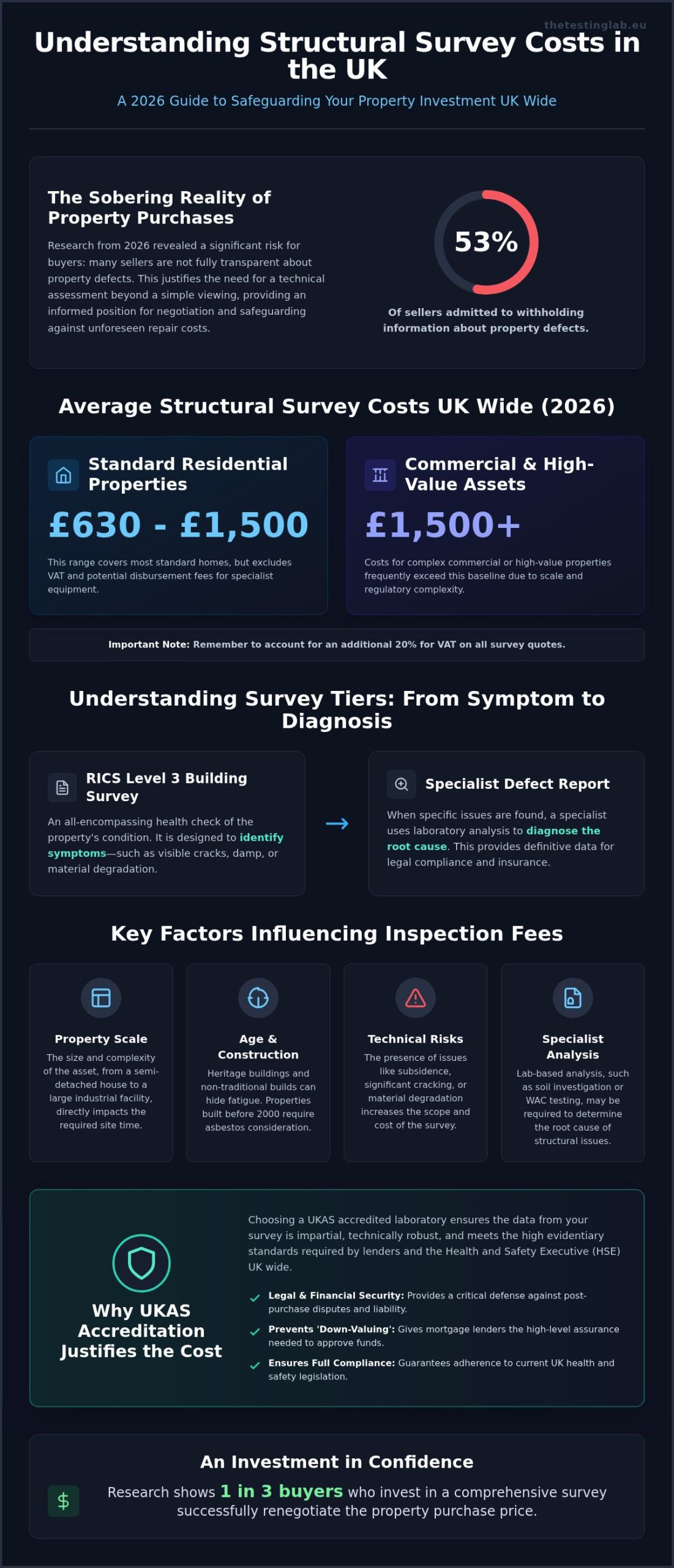
In 2026, research revealed that 53% of property sellers admitted to withholding information about defects, ranging from damp to systemic drainage issues. It’s a sobering statistic that justifies the common fear of inheriting hidden repair costs when purchasing a property. You want more than just a visual walkthrough; you need a technical assessment that provides a definitive risk profile. Understanding the structural survey cost UK is the first step in moving from uncertainty to a position of informed negotiation.
This guide breaks down current market rates and the technical variables that dictate professional inspection fees. We’ll clarify the critical differences between general building surveys and specialist engineering reports to ensure you don’t pay for redundant services. By focusing on UK wide standards and the value of UKAS accredited methodologies, we’ll show you how a precise, laboratory backed inspection safeguards your investment. You’ll gain a clear framework for budgeting and the confidence that your surveyor’s expertise is grounded in technical excellence.
Key Takeaways
- Learn to distinguish between standard building surveys and technical defect reports to avoid overpaying for unnecessary inspections.
- Identify how property age and construction methods directly impact the structural survey cost UK for both residential and commercial assets UK wide.
- Discover why UKAS accredited laboratory analysis is essential for identifying hidden risks like soil instability or hazardous materials.
- Use professional survey data to renegotiate property prices or ensure full compliance with current UK health and safety legislation.
Average Structural Survey Cost UK: 2026 Price Benchmarks
Chartered Surveyors in the UK provide comprehensive assessments, but their quotes often exclude VAT and disbursement fees. You should account for an additional 20% for VAT and potential costs for specialist equipment, such as drones for roof inspections or historical data access. For commercial entities, these reports are strategic risk management tools rather than mere administrative hurdles. Investing in a thorough assessment ensures the structural survey cost UK translates into long-term asset protection.
Understanding the Tiers: RICS Level 3 vs Structural Engineer Reports
A RICS Level 3 Building Survey is an all-encompassing health check of the property’s condition. If the surveyor identifies specific movement or material degradation, they’ll refer the case to a specialist testing laboratory for a specific defect report. This transition is critical. While a building survey identifies symptoms, a structural engineer or specialist consultant uses laboratory analysis to diagnose the root cause. This often involves specialist surveying for hazardous materials or soil stability. A full structural inspection provides the definitive data needed for legal compliance and insurance underwriting, far exceeding the technical scope of a basic mortgage valuation.
Key Factors Influencing Your Structural Inspection Fees
Several variables dictate the final quote for professional inspections UK wide. Property scale is the most obvious factor. A standard semi-detached house requires less site time than a complex industrial facility with multiple structural spans. The RICS Home Survey Standard provides a framework for these tiers, but the physical complexity of the asset determines the actual engineer’s hours required for a robust assessment.
Age and construction methods also play a critical role in pricing. Older heritage buildings or post-war non-traditional builds often hide structural fatigue that modern brick-and-mortar homes don’t share. When these technical risks appear, such as subsidence or material degradation, the structural survey cost UK increases to cover the forensic precision needed. If your property was built before 2000, you must consider Specialist Asbestos Consultancy Services. This ensures any intrusive structural sampling complies with the Control of Asbestos Regulations 2012, protecting both the building’s occupants and the survey team.
The Cost of Specialist Technical Investigations
Identified risks like significant cracking or floor heave often trigger a requirement for lab-based analysis. This isn’t just an extra expense; it’s a methodological necessity to ensure safety and compliance. Soil investigation or WAC testing helps determine if ground conditions are the root cause of structural movement. Integrating these laboratory services into your total budget provides a data-driven risk profile that visual inspections alone can’t offer. For precise budgeting, you can request a technical quote to cover these specific investigation needs and secure your asset’s future.
Ensuring Compliance: Why UKAS Accreditation Justifies the Cost
When evaluating the structural survey cost UK, the premium for UKAS accreditation reflects the technical rigor required for legal and financial security. Unaccredited inspections often fail to meet the evidentiary standards required by lenders or the Health and Safety Executive (HSE). By utilizing a UKAS accredited laboratory for soil and material analysis, businesses receive data that is impartial and technically robust. This independent oversight acts as a critical defense against “down-valuing” by mortgage lenders, who frequently require high-level assurance before approving funds for non-traditional or complex structures UK wide.
Adherence to the RICS Home Survey Standard ensures that physical inspections meet professional benchmarks, but technical accreditation goes further. It protects stakeholders from UK health and safety legislation breaches, particularly during invasive investigations where soil contamination or hazardous materials are suspected. For projects requiring deep analysis, our UK-Wide Structural Risk and Asbestos Surveys provide the specialized oversight needed to manage these liabilities effectively. This methodology transforms a standard report into a strategic asset that withstands regulatory scrutiny.
Professional Liability and Legal Accuracy
UKAS accreditation provides a framework of technical competence that ensures survey findings are legally defensible within UK courts. This accuracy is paramount when managing structural assessments that involve high-risk environments or disputed property conditions. Comprehensive reports often integrate 4-stage clearance and air monitoring protocols to verify that a site is safe for re-occupation following intrusive sampling. These precision-led processes justify the initial structural survey cost UK by eliminating the risk of future litigation, operational downtime, or heavy regulatory fines.
Securing Your Property Investment Through Technical Precision
Navigating the structural survey cost UK requires a focus on long-term asset protection rather than just the initial fee. You’ve seen how property age, scale, and the need for specialized laboratory investigations UK wide determine the final inspection budget. Relying on UKAS accredited expertise ensures your report meets the highest standards for legal defensibility and lender requirements. As an independent professional consultancy, we provide the technical oversight needed to mitigate hidden risks like soil instability or hazardous materials. This precision-led approach, which is central to our specialist surveying services, removes the burden of professional responsibility from your shoulders and replaces it with verified data. It’s about ensuring your investment is grounded in technical certainty.
Get a Professional Quote for Your Structural Survey UK-Wide today.
Take the first step toward securing your property with confidence and professional clarity.
While technical surveys provide structural peace of mind, maintaining the exterior of your property is equally important for its long-term value; discover Reflective Cleaning for professional window cleaning services across the UK.
Frequently Asked Questions
What is the difference between a building survey and a structural survey?
A building survey, specifically a RICS Level 3, is a comprehensive visual assessment of a property’s overall condition. A structural survey is a targeted investigation by an engineer to diagnose specific defects like subsidence or movement. While the building survey identifies symptoms, the engineer provides a technical diagnosis. This distinction is critical when calculating the structural survey cost UK for complex property acquisitions.
How long does a full structural survey take to complete in the UK?
Onsite inspections UK wide typically take between three to eight hours. However, the final technical report usually requires five to ten working days for analysis and drafting. If your project involves UKAS accredited laboratory testing for soil stability or material degradation, the timeline will extend to include the forensic data processing required for a legally defensible and accurate result.
Are specialist tests like asbestos identification included in a standard survey cost?
Standard visual surveys usually exclude intrusive specialist testing. Identifying hazardous materials or soil contaminants requires laboratory analysis to comply with the Control of Asbestos Regulations 2012. While a general surveyor might identify a risk, a technical consultant must perform sampling. These specialized services are essential for accurate risk management but are separate from the initial structural survey cost UK.
Why do lenders sometimes require a separate structural engineer report?
Lenders request separate reports when a general surveyor flags significant movement or structural cracks. They need a specialist engineer’s technical diagnosis to confirm the property’s long-term stability before approving a mortgage. This ensures the asset remains a secure investment and meets the lender’s risk profile. It provides the legal and technical assurance that a standard visual inspection simply cannot offer.

Article by
P J F Thomas
CEO and Founder of TTL plc.
Disclaimer
Items declared are AI generated but do reflect our services. Please get in contact if you have any questions.