Could a single missed sample increase your project’s waste disposal costs by over 1,400%? With the standard landfill tax rate sitting at £130.75 per tonne in 2026, the financial margin for error has effectively vanished. For developers operating UK wide, a rigorous contaminated land investigation is no longer just a regulatory hurdle; it’s a critical mechanism for risk mitigation and capital preservation.
We recognize that navigating Part 2A of the Environmental Protection Act and the updated BS 10175:2026 standards often feels like a bottleneck for your project timelines. It’s a common concern that undiscovered contaminants might trigger unforeseen delays or expose your firm to long-term legal liability. This guide provides a clear roadmap to accredited ground investigations that ensure your site is safe for future occupants while protecting your budget through accurate waste classification. We’ll examine the essential steps for achieving planning discharge and how to integrate specialized requirements, such as asbestos and legionella surveying, into your broader risk management strategy.
Key Takeaways
- Understand the impact of Part 2A of the Environmental Protection Act 1990 on property development UK wide and how it dictates legal liability.
- Discover why a phased contaminated land investigation, beginning with a Preliminary Risk Assessment, is essential for identifying historical hazards early.
- Learn how precise laboratory analysis and accurate waste classification prevent unnecessary disposal costs and the over-engineering of remediation strategies.
- Ensure site safety and regulatory compliance by following the updated BS 10175:2026 standards for ground investigation and reporting.
The Framework for Contaminated Land Investigation in the UK
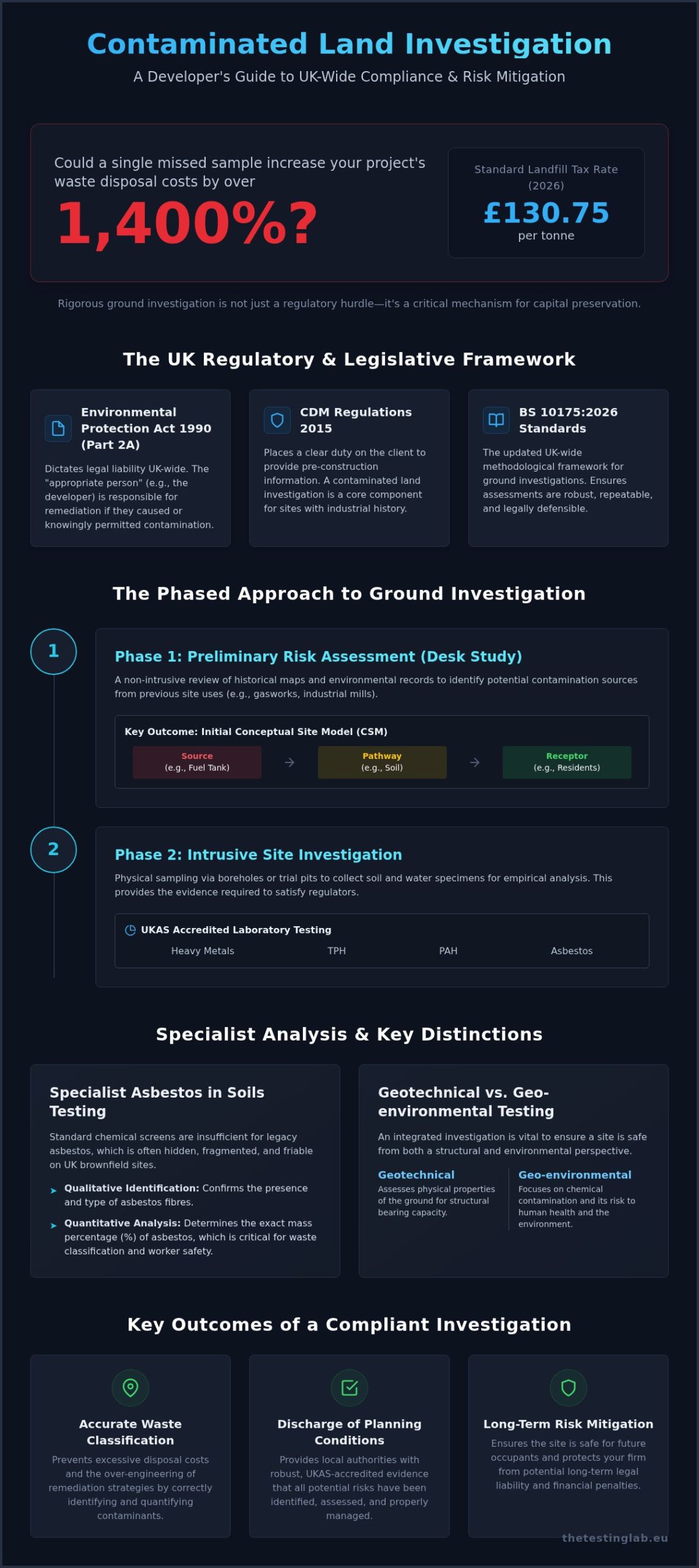
A contaminated land investigation is the methodical process of identifying and assessing substances in, on, or under land that have the potential to cause significant harm to human health or the environment. This technical assessment isn’t just a box-ticking exercise; it’s a legal requirement under Part 2A of the Environmental Protection Act 1990. This legislation applies UK wide, placing the burden of responsibility on the “appropriate person” to ensure land is suitable for its intended use. For developers, this means that if you’ve caused or knowingly permitted contamination, you’re liable for its remediation.
Most development-led investigations occur through the planning process. The National Planning Policy Framework (NPPF) mandates that after remediation, as a minimum, land should not be capable of being determined as contaminated land under Part 2A. To discharge planning conditions successfully, you must provide the local authority with evidence that risks are managed. This is where UKAS accreditation becomes vital. Using a UKAS-accredited laboratory for asbestos in soils testing or chemical analysis ensures your data meets the rigorous standards required by insurers, lenders, and regulators.
Legislative Drivers: CDM 2015 and BS 10175:2026
The Construction (Design and Management) Regulations 2015 (CDM 2015) place a clear duty on the client to provide pre-construction information to designers and contractors. If your site has a history of industrial use, a contaminated land investigation is a core component of this information pack. Failing to identify hazards early doesn’t just risk health; it leads to work stoppages and massive financial penalties.
Following the 2026 update to the British Standards, all investigations must now adhere to BS 10175:2026. This revised code of practice introduces stricter considerations for climate change resilience and emerging contaminants like PFAS. ‘BS 10175 provides the UK-wide methodological framework for ensuring ground investigations are robust, repeatable, and legally defensible.’ Adhering to this standard is the only way to ensure your site assessment stands up to legal scrutiny.
The Phases of Ground Investigation: From Desk Study to Lab Analysis
A successful contaminated land investigation follows a logical, phased sequence. This starts with Phase 1, the Preliminary Risk Assessment or “Desk Study”. During this stage, we examine historical maps and environmental records to identify previous site uses, such as former gasworks or industrial mills, which might have left a chemical legacy. This phase concludes with the development of the initial Conceptual Site Model (CSM). The CSM is a vital tool that links potential contaminant sources to pathways and sensitive receptors, such as future residents or groundwater, ensuring every risk is mapped before a single borehole is drilled.
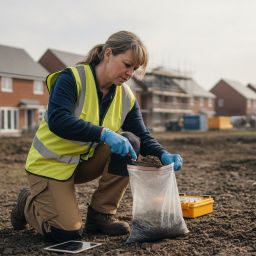
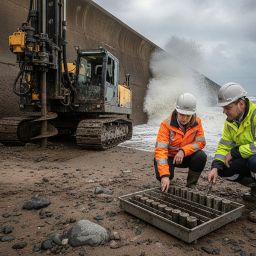
Phase 2 moves into the field through an Intrusive Site Investigation. This involves physical sampling using boreholes or trial pits to collect soil and water specimens. This data must align with the Contaminated Land Statutory Guidance to ensure the site’s risk profile is accurately captured. Precision at this stage is non-negotiable. UKAS-accredited laboratory testing for heavy metals, Total Petroleum Hydrocarbons (TPH), and Polycyclic Aromatic Hydrocarbons (PAH) provides the empirical evidence needed to satisfy regulators and discharge planning conditions UK wide.
Specialist Asbestos in Soils Testing
Legacy asbestos remains one of the most significant risks on UK brownfield sites. Unlike modern building materials, asbestos in soil is often hidden, fragmented, and friable. A standard chemical screen is insufficient for these hazards. We utilize specialized asbestos in soils testing to provide both qualitative identification and quantitative analysis. This determines the exact mass percentage of asbestos present, which is essential for accurate waste classification and worker safety protocols.
Geotechnical vs. Geo-environmental Testing
It’s vital to distinguish between these two disciplines. Geotechnical testing assesses the physical properties of the ground to determine its structural bearing capacity. In contrast, geo-environmental testing focuses on chemical contamination. Integrated investigations often include water table monitoring to prevent groundwater pollution issues. This ensures the site is safe from both a structural and environmental perspective. If you’re unsure which phase your project requires, you can request a specialist consultation to define your scope precisely.
Risk Mitigation and Waste Management Strategies
Accurate soil analysis is the most effective safeguard against the “over-engineering” of remediation strategies. Without high-resolution data from a contaminated land investigation, developers often default to expensive, broad-brush excavation methods that inflate project costs. By defining exact contamination boundaries, you can minimize the volume of soil requiring treatment or off-site disposal, directly protecting your project budget. Following CIRIA best-practice guidance ensures these mitigation strategies are both technically sound and cost-effective.
The final proof of a safe site lies in the verification report. This document provides the empirical evidence that your remediation goals have been met, proving the land is “clean” for its intended end-use. As an independent strategic partner, The Testing Lab PLC provides UK-wide support, delivering unbiased reporting that satisfies both regulatory bodies and project stakeholders. Our independent laboratory data also supports effluent discharge permit monitoring, ensuring site water management remains compliant throughout the construction phase.
Waste Classification (WM3) and WAC Testing
Misclassifying soil can lead to catastrophic financial penalties. WM3 testing is the essential first step to determine if waste is hazardous or non-hazardous. Once classified, Waste Acceptance Criteria (WAC) testing determines which specific type of landfill can accept the material. With landfill tax rates at £130.75 per tonne for standard waste in 2026, getting this wrong isn’t an option. Additionally, HMRC LOI fines testing protects you from unexpected tax reclassifications that can occur during disposal.
Achieving Site Clearance and Compliance
Site safety requires a holistic approach that extends beyond chemical markers. Integrating soil data with asbestos and legionella surveying ensures all environmental risks are managed under one strategy. For sites involving asbestos, the final 4-stage clearance process serves as the definitive conclusion to your contaminated land strategy, providing the peace of mind that the site is ready for safe occupancy and that all legal liabilities have been addressed.
Securing Your Site’s Regulatory and Financial Future
Succeeding in the 2026 regulatory landscape requires more than just compliance; it demands a strategic approach to ground risk. By adhering to the updated BS 10175:2026 standards and utilizing precise waste classification such as WM3 and WAC testing, you don’t just protect your legal standing under Part 2A of the Environmental Protection Act. You actively preserve your project’s capital by avoiding the prohibitive costs associated with mismanaged hazardous waste.
While ground risk is a primary concern, broader operational strategy is key for long-term success in sectors like retail and agribusiness; to see how expert consulting can support your supply chain, visit LabInvestGroup.
A professional contaminated land investigation acts as the essential foundation for site safety and financial predictability. As a UKAS Accredited Lab (#2551) and independent consultancy, we provide the unbiased data necessary to satisfy regulators and lenders UK wide. Our specialist expertise in asbestos in soils ensures that even the most complex brownfield challenges are resolved with methodological precision. It’s about taking the burden of professional liability off your shoulders and placing it in expert hands.
Request a Quote for UK-Wide Contaminated Land Investigation today to ensure your project remains on track and fully compliant. We look forward to helping you achieve a safe, successful site clearance.
Frequently Asked Questions
What is the difference between a Phase 1 and Phase 2 land investigation?
A Phase 1 investigation is a desk-based study that examines historical records and environmental data to identify potential risks. It establishes a Preliminary Risk Assessment and a Conceptual Site Model without physical digging. In contrast, a Phase 2 contaminated land investigation is an intrusive process. It involves collecting physical soil and water samples through boreholes or trial pits to confirm the presence and concentration of actual contaminants.
How long does a UKAS-accredited contaminated land report take to complete?
Most reports take between two and four weeks from the initial instruction to the final delivery. A Phase 1 desk study is often completed within 5 to 10 working days. For a Phase 2 report, you must account for site mobilization, sampling, and the laboratory’s analytical timeframe. Standard chemical analysis usually requires 5 to 7 working days once samples are received at our UKAS-accredited laboratory.
Do I need a contaminated land survey for a small residential development?
Yes, local planning authorities UK wide typically require a Phase 1 assessment for any development with a sensitive end-use, such as housing. Even a single new dwelling on a previously developed site must be proven “suitable for use” under the National Planning Policy Framework. If the Phase 1 study identifies any historical industrial activity, you’ll likely need an intrusive survey to discharge your planning conditions.
What happens if asbestos is found in the soil during an investigation?
The discovery of asbestos requires immediate quantitative analysis to determine the exact mass percentage and fiber type. This information is vital for your site’s health and safety plan and determines your waste disposal strategy. We use specialized laboratory testing to assess whether the soil must be removed as hazardous waste or if it can be safely managed on-site. Early detection prevents the massive fines and project stoppages associated with mismanaged legacy asbestos.

Article by
P J F Thomas
CEO and Founder of TTL plc.
Disclaimer
Items declared are AI generated but do reflect our services. Please get in contact if you have any questions.