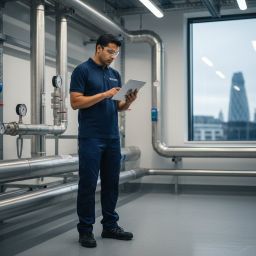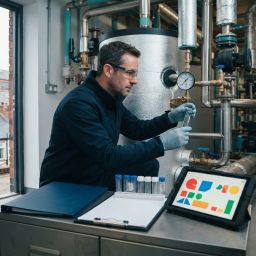
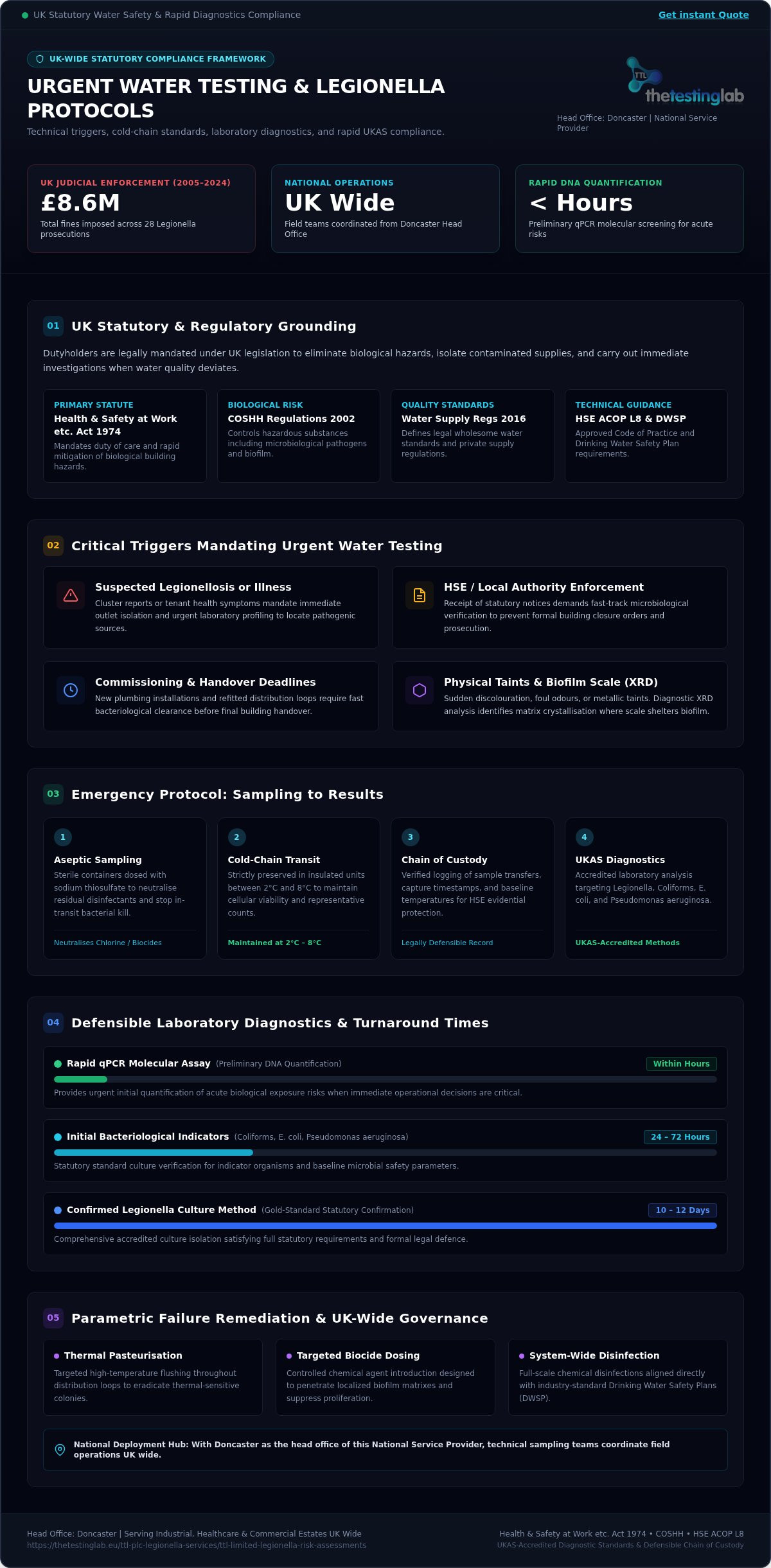
Between 2005 and 2024, UK courts imposed £8.6 million in fines across 28 Legionella prosecutions, proving that delayed compliance carries severe legal and operational consequences. When suspected contamination threatens occupant health or an enforcement inspection looms, protracted turnaround times from standard laboratories simply aren’t viable. Commissioning an urgent water test provides the rapid, defensible data required to prevent illness, avoid regulatory intervention, and maintain complete operational control.
You already know that prolonged testing delays escalate statutory risks under the Health and Safety at Work etc. Act 1974 and COSHH regulations. Discover how to secure an urgent water test across the UK to verify safety and meet statutory regulations without procedural guesswork. Operating with Doncaster as the head office of this National Service Provider, we outline how rapid site sampling, UKAS-accredited laboratory diagnostics, and prompt remediation pathways keep facilities compliant UK wide.
Key Takeaways
- Statutory duties under the Health and Safety at Work etc. Act 1974 mandate immediate investigation whenever contamination or temperature deviations threaten building water safety.
- Recognizing critical physical and operational triggers helps duty holders know precisely when to commission an urgent water test to protect occupant health.
- Aseptic sampling protocols and unbroken cold-chain logistics protect sample integrity, delivering legally defensible, UKAS-accredited laboratory analysis.
- With its head office located in Doncaster, this National Service Provider deploys technical support UK wide to accelerate root-cause analysis and regulatory remediation.
Critical Triggers for an Urgent Water Test Under UK Law
Standard acoustic leak surveys locate escaping volume, but they can’t identify invisible pathogenic threats within pipework. When building water exhibits sudden discolouration, foul odours, or metallic taints, duty holders face immediate statutory exposure. Under the Health and Safety at Work etc. Act 1974 and the Control of Substances Hazardous to Health Regulations 2002 (COSHH), employers must act swiftly to isolate supplies and eliminate biological hazards. Utilizing accredited Water testing procedures removes guesswork, ensuring systems satisfy the Water Supply (Water Quality) Regulations 2016 and HSE ACOP L8 guidelines. Scheduling an urgent water test delivers defensible laboratory verification before microbial proliferation triggers enforcement action.
Regulatory Compliance and Contamination Indicators
Specific facility events require emergency sampling rather than delayed routine assessments:
- Suspected Legionellosis or Tenant Illness: Cluster reports mandate immediate outlet isolation and rapid laboratory profiling to identify pathogenic sources.
- Enforcement Notices: HSE or local authority notices demand fast-track microbiological verification to prevent formal closure orders and prosecution.
- Commissioning Deadlines: New plumbing installations or refitted distribution loops require urgent bacteriological clearance before building handover.
Where pipe scale or sediment shelters hidden biofilm, diagnostic XRD analysis identifies matrix crystallisation alongside an urgent water test. With Doncaster as the head office of this National Service Provider, technical specialists deploy UK wide to protect public safety and resolve regulatory non-compliance swiftly.
The Emergency Water Testing Protocol: Sampling to Results
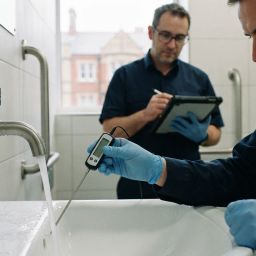
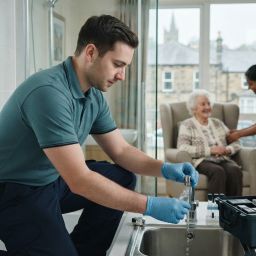
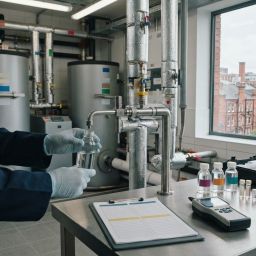
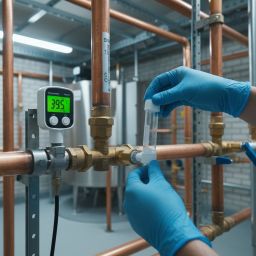
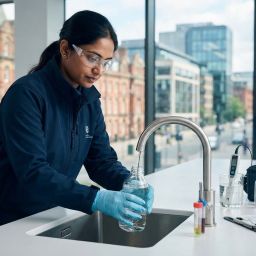
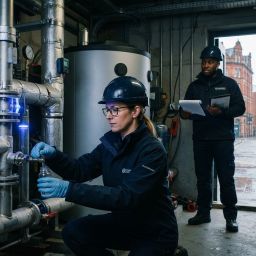
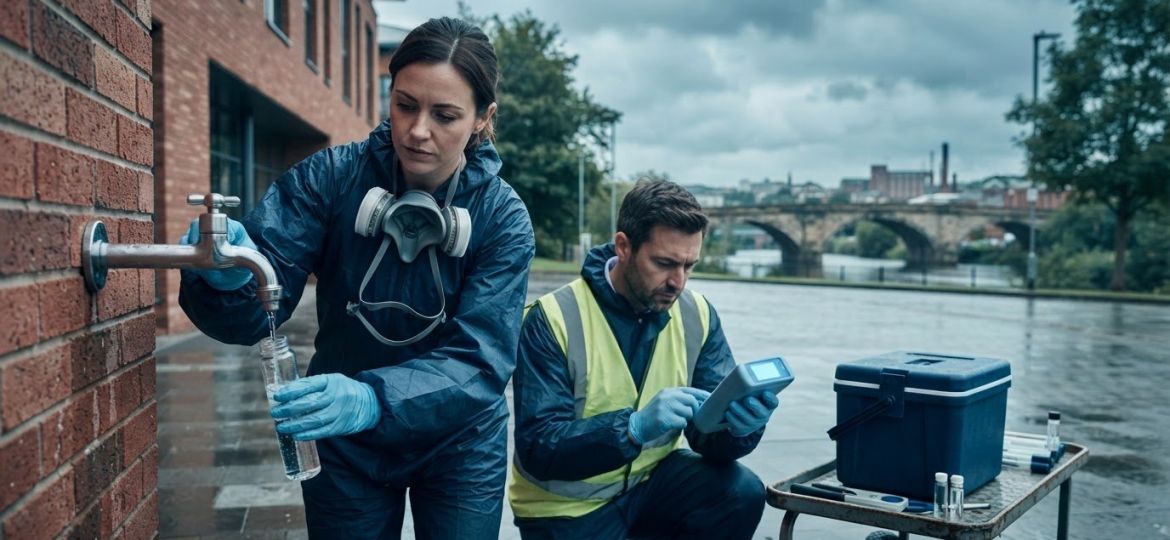
Executing an urgent water test demands rigorous sampling hygiene. Competent technicians collect samples aseptically using sterile containers dosed with neutralising agents like sodium thiosulfate. This practice stops residual disinfectants from killing bacteria mid-transit and prevents cross-contamination. Samples immediately enter insulated, temperature-controlled transit units maintained between 2°C and 8°C. This cold-chain preservation maintains cellular viability, ensuring representative microbial counts upon receipt, whether investigating municipal feeds or monitoring duties under UK private water supply regulations.
Chain of Custody and UKAS Laboratory Standards
A verified chain of custody log tracks sample transfers, capture timestamps, and baseline temperatures. This documentation gives dutyholders robust evidential protection during environmental health inspections and HSE investigations.
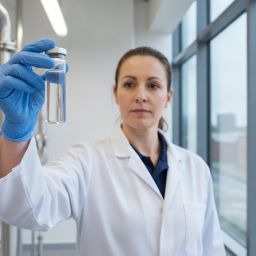
Upon sample intake, UKAS-accredited facilities run validated methods isolating Legionella, coliforms, E. coli, and Pseudomonas aeruginosa. Standard culture methods deliver statutory confirmation, requiring 24 to 72 hours for initial bacteriological indicators and 10 to 12 days for confirmed Legionella culture. Where immediate operational decisions can’t wait, rapid qPCR molecular assays deliver preliminary DNA quantification within hours to assess acute exposure risks. With Doncaster as the head office of this National Service Provider, technical field teams coordinate UK wide to eliminate testing backlogs. Facility teams facing biological uncertainty can request urgent analysis to secure decisive laboratory metrics without delay.
Coordinating UK-Wide Rapid Testing and Water Safety Management
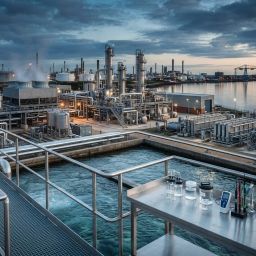
Managing multi-site commercial estates requires unified operational governance rather than fragmented local contractors. With Doncaster as the head office of this National Service Provider, technical sampling teams coordinate field operations UK wide. Immediate on-site deployments ensure swift diagnostics across industrial plants, healthcare estates, and educational campuses. When an urgent water test reveals parametric failures, our scientific personnel provide direct engineering clarity. Test metrics inform precise remediation pathways, such as thermal pasteurisation, targeted biocide dosing, or system-wide chemical disinfections aligned with industry-standard Drinking Water Safety Plans.
Connecting Rapid Diagnostics to Long-Term Compliance
Emergency interventions must translate into permanent structural controls. Isolate immediate bacterial risks first, then update underlying governance records to prevent recurring operational breaches. Connecting diagnostic outcomes to broader controls ensures total statutory protection:
- Integrate urgent findings with legionella risk assessment services to eliminate stagnation zones, dead legs, and temperature stratification.
- Partner with experienced environmental scientists via The Testing Lab PLC to implement structured water management services and UKAS-accredited monitoring.
- Establish proactive oversight schedules using our guide to water compliance to uphold continuous alignment with HSG274 technical standards.
Taking a systems-level engineering approach turns an acute emergency into documented operational resilience. Fast laboratory diagnostics confirm water safety today, while rigorous ongoing monitoring shields building dutyholders from future statutory liability.
Secure Immediate Compliance and Verify Water Safety Today
Unchecked microbial contamination carries severe legal exposure under HSE ACOP L8 and the Water Supply Regulations. Fast intervention, strict sampling protocols, and validated diagnostics transform acute facility risks into documented operational control. Commissioning an urgent water test provides the conclusive laboratory evidence required to protect building occupants, resolve statutory notices, and prevent disruptive site closures.
Operating with Doncaster as the head office of this National Service Provider, The Testing Lab PLC deploys specialist personnel UK wide to deliver fast sampling and UKAS-accredited laboratory analysis. Don’t let compliance delays compromise occupant safety or risk prosecution. Get instant Quote now to secure rapid testing and protect your operations.
Frequently Asked Questions
How fast can an urgent water test confirm bacterial contamination?
Preliminary molecular screening delivers indicative bacterial quantification within hours, providing quick insights during emergencies. Traditional UKAS-accredited culture methods require 24 to 72 hours for initial bacteriological indicators like E. coli and coliforms. Full Legionella culture confirmation takes 10 to 12 days under standard laboratory incubation. An urgent water test combines both approaches so dutyholders can take immediate protective action while awaiting statutory certificates.
What UK regulations require emergency water testing in commercial premises?
Emergency testing falls under the Health and Safety at Work etc. Act 1974, COSHH Regulations 2002, and the Management of Health and Safety at Work Regulations 1999. In England, the Water Supply (Water Quality) Regulations 2016 and Private Water Supplies Regulations 2016 mandate immediate investigation following quality failures. Operating with Doncaster as the head office of this National Service Provider, our teams assist clients UK wide in meeting HSE ACOP L8 guidelines.
Can rapid water testing identify both chemical contaminants and biological pathogens?
Yes, comprehensive diagnostic sampling screens for chemical parameters and biological pathogens simultaneously. Laboratories evaluate pH, heavy metals, and residual biocides alongside microbial indicators such as pseudomonads and coliforms. Coordinating sampling across regional estates from Leeds and Sheffield to Manchester and Newcastle, The Testing Lab PLC ensures samples undergo precise laboratory analysis. Validated data isolates the root cause quickly, whether pipe corrosion or active biofilm.
What immediate steps should dutyholders take while awaiting emergency water test results?
Dutyholders should immediately restrict access to suspected outlets and post clear warning notices prohibiting consumption or aerosol generation. Maintain existing temperature controls, avoid premature system flushing that could distort evidence, and log all environmental conditions. Commissioning an urgent water test provides decisive data to steer subsequent remedial disinfection safely. Documenting every interim precaution protects building occupants across commercial sites UK wide while demonstrating statutory compliance.

Article by
P J F Thomas
CEO and Founder of TTL plc.
Disclaimer
Items declared are AI generated but do reflect our services. Please get in contact if you have any questions.