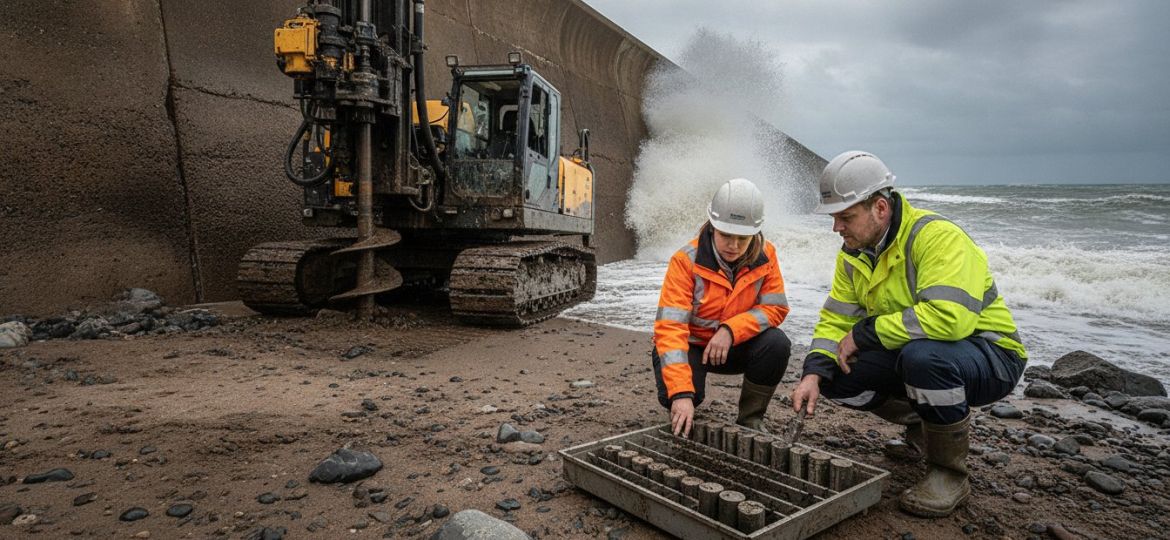
Can a £7.9 billion investment in UK coastal infrastructure survive the relentless reality of rising sea levels without a precision geotechnical investigation for coastal defences? Engineering teams across the UK-wide coastline understand that erosion and saltwater ingress don’t just threaten the surface; they compromise the integrity of foundation materials. It’s a high-stakes environment where compliance with the 2024 updates to BS EN 1997 and the Flood and Water Management Act 2010 is a survival requirement.
This guide explores how site investigations and UKAS-accredited laboratory soil analysis provide the structural resilience needed for 2026 and beyond. We’ll examine the transition to second-generation Eurocodes, the role of BS 5930 in site characterisation, and how our Doncaster head office enables us to act as a National Service Provider, supporting projects with technical risk mitigation.
Key Takeaways
- Understand why systematic soil and groundwater assessments are critical for preventing structural failure and managing complex landslide risks in high-stakes tidal zones.
- Learn how in-situ techniques, including Piezocone Penetration Tests (CPTu), identify hidden slippage planes and geological strata within the intertidal environment.
- Discover the importance of a UKAS-accredited geotechnical investigation for coastal defences to ensure full compliance with BS EN 1997 and the Coast Protection Act 1949.
- Explore how advanced mineralogical analysis, such as XRD and XRF, identifies chemical changes in marine soils that compromise long-term material integrity.
The Critical Role of Geotechnical Investigation in UK Coastal Resilience
A geotechnical site investigation is the systematic assessment of soil, rock, and groundwater behaviour within volatile tidal zones. It isn’t merely a preliminary step; it’s the foundation of structural safety. This rigorous process is essential for preventing seawall failure and managing active landslide complexes, such as those found across unstable cliff slopes or along the Sunderland coastline. At The Testing Lab PLC, we support these vital infrastructure projects from our Doncaster head office. As a national service provider, we offer UK-wide expertise to ensure every project meets the highest engineering standards.
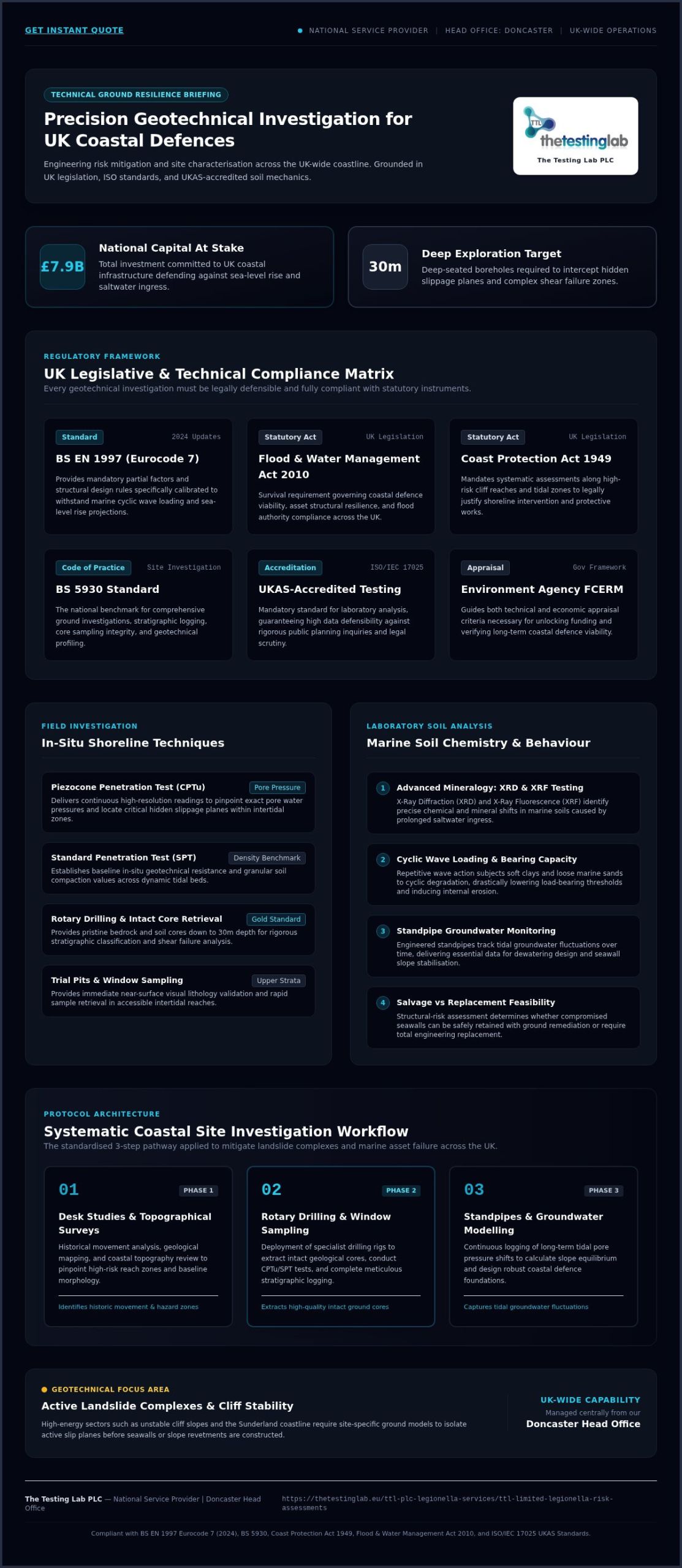
All geotechnical investigation for coastal defences must be grounded in UK legislation. This includes strict adherence to BS EN 1997 (Eurocode 7) and the Maritime Works code of practice. These frameworks provide the necessary partial factors and design rules to account for the unpredictable nature of marine environments. By following these standards, we ensure that coastal assets can withstand the projected sea-level rises and increased storm frequency expected over the next century. Our approach removes the burden of technical risk from the client’s shoulders, ensuring every survey is legally and technically defensible.
Understanding Soil Behaviour in High-Energy Marine Environments
Marine environments subject soft clays and loose sands to constant tidal cycles and cyclic wave loading. These forces don’t just move sediment; they fundamentally change how the ground supports a structure. Saltwater ingress often alters the chemical composition of the soil, which can drastically reduce its load-bearing capacity over time. Accurate construction material testing is required to identify these mineralogical shifts. Without precise laboratory data, predicting long-term settlement or the risk of internal erosion becomes impossible, leaving coastal communities and infrastructure vulnerable.
Get instant Quote
Essential Site Investigation Techniques for Shoreline Infrastructure
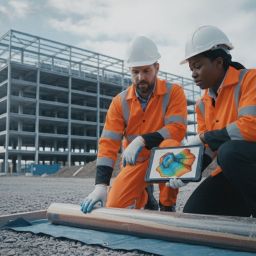
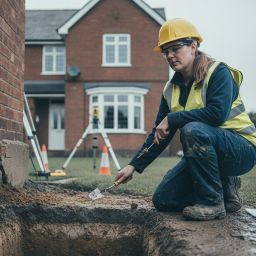
Shoreline projects require more than surface-level observations; it’s why deep exploration is non-negotiable. A robust geotechnical investigation for coastal defences involves deep-seated boreholes, often reaching depths of 30m to pinpoint hidden slippage planes that threaten stability. Trial pits provide immediate visual confirmation of upper strata, but rotary drilling remains the gold standard for extracting intact cores. This detailed data is vital for meeting the Environment Agency FCERM appraisal guidance, which governs the technical and economic viability of UK flood risk schemes.
In-situ testing bridges the gap between raw sampling and laboratory analysis. Standard Penetration Tests (SPT) provide a benchmark for soil density, while Piezocone Penetration Tests (CPTu) offer high-resolution data on pore water pressure. This is critical for projects involving existing infrastructure, where structural-risk assessments determine if a seawall can be salvaged or requires replacement. Groundwater monitoring via installed standpipes allows our team at the Doncaster head office to assess dewatering needs and design effective slope stabilisation measures for UK-wide developments.
Mapping the Landslide Complex: From Boreholes to Geo-Data
A systematic approach ensures data defensibility for large-scale coastal projects across the UK:
- Step 1: Perform initial desk studies and topographical surveys to identify historic movement and high-risk reach zones.
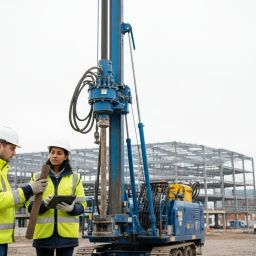
- Step 2: Deploy rotary drilling and window sampling to retrieve high-quality cores for detailed stratigraphic logging.
- Step 3: Install standpipes to capture long-term tidal groundwater fluctuations, which are essential for modelling slope stability.
For tailored advice on site-specific methodologies, you can request a technical consultation from our team at The Testing Lab PLC, a National Service Provider headquartered in Doncaster.
Get instant Quote
Accredited Laboratory Analysis and Regulatory Compliance
Public sector coastal projects demand high data defensibility. UKAS-accredited testing isn’t just a best practice; it’s a mandatory requirement under ISO/IEC 17025. This ensures that the results of a geotechnical investigation for coastal defences are robust enough to withstand planning scrutiny and legal challenges. At The Testing Lab PLC, we act as a strategic partner, ensuring that every sample meets these rigorous standards. All laboratory fees and results are processed through our Doncaster head office, providing national consistency for our UK-wide clients.
Identifying mineralogical changes in marine soils is vital for predicting long-term structural behaviour. We use specialised XRD and XRF analysis to detect chemical shifts caused by prolonged saltwater exposure. Integrating these results with the British Geological Survey GeoCoast dataset allows for a comprehensive understanding of erosion susceptibility and coastal morphology. When works involve excavation, we also provide Waste Acceptance Criteria (WAC) testing to determine the correct disposal route for excavated maritime materials, keeping projects compliant with UK waste regulations.
Corrosion Resistance and Material Durability Testing
Seawalls face constant chemical attack from the environment. We test for chloride and sulphate levels to help engineers specify the correct concrete grades, ensuring the structure doesn’t degrade prematurely. In industrial hubs like Hull or Liverpool, asbestos-in-soils testing is critical for safe brownfield coastal redevelopment. Precise pH testing is also essential to prevent the chemical degradation of foundations in aggressive marine environments. By addressing these chemical risks early, we help secure the long-term resilience of the UK’s shoreline infrastructure.
Get instant Quote
Securing the Future of UK Shoreline Infrastructure
The transition to second-generation Eurocodes and the £7.9 billion capital investment window through 2036 mark a pivotal era for maritime engineering. A precise geotechnical investigation for coastal defences is the only way to mitigate the risks of tidal loading and chemical degradation. From deep-seated boreholes to UKAS-accredited XRD analysis, the data you collect today determines the structural lifespan of your assets tomorrow. Compliance with the Coast Protection Act 1949 and BS EN 1997 requires a methodological approach that leaves no room for geological uncertainty.
The Testing Lab PLC operates as a national service provider from our Doncaster head office, providing UK-wide coverage and UKAS-accredited expertise in soil and water analysis. We don’t just provide data; we provide technical certainty for your most critical assets. Ready to ensure your next coastal project is built on a stable foundation? Get instant Quote for your site investigation and laboratory testing needs today. Together, we can build a more resilient coastline.
Get instant Quote
Frequently Asked Questions
Why is geotechnical investigation mandatory for UK coastal defences?
A geotechnical investigation for coastal defences is mandatory to ensure compliance with the Coast Protection Act 1949 and BS EN 1997 (Eurocode 7). These regulations require engineers to verify structural stability against extreme wave loading and projected sea-level rises. Without UKAS-accredited data, projects cannot secure Environment Agency funding or planning permission. Our Doncaster head office provides the technical evidence needed to satisfy these statutory requirements UK-wide.
What are the common soil challenges in maritime engineering projects?
Maritime projects face high-risk factors like saltwater ingress, which alters soil chemistry and reduces load-bearing capacity. Soft marine clays and loose sands are also prone to settlement or liquefaction under cyclic wave loading. Identifying these issues early through rigorous site investigation prevents catastrophic seawall failures. We use advanced XRD analysis to detect mineralogical changes that standard surveys might overlook in high-energy coastal zones.
How much does a coastal ground investigation cost in the UK?
The total cost of a UK-wide coastal investigation varies based on site accessibility, borehole depth, and the volume of laboratory testing required. Instead of fixed flat rates, we focus on cost-effective project planning through per-sample laboratory analysis fees. This transparency allows for precise budgeting tailored to the specific geological complexity of the reach. Clients can request a bespoke estimate to manage their capital expenditure more effectively.
What is the difference between onshore and intertidal geotechnical surveys?
Onshore surveys focus on the terrestrial side of the defence, while intertidal surveys occur between high and low water marks. Intertidal work requires specialized equipment like tracked Piezocone rigs and must navigate strict tidal windows. These surveys often require Marine Management Organisation (MMO) licensing under the Marine and Coastal Access Act 2009. Our national team manages these complex logistics to ensure seamless and compliant data collection.

Article by
P J F Thomas
CEO and Founder of TTL plc.
Disclaimer
Items declared are AI generated but do reflect our services. Please get in contact if you have any questions.