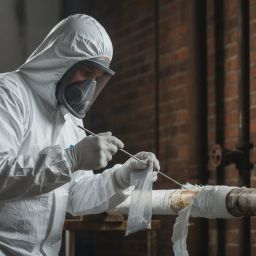
Could a single misclassified sample be the difference between a standard maintenance task and a five-figure legal headache? For many duty holders across the UK, the uncertainty of whether a project requires a licensed contractor creates significant operational risk. You likely already know that the Control of Asbestos Regulations 2012 (CAR 2012) demands strict adherence, but identifying the exact nature of a material by sight alone is impossible. Without precise asbestos water absorption testing, misclassifying asbestos insulating board (AIB) as cement doesn’t just invite health risks; it leads to massive overspending or severe legal non-compliance.
This professional analysis provides the definitive data required to navigate these complexities. We’ll show you how a UKAS-accredited laboratory uses the 30% absorption threshold to deliver a legally defensible Certificate of Analysis. Whether you’re managing a residential portfolio or a complex commercial site, our UK-wide asbestos and water management services ensure you’re making decisions based on methodology, not guesswork. This article breaks down the technical process of lab analysis and how independent advice can protect your project from unnecessary costs in 2026.
Key Takeaways
- Identify the legal distinction between asbestos cement and insulating board by applying the 30% water absorption threshold defined in CAR 2012.
- Utilize expert asbestos water absorption testing to determine precisely whether your remediation project requires a licensed or non-licensed contractor.
- Leverage the impartiality of an independent UKAS-accredited laboratory to avoid the conflicts of interest and inflated costs often associated with removal-linked firms.
- Understand the technical laboratory process, including fibre identification via Polarised Light Microscopy, to ensure your material classification is scientifically robust.
- Ensure full regulatory compliance for your UK-wide assets with a legally defensible Certificate of Analysis that stands up to HSE scrutiny.
The Role of Water Absorption Testing in UK Asbestos Compliance
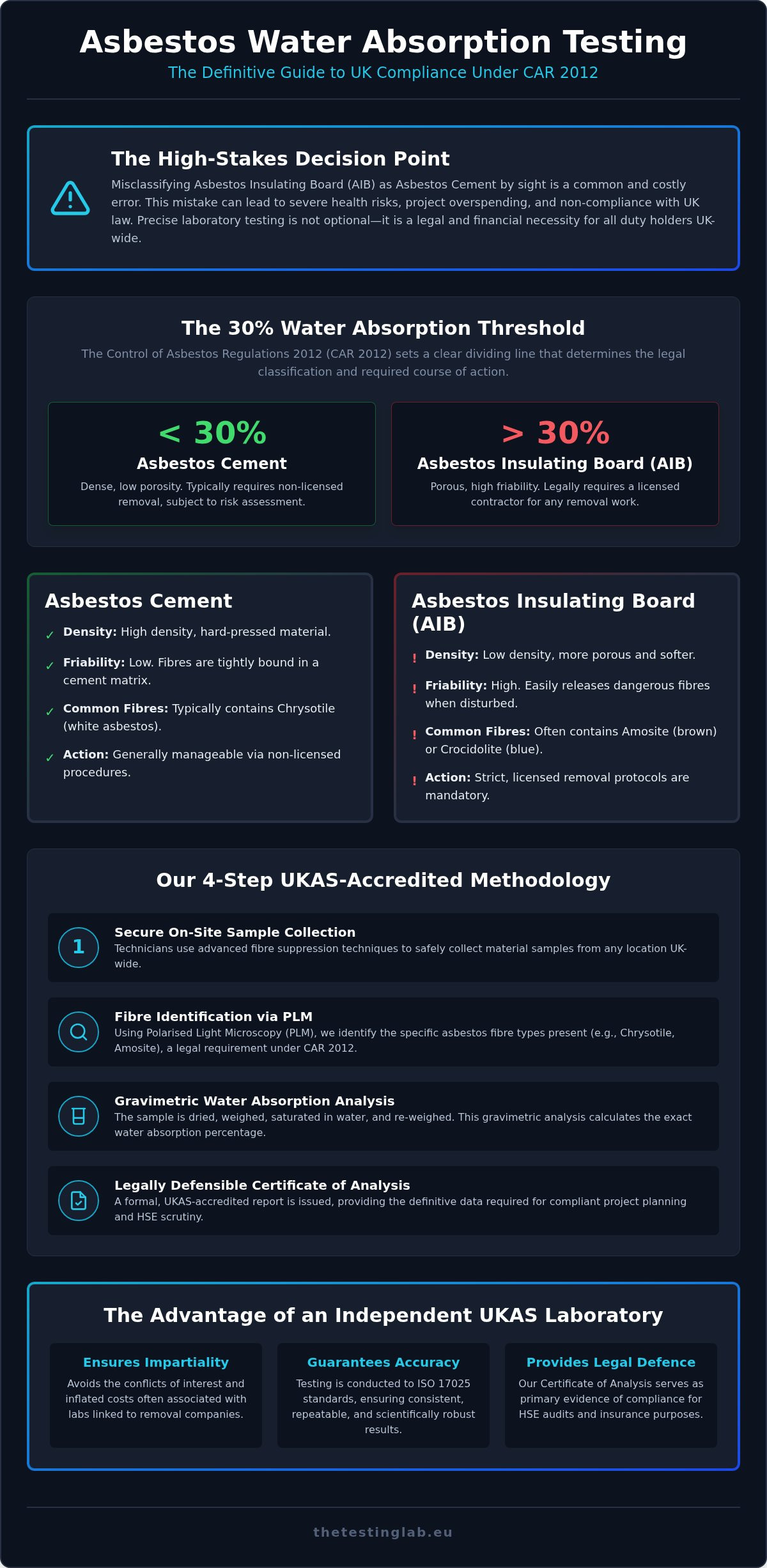
Water absorption testing is a critical diagnostic procedure used to measure the porosity and density of an asbestos-containing material (ACM). This technical analysis isn’t merely for documentation; it’s the primary method for determining a material’s legal classification under the Control of Asbestos Regulations 2012 (CAR 2012). Regulation 2 provides a clear threshold: asbestos cement is defined as a material that absorbs less than 30% water by weight in a dry state. When a material exceeds this 30% limit, its density is lower and its porosity is higher, which typically classifies it as Asbestos Insulating Board (AIB).
For duty holders, this distinction is a pivot point for project management and legal safety. Misclassifying AIB as cement can lead to the accidental disturbance of high-risk fibres, creating significant health hazards and potential prosecution. Using professional asbestos water absorption testing ensures that building owners meet their “Duty to Manage” responsibilities. For those seeking a comprehensive overview of asbestos, understanding these regulatory thresholds is foundational to maintaining safety across UK-wide property portfolios. Precise data from a UKAS-accredited lab removes the guesswork, protecting both the budget and the workforce.
Differentiating Asbestos Cement from Insulating Board (AIB)
The matrix composition of these materials varies significantly. Asbestos cement is a dense, hard-pressed material where fibres, usually Chrysotile, are tightly bound. In contrast, AIB typically utilizes a calcium silicate matrix and often contains Amosite or Crocidolite. Because AIB is less dense and more porous, it’s far more friable. This means it releases dangerous fibres much more easily when disturbed, which is why it’s subject to stricter, licensed removal protocols. Our asbestos consultancy experts help clients interpret these technical variances to ensure correct site-specific risk assessments.
Legal Framework: CAR 2012 and UK-Wide Standards
A laboratory Certificate of Analysis serves as primary evidence during Health and Safety Executive (HSE) audits or insurance reviews. To be legally defensible, all asbestos water absorption testing must be conducted in a facility meeting ISO 17025 standards for laboratory precision. This accreditation guarantees that the methodology is consistent, repeatable, and accurate. We provide these essential services UK-wide, delivering the technical certainty required for both residential and large-scale industrial compliance.
Professional Laboratory Methodology for Material Classification
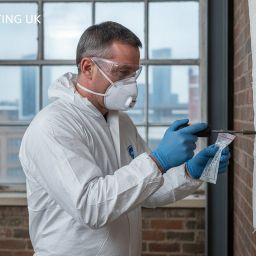
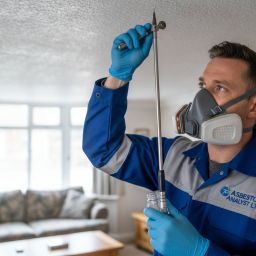
Precision in material classification relies on a rigorous, four-step methodology. First, our technicians perform secure on-site sample collection using advanced fibre suppression techniques. This ensures the safety of the surrounding environment. Once in the lab, we use Polarised Light Microscopy (PLM) to identify specific fibre types, such as Chrysotile, Amosite, or Crocidolite. This initial identification is a legal requirement under The Control of Asbestos Regulations 2012.
The core of the process is the gravimetric analysis. We dry the samples to a constant weight, record the mass, and then saturate them in water. By re-weighing the saturated material, we calculate the exact absorption percentage. This asbestos water absorption testing determines if the material sits above or below the 30% threshold. Finally, we issue a formal UKAS-accredited report. This document provides the technical clarity needed for management or removal decisions. For projects requiring high-precision results, consulting with an independent UKAS laboratory ensures total impartiality.
Specialist Analysis: Asbestos in Soils and Environmental Testing
On complex brownfield sites, we often integrate asbestos in soils testing with material classification. This prevents environmental liabilities during construction. Water absorption is also vital for assessing weathered cement. Older, degraded products may show increased porosity, potentially shifting their classification and risk profile. We provide these specialist insights UK-wide to support safe land redevelopment.
Interpreting Your Analysis Report
Your report might include a ‘Trace’ designation. This indicates that while asbestos is present, it’s at an extremely low concentration. Understanding these nuances is essential for your long-term management plan. When results are borderline, moving from a single test to a full asbestos consultancy engagement provides the strategic oversight needed for regulatory compliance. We help you translate these data points into actionable safety protocols.
Strategic Compliance: Independent UK-Wide Laboratory Services
Choosing an independent laboratory is a strategic decision that directly impacts project overheads and legal safety. The “Independence Advantage” means our results are entirely unbiased; we don’t perform removal, so we’ve no incentive to misclassify materials. Accurate asbestos water absorption testing ensures you only hire licensed contractors when the law actually requires it. This impartiality protects your budget from the inflated costs often associated with firms that handle both testing and remediation. By removing the conflict of interest, we provide a clear, technical pathway to compliance.
Our UK-wide network of consultants provides a rapid response for commercial and industrial portfolios, regardless of the site’s complexity. We understand that modern building management requires more than just a single-issue focus. By combining asbestos management with Legionella risk assessments, we offer a holistic safety strategy that streamlines your regulatory duties. For large-scale site investigations or multi-site audits, you can easily request a quote for accredited testing to secure a transparent cost structure from the outset.
The Value of PLC Status in Occupational Hygiene
Large organisations trust The Testing Lab PLC because we provide transparent, end-to-end compliance monitoring. Our status as a PLC reflects a deep commitment to technical excellence and professional accountability. We maintain a robust chain of custody for every sample, ensuring that data integrity is preserved from the moment of collection on-site until the final analysis in our UKAS-accredited facility. This meticulous approach is why we’re a preferred partner for high-stakes industrial projects.
Ensuring National Compliance Standards
Meeting HSE requirements demands more than just a test; it requires expert consultancy that stands up to legal scrutiny. In 2026, UKAS accreditation remains the essential benchmark for ensuring that every asbestos water absorption testing procedure is legally defensible and scientifically sound. This independent verification is the cornerstone of a modern, compliant occupational hygiene policy that protects both people and assets across the UK.
Securing Regulatory Compliance for Your 2026 Projects
Managing the complexities of CAR 2012 requires more than just a visual survey. It demands technical precision that only a laboratory environment can provide. By establishing whether a material sits above or below the critical 30% threshold, you’re not just following a guideline; you’re securing the legal and financial integrity of your project. Our independent PLC status ensures that your results are never skewed by a desire to sell removal services, giving you a transparent foundation for your asbestos management plan.
Through professional asbestos water absorption testing, we help duty holders across the UK eliminate uncertainty. Whether you’re managing a single residential property or an industrial portfolio, our UKAS Accredited Lab (#2556) provides the definitive evidence needed for health and safety audits. We offer full UK-wide coverage to ensure that expert analysis is always within reach. Our team acts as a strategic partner, taking the burden of professional liability off your shoulders.
Ready to classify your materials with scientific certainty? Request an Accredited Asbestos Testing Quote today and take the first step toward total regulatory compliance. We’re here to help you manage your risks with confidence.
Frequently Asked Questions
How long does it take to get asbestos water absorption results back?
Standard turnaround times for laboratory results typically range from three to five working days. This period is necessary because the technical process requires the sample to be dried to a constant weight before the saturation phase begins. While some expedited services may be available depending on current lab capacity in 2026, the scientific methodology for calculating the 30% threshold cannot be rushed without compromising accuracy.
Is water absorption testing a legal requirement for all asbestos samples?
No, this specific analysis isn’t required for every asbestos sample collected during a standard survey. It’s only necessary when there is technical ambiguity regarding whether a material is asbestos cement or asbestos insulating board (AIB). Under CAR 2012, the results provide the definitive evidence required to determine the material’s density and its subsequent legal classification for removal or management.
What is the difference between asbestos cement and AIB in terms of removal cost?
The cost difference is substantial because AIB removal is a licensed activity that requires specialized enclosures, negative pressure units, and a 14 day notification to the HSE. In contrast, removing asbestos cement is generally a non-licensed task with lower operational overheads. Utilizing asbestos water absorption testing ensures you don’t mistakenly pay the premium rates associated with licensed AIB removal for materials that are actually lower-risk cement.
Can I take the sample for water absorption testing myself?
Sampling for asbestos water absorption testing should never be performed by an untrained individual due to the high risk of fibre release. If the material is AIB, even minor disturbance can release significant concentrations of Amosite or Crocidolite fibres into the air. Our UK-wide consultants use professional fibre suppression and strict safety protocols to collect samples while maintaining a legally defensible chain of custody for the laboratory.

Article by
P J F Thomas
CEO and Founder of TTL plc.
Disclaimer
Items declared are AI generated but do reflect our services. Please get in contact if you have any questions.